
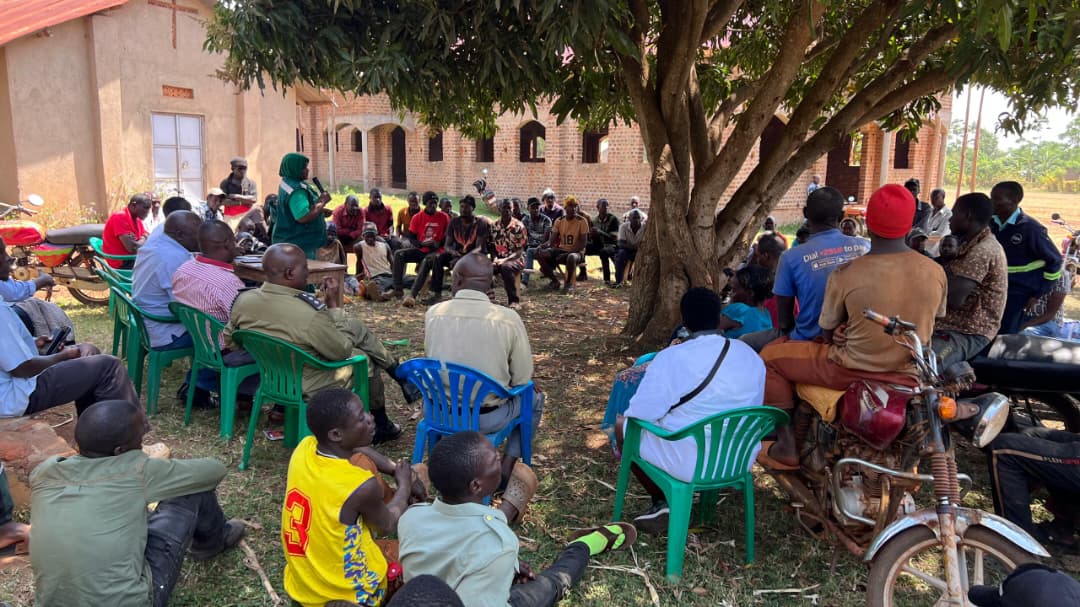
Government has called for urgent interventions to address growing safety concerns among artisanal gold miners in Namayingo District, warning that poor safety practices and non-compliance with mining regulations are putting thousands of miners at risk.
Officials said the rising number of deaths and injuries at mining sites requires stricter enforcement of occupational safety measures and increased compliance with existing regulations.
The call was made on Tuesday, July 7, 2026, during the launch of a sensitisation campaign on occupational safety, legal compliance and environmental protection among artisanal and small-scale gold miners. The campaign was organised by the Department of Occupational Safety and Health (DOSH) under the Ministry of Gender, Labour and Social Development.
Addressing miners at Bulamba Primary School, Namayingo Deputy Resident District Commissioner (RDC) Yakuti Kalange expressed concern over declining safety standards at several mining sites, saying many miners continue to operate without basic protective equipment and sanitation facilities.
“Some sites are overcrowded; some people are mining without latrines. They don’t use any mechanism to prevent any occurrence that can affect their lives. As the government, we have tried to sensitise the people, though compliance is a challenge,” Kalange said.
He warned that the continued use of hazardous chemicals such as sodium cyanide and mercury during gold processing poses serious health and environmental risks if not properly managed.
Kalange also raised concern over illegal mining activities near public infrastructure, particularly roads, saying some miners have dug deep pits along major roads, threatening infrastructure and increasing government maintenance costs.
Dalton Bakisuula, an official from DOSH representing the Commissioner for Occupational Safety and Health at the Ministry, Eva Katusabe, said many artisanal miners are exposed to workplace hazards, unsafe mining practices and improper handling of dangerous chemicals.
Bakisuula expressed concern over the growing number of abandoned and open mining pits in communities, warning that they pose a danger to both miners and residents.
“We really don’t want to hear about death cases in the mining centres; it can be heartbreaking for someone to go mining in the morning, and in the evening they are no more,” he said.
He urged mine operators to fence off open excavations and comply with occupational safety standards.
Bakisuula further cautioned artisanal miners against digging pits deeper than 10 metres, saying excessive excavation increases the risk of fatal accidents caused by collapsing soil and oxygen shortages.
“Many mines have pits more than 10 metres deep; the pits should have an open end to allow people to exit and also allow free circulation of oxygen,” he said.
Meanwhile, Hajarah Nakiberu, a senior environmental inspector at the National Environment Management Authority (NEMA), raised concern over increasing mining activities in wetlands, warning that the authority would soon launch a crackdown on illegal operations in protected areas.
“I don’t see any reason why miners can end up operating in wetlands. NEMA will soon launch a crackdown on illegal activities along the wetlands. Why do people pour debris into wetlands, yet wetlands give us water?” Nakiberu said.
She urged miners to observe mandatory wetland buffer zones and adopt environmentally responsible practices.
Nakiberu also called for proper water management at mining sites, including the construction of reserve tanks to prevent contaminated water from flowing into wetlands and other water sources.
“Every pit must have a tank to enable the water to be used in processes other than releasing the water to destroy the wetlands,” she said.
James Peter Ouma, Chairperson of the Namayingo Bukoma Gold Miners Cooperative Society, called for improvements in the process of acquiring Environmental Impact and Social Assessment (ESIA) reports, saying delays affect miners seeking to obtain licences and operate legally.
Government officials urged miners to embrace occupational safety measures, comply with mining regulations and adopt environmentally sustainable practices, saying responsible mining will help protect lives and preserve Uganda’s natural resources.
Namayingo District has experienced a series of gold rushes since the discovery of gold deposits in 2024, attracting thousands of artisanal miners from across Uganda and neighbouring countries.
In October 2024, government temporarily closed the Mpano gold mining site over environmental degradation, unsafe mining practices and illegal operations, including widespread use of mercury and excavation of dangerous open pits.
Despite the crackdown, new mining sites have emerged in areas such as Buyinja Sub-county and Bukana Island, attracting more miners.
The sensitisation campaign is expected to equip artisanal miners with knowledge on occupational health and safety, environmental conservation, lawful mining operations and workers’ rights as government moves to formalise the sector and reduce accidents and illegal mining activities.
