
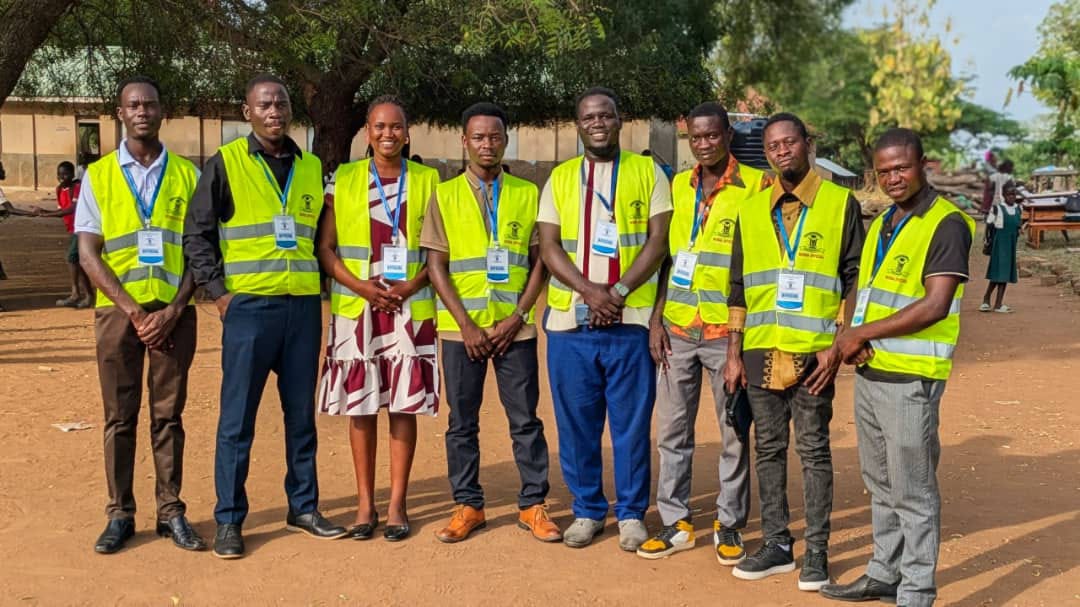
NEBBI — Education stakeholders have challenged the Greater Nebbi University Students’ Association (GNUSDA) to end its reliance on donations from politicians and well-wishers and instead advocate for a dedicated budget line from the district to support its activities.
For 21 years, GNUSDA has relied on financial support from politicians and other well-wishers to organise career guidance sessions, sports and cultural galas, but stakeholders argue that the approach is unsustainable and limits proper planning.
They say incorporating student activities into the district budget would improve accountability, guarantee consistent funding and reduce dependence on political goodwill, especially during election periods.
Shepherd Oyirwoth, a former member of the Nebbi University Students Development Association (NUSDA), said students should engage the district leadership to establish a formal funding mechanism.
“We should task the Nebbi District to include a budget line to support university students in activities like career guidance and sports galas. Begging politicians is not sustainable,” Oyirwoth said.
He said university students play a critical role in mentoring learners and exposing them to career opportunities, a role he believes should be integrated into the district education calendar.
“The education department does not do much in guidance and career talks, among others, and that is the gap filled by university students. These activities should be incorporated into the education calendar with a budget attached,” he said.
GNUSDA, which serves as a mother association to groups including the Alur Kyambogo University Students’ Association (AKUSA) and Nebbi Makerere University Students’ Association (NEMSA), was formed in 2005 but has not developed a sustainable funding model for its activities.
GNUSDA president Brenda Muber said changing the system would be difficult because the association has operated through donations since its establishment.
“GNUSDA has existed for 21 years and I am the 21st president. All my predecessors have been undertaking activities using this approach, so changing may not be easy for me,” Muber said.
She said the association currently depends mainly on membership contributions, which are insufficient to meet the cost of its programmes.
“We are constrained financially, but we feel indebted to this noble course. There are so many learners at primary and secondary level who lack career guidance and that is what we are offering ourselves to do. It is a sacrifice, but it needs finance,” she said.
Muber said the association was preparing a proposal to present to the district council seeking support, although the district has previously provided assistance in form of vehicles and fuel to facilitate their activities.
However, critics argue that such support continues to encourage dependency instead of creating a sustainable funding structure.
Nebbi District Vice Chairperson Geoffrey Anecho Okello said the district’s ability to finance additional activities is limited because most government transfers are tied to specific programmes.
“We always receive funds for recurrent expenditures, wage bills and facility construction. These monies cannot be diverted, so it leaves us unable to tap into central government transfers,” Okello said.
He said the district could consider supporting the students through locally generated revenue, but noted that the resource envelope remains limited.
“Our local revenue is also very meagre. We may incorporate such activities, but when the money is small, we have to turn to our priorities first,” he said.
Nebbi District’s approved locally generated revenue stands at Shs1.77 billion, while the revised district budget totals Shs46.6 billion, including central government transfers and external financing.
Stakeholders argue that with more than Shs1 billion in local revenue collections, setting aside a modest allocation for student mentorship and career guidance activities should not significantly strain the district budget, provided it is properly planned and prioritised.
