
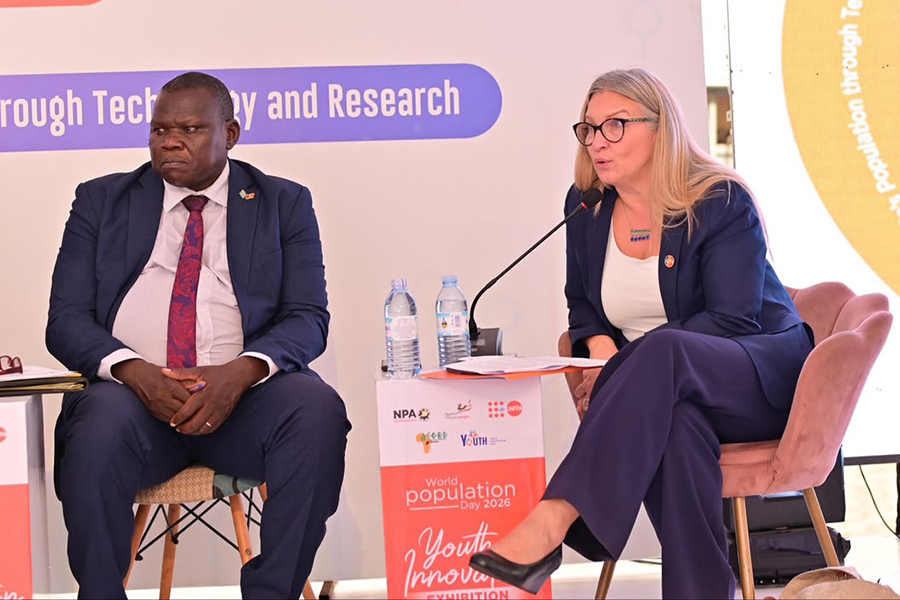
KAMPALA — The United Nations Population Fund (UNFPA) has urged Uganda to increase investment in young people, saying the country’s youthful population has the potential to become a major driver of economic transformation if properly supported.
UNFPA Representative in Uganda Kristine Blokhus said Uganda’s large youth population presents a unique opportunity for development, but warned that the benefits of a demographic dividend can only be achieved through deliberate investments.
“It is really a roadmap for the future,” Blokhus said.
She noted that about 73 percent of Uganda’s population is below the age of 30, describing young people as a source of energy, creativity and innovation that can accelerate national development.
“Seventy-three percent of this country are under the age of 30, so we have a big pool of energy and creativity, really unparalleled. But we also know that this demographic dividend is not something that we automatically get to access. It is a prize that we have to earn through deliberate, focused investments,” she said.
Blokhus said investments in quality education, healthcare, skills development and decent employment opportunities are essential for young Ugandans to contribute meaningfully to the economy.
She added that technology and research can help address barriers facing young people, especially those in underserved communities.
According to Blokhus, digital innovation can connect rural entrepreneurs to markets, while research can improve access to sexual and reproductive health information and help safeguard young people’s futures.
“We believe that every young person’s potential is a promise that we, as duty bearers, must help them to keep,” she said.
Blokhus made the remarks while praising young innovators who showcased projects addressing challenges in healthcare, education, economic empowerment and community development.
She said the innovations demonstrated that Ugandan youth are not only beneficiaries of development programmes but are also creating solutions to challenges affecting their communities.
“Whether it’s a new app to improve health service delivery or platforms to educate your peers on menstrual health, you have proven that Ugandan youth are not just passive recipients of aid; they are active architects of their own development,” she said.
UNFPA selected 14 finalists from different parts of Uganda to showcase their innovations in Kampala, recognising their efforts in developing solutions for community challenges.
“When young people are given a platform, they do not just dream of a better Uganda; they build it,” Blokhus said.
She reaffirmed UNFPA’s commitment to supporting youth innovators through partnerships, mentorship and opportunities to expand their ideas.
The event featured an exhibition where young innovators displayed technology and research-based solutions aimed at improving livelihoods and contributing to sustainable development.
During engagements with government officials, innovators highlighted challenges affecting startups, including high production costs, rising business expenses and limited access to information about financing and support programmes.
They called for stronger government support to help youth-led enterprises grow, create jobs and contribute to Uganda’s economic transformation.
