
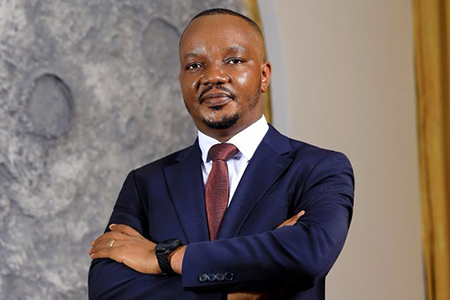
By Dedan Mutatinensi
For years, Pay As You Earn (PAYE) has felt like one of those silent deductions you rarely question. You simply look at your payslip, sigh a little, and move on.
But this time, it is different.
For more than a decade, Uganda’s PAYE system has largely been tied to an economic reality that no longer exists. Updating a tax system after more than 10 years is not a small thing. It shows that someone looked up and realised that the economy people live in today is not the economy of 2012.
Fuel prices, rent, transport costs, school fees and general living standards have changed significantly.
So yes, this proposal recognises that the old tax threshold had become outdated.
The government is now proposing new PAYE rates:
- 0 per cent for income up to Shs335,000
- 20 per cent from Shs335,000 to Shs410,000
- 25 per cent from Shs410,000 to Shs485,000
- 30 per cent from Shs485,000 to Shs10 million
- 40 per cent above Shs10 million
On paper, it looks like relief. Compared to the old system, there is some breathing space. It appears the government is trying to make the tax burden lighter for workers.
But let us not celebrate too quickly.
The deeper issue is that this proposal quietly exposes how unrealistic Uganda’s salary structure has become.
It shows that many people are earning just slightly above the tax-free threshold.
Think about that for a moment. In 2026, we are designing a tax system around a threshold of Shs335,000, yet many formal workers are still earning around Shs350,000.
That is not only a tax issue. It is an economic warning sign.
Let us be honest. Shs350,000 is not a salary that allows a worker to breathe comfortably. It forces someone to calculate every day whether they will eat, pay transport costs, support family members, and survive the month without borrowing.
Yet that is the reality many workers face.
This tax adjustment may reduce PAYE for low-income earners, and that matters. A little extra money in someone’s pocket is not meaningless. For a worker living on the edge, even a small reduction can mean a meal saved, transport covered, or a utility bill paid.
That is tangible relief.
But relief is not the same as transformation. At some point, Uganda must stop pretending that this situation is normal.
A tax-free threshold of Shs335,000 may be better than Shs235,000, but it should not be mistaken for evidence of a thriving economy. It simply means the tax system has moved closer to reality. It does not mean the reality itself has improved enough.
That is why this reform is both progressive and frustrating.
It is progressive because it recognises that low-income workers should not be heavily taxed before meeting their basic needs.
But it is frustrating because it also reveals how low our expectations have become. We have become so accustomed to survival that any small reduction in pressure feels like a major breakthrough.
It is not a breakthrough. It is a correction — a necessary one, but still a correction.
If someone earning Shs350,000 gets some relief from the new PAYE rates, that person should welcome it. But they should also ask a harder question: Why, in 2026, does a person in formal employment still earn a salary that cannot comfortably sustain them through the month?
That is not only a tax question.
It is a wages question. It is a productivity question. It is a private sector question. It is also a government policy question.
Because if we keep adjusting taxes without addressing low salaries, we are only treating the symptom while ignoring the disease.
The disease is an economy where many people are employed but not adequately paid.
The disease is an economy where formal employment does not always guarantee dignity.
The disease is an economy where someone can work full-time and still remain one emergency away from financial collapse.
There is also a psychological side to this debate.
When low-income earners hear that the tax-free threshold is increasing, they may smile briefly. But they also know their lives are not suddenly changing.
Rent is still due. Transport remains expensive. Children still need support. Bills still arrive on time. Salaries remain stretched.
That is why this debate feels so real. It is not just about percentages and tax brackets. It is about daily survival.
The government deserves credit for reviewing PAYE after many years. That part is fair and overdue.
But the public also deserves honesty.
A tax reform built around a Shs335,000 threshold is evidence that workers have been left behind for too long.
If Uganda is serious about building a fair tax system, it must also be serious about building a fair wage economy.
The uncomfortable truth in this debate is not the new tax bracket. It is the salary that falls within it.
That is the issue Uganda must confront with more courage than comfort.
You can reduce PAYE, but you cannot tax-adjust your way out of low wages. You can increase thresholds, but you cannot fix an economy where income growth is not keeping pace with the cost of living.
This is why salary earners should pay attention not only to what is deducted from their payslips, but also to what they are earning in the first place.
Because the biggest change is not only in the PAYE bracket. It is in awareness.
So while workers may see some relief in their payslips, the bigger truth remains: the problem was never just PAYE. It is what people are being paid.
Until that conversation receives the same urgency as tax reform, salary earners will continue facing the same cycle — small reliefs, unchanged realities, and constant pressure to survive in an economy that keeps adjusting everything except wages.
The writer is a tax advisor
