
The government will table a new Fisheries Management Bill before Parliament within a month as part of broader reforms aimed at improving the management of Uganda’s fisheries sector.
State Minister for Fisheries Robert Migadde said the proposed legislation is intended to promote sustainable fishing practices while safeguarding the livelihoods of communities that depend on the sector.
“Within a month, we shall be presenting the new fisheries law to Parliament. The proposed legislation will transfer the management of the lake to civilian authorities and end the practice of burning confiscated illegal fish,” Migadde said.
Migadde said the new law will also reform the handling of confiscated fishing gear in an effort to reduce corruption within fisheries enforcement.
“We do not want confiscated fishing gear to be taken to police stations or army detachments on the lake. Enforcement officers will instead photograph the exhibits for evidential purposes, which will help reduce cases of corruption,” he said.
The minister’s remarks come at a time when the government’s suspension of silverfish fishing continues to affect livelihoods among fishing communities along the shores of Lake Victoria in Buikwe District.
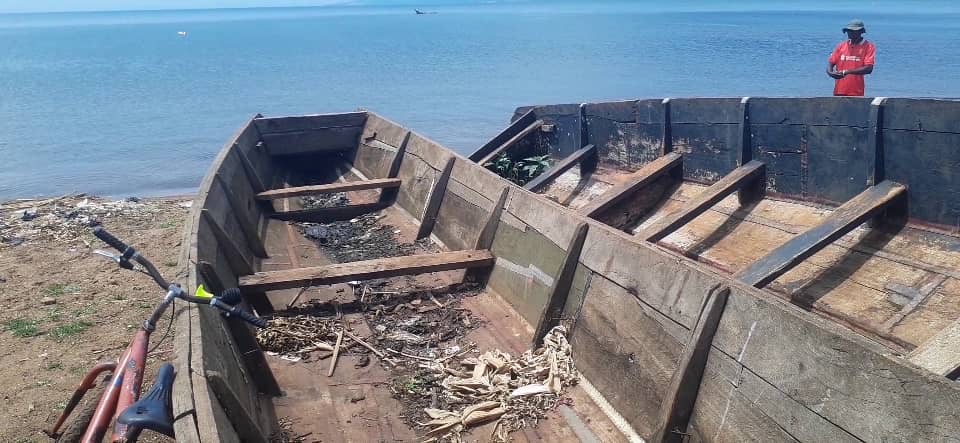
At Kiyindi Landing Site, once a thriving silverfish trading hub, business has significantly declined, with closed shops, abandoned boats and empty rental houses reflecting the impact of the prolonged suspension.
Residents say they need clear guidance from government on approved fishing methods to enable them return to work. Many fishermen and traders say they are struggling to repay bank loans, with some losing property after failing to meet repayment obligations.
Some residents accused the government of politicising fisheries policies, claiming they were allowed to resume fishing during the election campaign period but were stopped again shortly after the swearing-in of the new government.
Kiyindi Town Council Chairperson Amir Kigundu said the suspension has also affected local government revenue collections.
“Since the suspension of silverfish fishing, our local revenue collections have dropped by about 40 percent. This has greatly affected our ability to provide essential services to the people,” Kigundu said.
He added that many households are struggling to meet basic needs, including paying school fees for their children.
Buikwe South Member of Parliament Jimmy Kanaabi criticised what he described as selective enforcement of fisheries regulations.
“It is unfair for the government to license individuals, including foreigners, to carry out cage fish farming while thousands of local fishermen are denied the opportunity to earn a living. Some of these cages have even been established in fish breeding areas, yet the authorities continue targeting small-scale silverfish fishermen instead of addressing the real problem,” Kanaabi said.
Buikwe District Woman Member of Parliament and State Minister in the Office of the Vice President Diana Mutasingwa encouraged affected communities to explore alternative sources of income while government works on fisheries reforms.
“As government, we are encouraging our people to diversify into agriculture and other businesses. We are ready to support them with loans, seedlings and training in aquaculture, including the establishment of fish ponds,” Mutasingwa said.
Local leaders estimate that nearly 60 percent of residents who previously depended directly on the silverfish value chain are now unemployed, highlighting the economic strain facing fishing communities.
As the government prepares to present the new Fisheries Management Bill, residents in Buikwe continue to await reforms they hope will restore livelihoods while ensuring sustainable management of Lake Victoria’s resources.
