
By Ezana Kassa
By the time a high-impact zoonotic disease reaches a hospital ward, it is already too late.
Global health systems are highly effective at tracking human-to-human transmission. They test, isolate, trace contacts, and treat patients. But these systems are activated only after infection has already occurred—after a pathogen has crossed from animals into people, adapted, and begun to spread.
This reactive posture exposes a fundamental flaw: global systems are designed to respond to emerging zoonoses, not to prevent. Recent scientific evidence makes this gap even clearer. Advances in genomic analysis now show that many outbreaks are not simply driven by ongoing human transmission, but by fresh spillover events—new introductions from wildlife or livestock into human populations. This means that even when transmission chains are controlled, the risk is not eliminated. It persists at the source, where pathogens continue to circulate silently. This underscores that outbreak control alone cannot eliminate risk; prevention must begin at the source.
The World Health Organization’s Director-General captured this reality starkly in a recent briefing on Ebola: “The outbreak had a big head start… we are still trying to catch up.”
That phrase—catching up—has become the defining feature of global outbreak response. Yet the lesson is clear: unless surveillance shifts upstream, the world will remain perpetually behind.
During the recent Ebola outbreak caused by the Bundibugyo virus (BDBV), the virus gained an early advantage because cases were not promptly detected in health facilities, as its symptoms closely resembled those of common diseases such as malaria. As a result, the response had to spend considerable effort catching up to contain transmission that had already spread undetected.
The Blind Spot: Where Spillover Happens
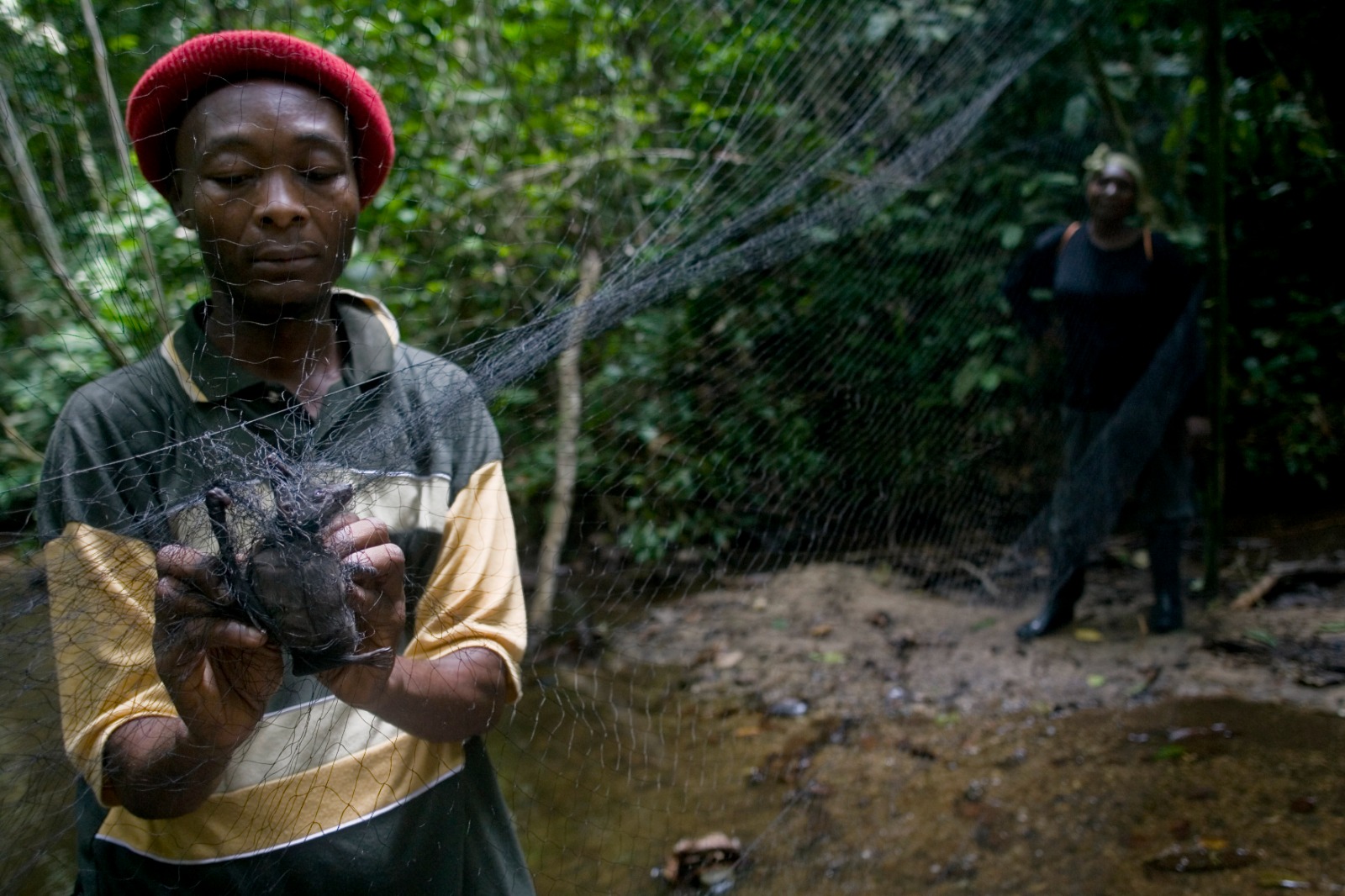
The majority of emerging infectious diseases originate at the wildlife–livestock–human interface. Expanding agriculture, environmental degradation, and population pressures are bringing humans, livestock, and wildlife into closer and more frequent contact.
These are not peripheral zones. They are active economic and livelihood systems. In many parts of Africa, including DRC and Uganda, they are central to how communities live, produce food, and sustain themselves.
Yet surveillance systems remain overwhelmingly focused on hospitals, laboratories, and human cases. They are not designed to monitor ecosystems, animal health, or interaction points where spillover occurs.
This is the blind spot—and it is precisely where the next outbreak will emerge. Without prioritizing the integration of ecological and veterinary surveillance, global health security remains incomplete.
From Pilot to Practice: Uganda’s Experience
Encouragingly, there are signs of a shift toward upstream thinking.
In Queen Elizabeth National Park, Uganda established a wildlife veterinary diagnostic laboratory in late 2021, supported by the United States Government, to strengthen early detection of zoonotic diseases at the source.
This facility enables:
- Detection of pathogens in wildlife before they spill over
- Surveillance across the wildlife–livestock–human interface
- Early warning and targeted interventions
Ugandan authorities have rightly described this investment as marking a “new era in disease surveillance and prevention.”
Such initiatives demonstrate that prevention is not theoretical—it is operational. But isolated pilots are not enough; they must be scaled, institutionalized, and embedded in national systems.
FAO and the One Health Imperative
This is where the Food and Agriculture Organization (FAO) plays a pivotal role.
Through its leadership in the One Health approach, FAO works with countries to integrate animal health, environmental monitoring, and food systems into broader health security frameworks. This includes strengthening veterinary services, supporting early detection of zoonotic risks, and promoting coordinated surveillance across sectors.
At the global level, FAO, together with WHO, WOAH, and UNEP, has led the One Health Joint Plan of Action, which calls for stronger surveillance and coordinated action at the human–animal–environment interface.
At country level, FAO’s work in Uganda, particularly in agrifood systems, livestock health, and ecosystem management, positions it uniquely to address risks where they actually emerge.
In essence, FAO helps shift the focus from responding to disease to managing the systems that generate disease risk. However, sustained financing and political will are critical to move from rhetoric to reality.
The Hard Reality: Risk and Culture
Any credible strategy to address spillover must also confront a complex reality: risk is not only ecological—it is social.
In many communities, bushmeat consumption and trade are deeply embedded in livelihoods, food systems, and cultural practices. Attempts to eliminate these practices outright are unlikely to succeed and may, in fact, drive them underground—where risks become even harder to manage.
A more effective and pragmatic approach is therefore required.
This is not about endorsing illegal hunting or unregulated markets—rather, it is about acknowledging realities on the ground and managing risk responsibly. The objective is not to erase cultural practices, but to reduce the public health risks associated with them.
This means applying principles already used for other animal-source foods:
- Promoting safe handling and processing practices
- Strengthening inspection and hygiene standards in markets
- Enhancing veterinary oversight and surveillance
- Supporting community awareness and behaviour change
Risk can rarely be eliminated, but it can be significantly reduced. Embedding these measures within community-led initiatives ensures sustainability and trust.
From Catching Up to Getting Ahead
The evidence is clear: spillover is not rare. It is continuous, dynamic, and increasing.
Yet global investments remain heavily skewed toward responding after outbreaks occur.
This imbalance is no longer sustainable. Upstream and integrated surveillance—grounded in One Health—offers a pathway forward. By integrating human, animal, and environmental health systems, it enables earlier detection, targeted interventions, and more cost-effective prevention.
The experience in Uganda shows that this shift is both feasible and impactful. The challenge now is scale. Without scaling, the world risks repeating the cycle of late detection and costly response.
Conclusion
If the world continues to wait until diseases reach people, it will remain locked in a cycle of reaction—always trying to catch up.
But if it invests in detecting risks at their source—at the wildlife–livestock–human interface—it can finally begin to get ahead.
The next pandemic will not start in a hospital.
It will begin quietly, at the intersection of ecosystems, animals, and people. The choice is stark: invest upstream now or pay downstream later.
The author is the FAO Representative for Uganda
