
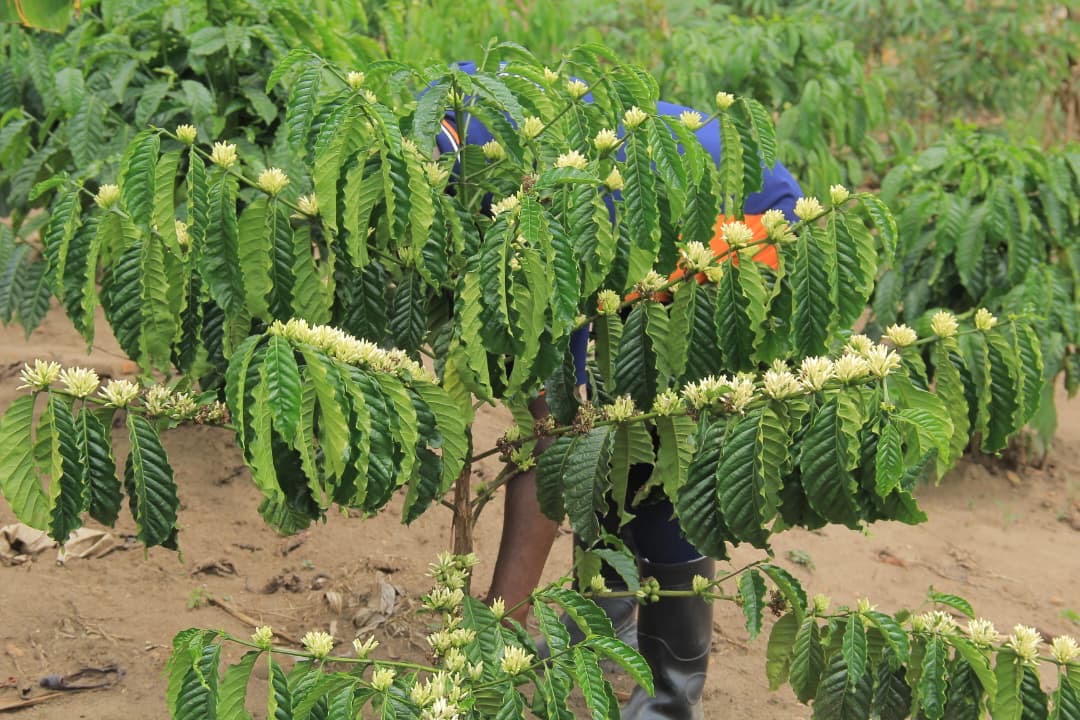
Coffee farming has become one of the biggest drivers of economic transformation in Gomba District, with residents describing the crop as a “money tree” that has lifted thousands of families out of poverty.
For decades, many households in the district depended mainly on cattle and goat rearing, alongside subsistence farming for food. Despite owning large pieces of land, few residents invested in commercial agriculture, leaving many families struggling economically.
Residents recall that about a decade ago, poor housing, low school enrolment and limited access to transport were common challenges across the district. Many families lived in grass-thatched or mud houses, while bicycles and walking were the main means of transport.
They say the turning point came after President Yoweri Museveni encouraged communities to embrace coffee farming through the distribution of seedlings and promotion of commercial agriculture.
The campaign gradually changed farming practices, with many households shifting from traditional activities to commercial coffee production.
Today, coffee plantations cover much of Gomba’s landscape. Nearly every household grows the crop, which has become the district’s leading source of income.
Residents say proceeds from coffee have enabled families to construct permanent homes, educate children, purchase vehicles and improve their general standard of living.
Coffee farmer Moses Kazibwe says coffee provides better returns compared to livestock farming.
“If you ask me whether to keep many cattle or grow coffee, I will choose coffee. To earn Shs100 million from cattle, you need about 50 cows raised over several years. But with just one and a half acres of coffee, you can earn the same amount while still keeping the plantation productive,” Kazibwe said.
Inspired by the benefits of coffee farming, Kazibwe established coffee nursery beds and distributed seven million seedlings to farmers who could not afford to buy them.
“We realised our neighbours without coffee would remain poor. I decided to give out seedlings so that more families could benefit, and today many of them are successful coffee farmers,” he said.
Residents believe Gomba is on course to become one of Uganda’s leading coffee-producing districts within the next three years.
However, they are calling on government to support value addition by establishing a coffee processing factory in the district.
They argue that although Gomba produces high-quality coffee grown organically using cattle manure, farmers still earn less because they sell raw coffee beans instead of processed products.
Residents say a local processing facility would allow farmers to roast, package and market coffee locally, increasing earnings and creating more employment opportunities.
With coffee continuing to transform livelihoods, many residents say the crop has truly earned its nickname — the “Money Tree.”
Across Gomba, some farmers who previously struggled to afford basic transport now own vehicles, including Mercedes-Benz cars, Toyota Land Cruiser TXs and Fuso trucks used for business, all purchased from proceeds of coffee farming.
Residents say the contrast is significant, noting that just ten years ago many households had no coffee plantations and could barely afford bicycles.
