
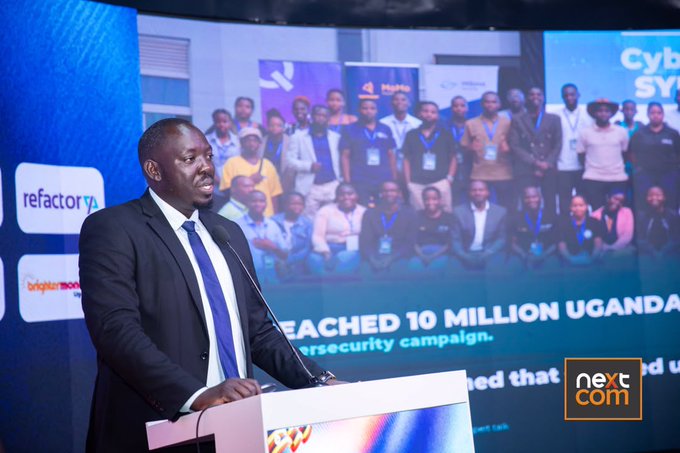
Cybersecurity should no longer be viewed as a concern reserved for large financial institutions and telecommunications companies, but as a responsibility for every organisation and individual participating in the digital economy, Milima Security has said.
Speaking at the State of the Digital Economy (SODE 2026), Milima Security representative Emmanuel Chagara said the growing use of digital platforms requires businesses across all sectors to strengthen their cyber protection measures.
His message added to a wider SODE 2026 conversation that while Uganda has made progress in expanding connectivity, the next stage of digital transformation depends on building trust, protecting users and ensuring that digital systems remain secure.
“Milima Security is an Ugandan cybersecurity company, ISO certified, with extensive experience in providing cybersecurity services across the East African region,” Chagara said.
Milima Security describes itself as a cybersecurity company focused on helping African businesses protect their digital assets as organisations increasingly adopt online systems and services.
Chagara said one of the biggest gaps in cybersecurity is the failure to recognise the role of people in preventing and responding to digital threats.
“The people element in cybersecurity is very essential,” he said.
He said many organisations have traditionally viewed cyber attacks as specialised threats targeting only high-value sectors such as banks and telecom companies, leaving smaller businesses and individuals less prepared.
“For a long time, the misconception that many of us have had about cyber attacks is that it is something that is isolated only for institutions such as banks and telecoms, yet it is not,” Chagara said.
He said attackers increasingly target vulnerabilities created by human behaviour, including weak security practices, lack of awareness and failure to recognise suspicious digital activity.
Chagara’s remarks complement discussions at SODE 2026 on the importance of digital trust as Uganda transitions from expanding access to increasing participation in the digital economy.
Earlier speakers highlighted that cybersecurity is critical to ensuring citizens trust online services, while innovators and businesses need secure systems to develop and scale digital solutions.
As more Ugandans use digital platforms for commerce, communication and service delivery, Milima Security said cybersecurity awareness must become part of everyday digital life.
The message from cybersecurity experts at SODE 2026 has been consistent: Uganda’s digital transformation will not only depend on faster networks, artificial intelligence and innovation, but also on the ability to protect the people, businesses and systems that power the digital economy.
