
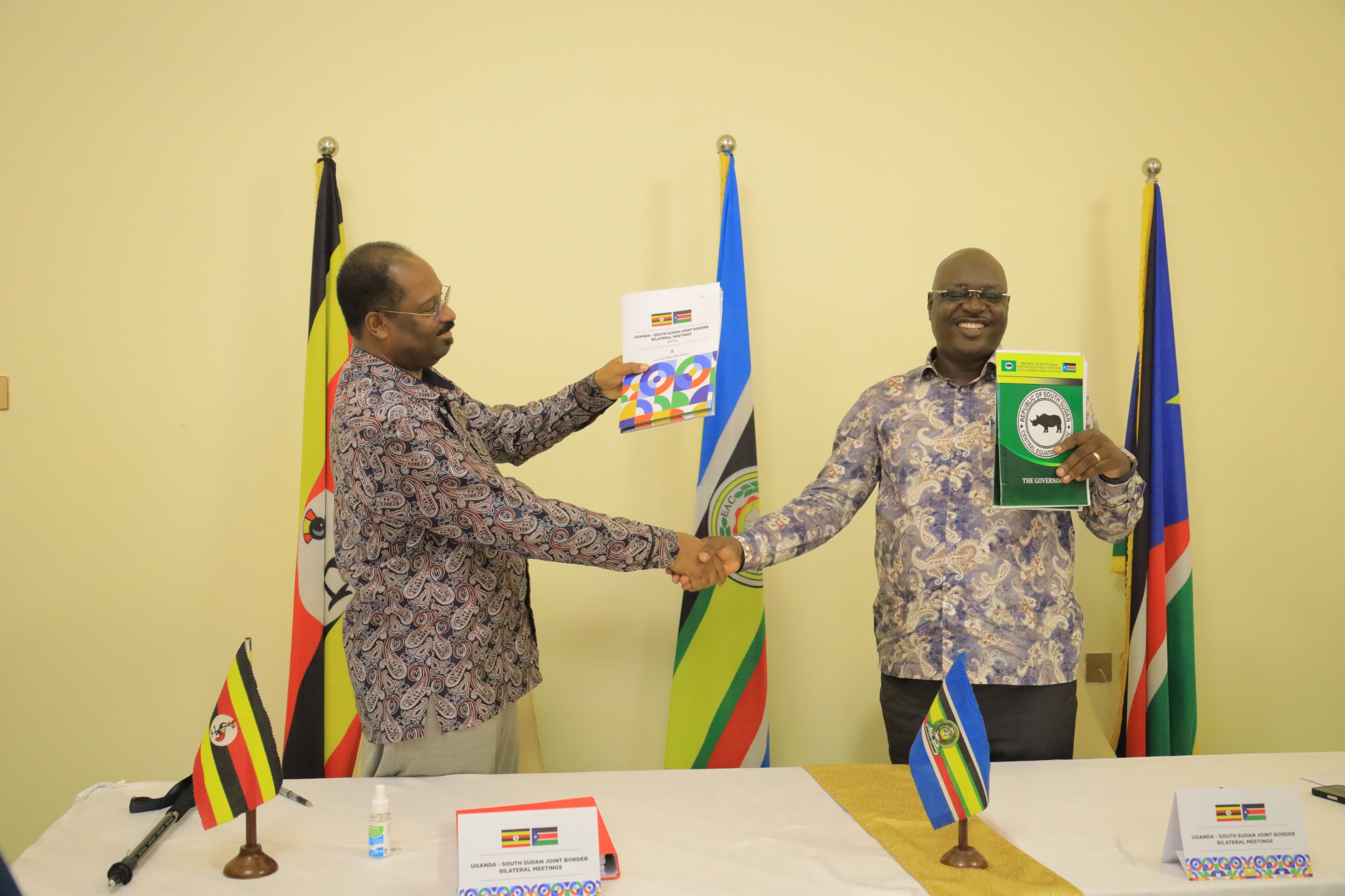
Uganda and South Sudan have agreed to strengthen joint security operations, improve border management and remove trade barriers as the two countries seek to deepen economic cooperation along their 470-kilometre shared boundary.
The commitment was made during the sixth Uganda–South Sudan Joint Border Meeting on Economic and Security Cooperation held in Arua from July 23 to 24, 2026.
The meeting brought together Ugandan and South Sudanese officials under the guidance of President Museveni and South Sudan President Salva Kiir Mayardit following discussions during President Museveni’s state visit to Juba in April 2025.
The talks come against the backdrop of South Sudan’s fragile security situation, where years of political conflict, armed violence and humanitarian crises have continued to affect stability despite peace efforts.
South Sudan gained independence from Sudan in 2011 but descended into civil war in 2013 following political disagreements between President Salva Kiir and his former deputy Riek Machar.
Although a revitalised peace agreement signed in 2018 brought relative calm, implementation challenges, communal conflicts, armed group activity and political tensions have continued to threaten stability.
For Uganda, instability in South Sudan has direct security and economic implications because of the country’s geographical proximity and the importance of the Juba–Nimule–Elegu corridor, a key route linking South Sudan to the port of Mombasa through Uganda.
Uganda has repeatedly played a role in supporting security along the route, including deployments and cooperation between security agencies to protect transport corridors, traders and humanitarian supplies moving between the two countries.
The route has historically been vulnerable to attacks, banditry and disruptions during periods of heightened insecurity in South Sudan, prompting Uganda to work with South Sudanese authorities to maintain safe movement of goods and people.
At the Arua meeting, the two governments emphasised the need for continued cooperation between defence and security institutions to address cross-border threats, including terrorism, violent extremism and other forms of organised crime.
“The delegations underscored the importance of African solidarity and regional stability,” the Ministry of Foreign Affairs said, adding that peaceful coexistence would be strengthened through joint border patrols, regular consultations and engagement with traditional and community leaders.
The discussions also focused on trade challenges affecting communities that depend on cross-border commerce.
Thousands of traders from Uganda and South Sudan rely on border markets for livelihoods, but they have frequently reported challenges including customs delays, multiple charges, inconsistent regulations, insecurity and restrictions affecting movement of goods and people.
The meeting resolved to progressively eliminate tariff and non-tariff barriers, harmonise customs and immigration procedures and reduce transit times along the Central and West Nile transport corridors.
The two countries also agreed to revive Border Management Committees and adopt an implementation framework involving government ministries, local authorities, security agencies and private sector actors.
However, the renewed push for closer integration comes amid concerns over immigration policies that some Ugandan traders and travellers view as unequal.
South Sudan recently updated its visa requirements, maintaining visa charges for Ugandans while exempting citizens of Tanzania and Egypt.
decision has attracted questions because Uganda and South Sudan share a border, have deep historical ties, host each other’s nationals and face common challenges, including refugee movements.
Uganda hosts one of the largest refugee populations in Africa, including hundreds of thousands of South Sudanese refugees who fled conflict in their country. At the same time, many South Sudanese depend on Ugandan markets, transport networks and services.
Analysts argue that reciprocal and coordinated visa arrangements between neighbouring countries are important for regional integration, especially within East Africa, where the free movement of people and goods remains a key objective.
The two governments also discussed migration and social services, including health and refugee-related issues, recognising that communities living along the border often share family, cultural and economic links that predate modern boundaries.
Another unresolved issue is the demarcation of the Uganda–South Sudan border. The two sides agreed to resume work by the Joint Technical Committee to reaffirm and re-mark the approximately 470-kilometre boundary, with a target of completing the exercise by 2027.
Uganda and South Sudan said stronger border cooperation would support peace, expand legitimate trade and strengthen relations between the two neighbours.
South Sudan will host the seventh session of the joint border bilateral meeting on a date to be communicated through diplomatic channels.
