
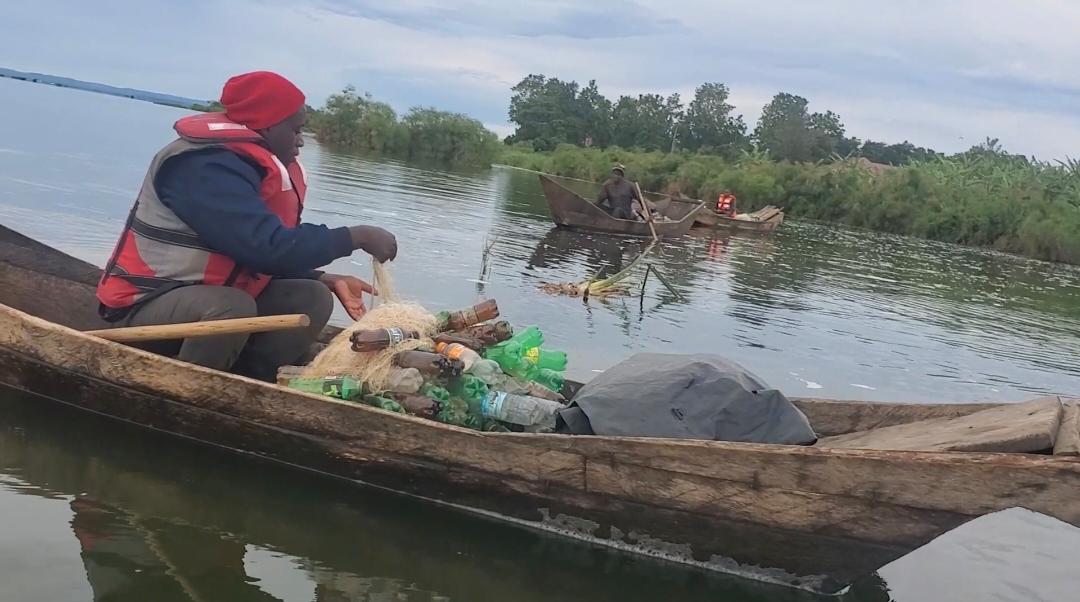
Fishermen operating at various landing sites on Lake Wamala have expressed concern over stricter regulations introduced under a government campaign to protect the lake and eliminate illegal fishing practices.
The fishermen say the new directives, particularly a restriction limiting each landing site to 33 boats, are too harsh and could leave many people without jobs. While they support efforts to conserve fish stocks, they argue that the regulations should also consider the livelihoods of communities that depend entirely on the lake.
The measures form part of a broader government strategy to restore fish populations and promote sustainable fishing on Lake Wamala, which has experienced declining fish stocks in recent years due to illegal fishing methods and environmental degradation.
“We understand the need to protect the lake, but limiting the number of boats to only 33 at a landing site will push many fishermen out of work,” said fisherman Muhamud Muwanga.
Fishermen have also been directed to use larger boats, a requirement many say is unrealistic given the nature of the lake and the financial challenges facing fishing communities.
Allen Nakirya, vice chairperson of Lubajja Landing Site, said larger boats are expensive and difficult to operate in the shallow sections of the lake.
“Most fishermen here cannot afford to buy the larger boats being recommended. The lake’s conditions also make them difficult to use,” Nakirya said.
Another fisherman, Harunah Ssekatonya, said the regulations were introduced without giving fishing communities enough time to prepare.
“We need more consultation and a transition period because many families depend entirely on fishing for survival,” he said.
The concerns come shortly after district leaders, including Resident District Commissioners, District Internal Security Officers, fisheries officials and marine security personnel, oversaw the election of three new committees to manage Lake Wamala.
However, some fishermen argue that the newly elected committees have not been granted sufficient authority to effectively combat illegal fishing activities.
Abasi Kasozi, chairperson of Lubajja Landing Site, said empowering local leaders would strengthen enforcement efforts.
“Those who work on the lake every day understand its challenges better. Giving local leaders more authority would help in protecting the lake,” Kasozi said.
Mityana District Fisheries Officer Elijah Ssenyonjo defended the regulations, saying illegal fishing has significantly contributed to the depletion of fish stocks in the lake.
“The lake has been under serious pressure because of illegal fishing methods. If we do not act now, future generations may not benefit from this important resource,” Ssenyonjo said.
He urged fishermen to comply with the regulations, noting that enforcement operations had already begun and would be implemented without favour.
“The law applies to everyone. Our intention is not to punish fishermen but to ensure that Lake Wamala remains productive for many years to come,” he added.
Lake Wamala stretches across Mityana, Kassanda and Gomba districts and supports thousands of residents whose livelihoods depend on fishing and related activities. The lake has 20 landing sites, 14 of which are located in Mityana District.
For many communities surrounding the lake, fishing remains the primary source of income, making the implementation of the new regulations both an environmental and economic issue.
While authorities insist the measures are necessary to prevent further depletion of fish stocks, fishermen are calling for additional dialogue and a more gradual implementation process that balances conservation efforts with the welfare of the communities that depend on the lake.
