
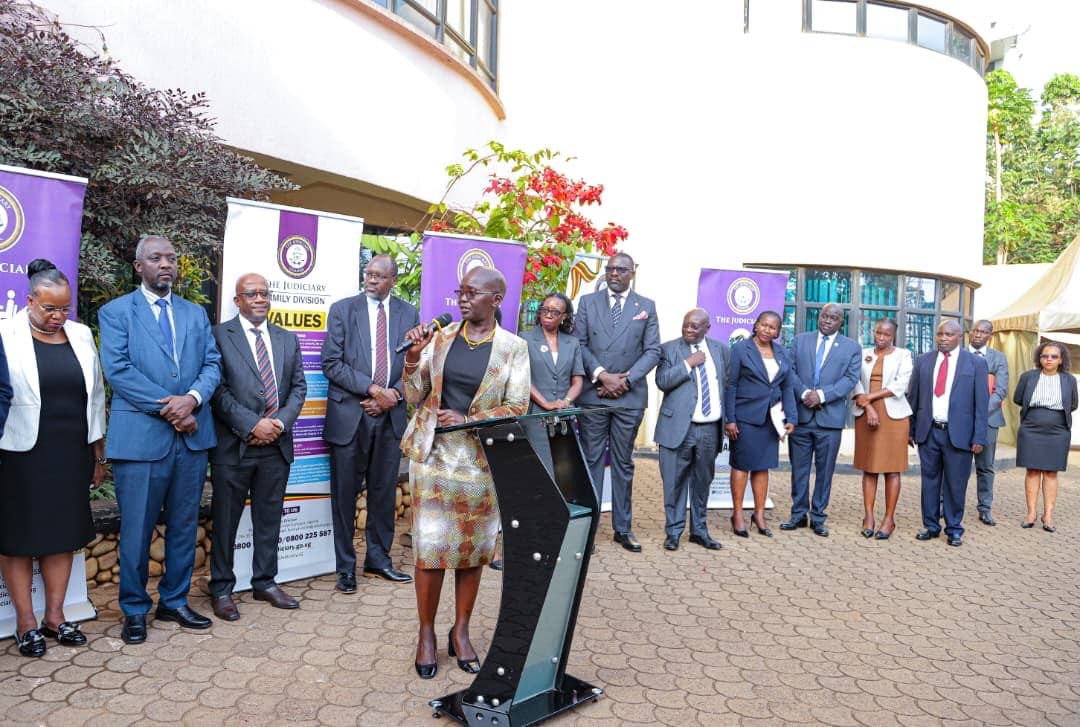
Principal Judge Lady Justice Jane Frances Abodo has called on judicial officers, advocates and the public to make mediation the first option for resolving family disputes, describing it as a faster, less costly and more humane approach than litigation.
Speaking while flagging off the Family Division Mediation Fortnight at the High Court Family Division, Abodo said mediation not only resolves legal disputes but also helps restore relationships and promote lasting peace within families.
"Family disputes are often emotionally charged and may persist across generations if handled only through litigation. While litigation determines legal rights, mediation restores relationships. It brings healing, closure and peace to families," Abodo said.
She was received at the event by the Head of the High Court Family Division, Justice John Eudes Keitirima, the Deputy Head of the Division, Lady Justice Immaculate Busingye, as well as judges, registrars and magistrates.
Abodo commended Justice Keitirima for championing Alternative Dispute Resolution (ADR) within the Family Division and encouraged judicial officers to explain the benefits of mediation to litigants at the earliest opportunity.
She also urged advocates to guide their clients towards mediation before pursuing lengthy and costly court proceedings.
Justice Andrew Khaukha, Executive Director of the Judicial Training Institute and the Judiciary's Focal Judge for Alternative Dispute Resolution, praised the Family Division for consistently ranking among the Judiciary's top-performing courts in the use of mediation despite operating with limited resources.
He acknowledged that delayed payments to mediators remain a challenge but said reforms are underway to strengthen alternative dispute resolution mechanisms within the Judiciary.
"Delayed payments to mediators remain a challenge, but reforms are underway to strengthen alternative dispute resolution," Khaukha said.
The Family Division Mediation Fortnight is part of the Judiciary's broader efforts to promote mediation as an effective means of resolving disputes, reducing case backlog and improving access to justice.
