
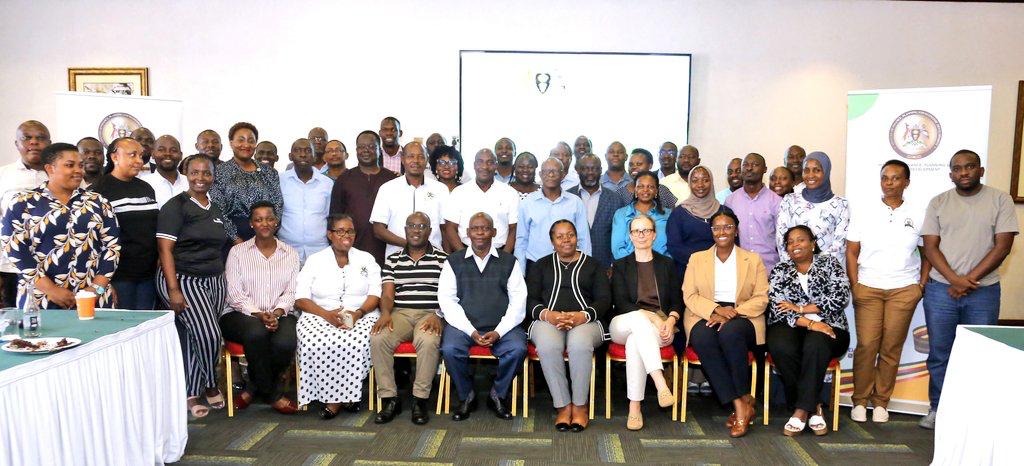
Government has commenced consultations on the second phase of the Uganda Intergovernmental Fiscal Transfers Program (UGIFT 2.0) following the successful completion of the first phase in December 2025.
A technical team from government, together with officials from the World Bank, held initial discussions aimed at shaping the successor program and identifying priority interventions to guide implementation.
Speaking at the closing of the initial consultations held at Serena Hotel, Kigo on Friday, the Acting Director Budget, Hannington Ashaba—whose remarks were delivered by the Acting Commissioner Budget Policy and Evaluation, John Muheirwoha—called on implementing ministries, departments and agencies (MDAs) to carefully prioritize the proposed interventions under UGIFT 2.0.
Ashaba emphasized the need for realistic and well-justified proposals, noting that the resource envelope for the second phase of the program has been scaled down.
“We must begin scoping realistic areas of intervention and move beyond broad wish lists,” he said.
Ashaba added that in the coming weeks, the government and development partners will agree on critical actions that will be translated into disbursement-linked indicators (DLIs) that are practical, measurable and implementable.
Ashaba also expressed appreciation to the World Bank for its continued partnership and technical support, which he said has played an important role in strengthening intergovernmental fiscal systems and improving service delivery outcomes across Local Governments.
The World Bank team, led by Barbara Magezi and Verena Fritz, thanked the government team for the frank, constructive and focused deliberations during the consultations.
According to the team, the outcomes of the discussions will be synthesized to inform the development of disbursement-linked indicators for the second phase of the program.
UGIFT 2.0 is expected to build on the gains made under the first phase of the program, which concluded in December 2025, as government and its partners continue efforts to strengthen intergovernmental fiscal transfers and enhance service delivery at the local government level.
