
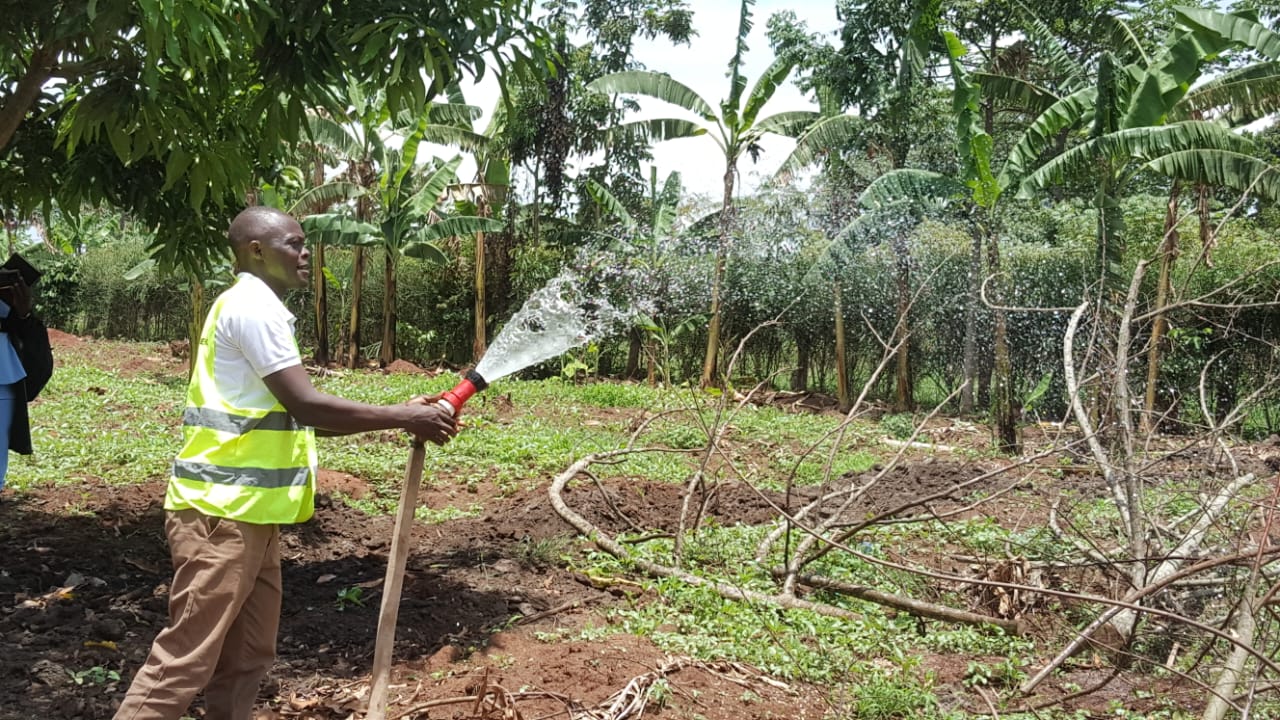
KAYUNGA — Small-scale irrigation is increasingly becoming a lifeline for farmers in Kayunga District as prolonged dry spells and erratic rainfall force households to abandon dependence on seasonal rains for crop production.
Across the district, farmers who have adopted irrigation say the technology is enabling them to grow crops throughout the year despite worsening weather conditions, while those yet to install the systems are calling for greater government support to make the technology affordable.
George William, a retired civil servant who ventured into commercial coffee farming in Kiryammuli Village, Kayunga Sub-county after taking early retirement, said farming has become increasingly unpredictable because rainfall can no longer be relied upon.
"Agriculture is becoming very difficult because the rains are no longer reliable. We receive minimal rainfall throughout the year, making it impossible to depend on natural rains alone. Without irrigation, many farmers are counting losses," William said.
He attributed the changing weather patterns to widespread deforestation and the indiscriminate cutting of trees, arguing that environmental degradation has contributed to rising temperatures and prolonged drought across the district.
"Trees have been cut down without replacement, and today we are paying the price. The hot weather is affecting crop production, yet only a few farmers can afford irrigation systems," he said.
William appealed to the government to revive funding under the Uganda Intergovernmental Fiscal Transfers (UgIFT) Small-Scale Irrigation Programme, saying more farmers need support to acquire irrigation equipment and improve access to reliable water sources.
"Government should resurrect funding for the UgIFT Small-Scale Irrigation Programme and support farmers with irrigation equipment and reliable water sources. Water is now the biggest challenge in fighting poverty through agriculture," he added.
For Joel Onyango of Misanga Village in Galiraya Sub-county, investing in irrigation has transformed his farming enterprise.
Onyango acquired a solar-powered irrigation system under the UgIFT Small-Scale Irrigation Programme after overcoming financial challenges to raise the required 25 percent contribution. Unable to raise the money immediately, he secured a bank loan to qualify for the equipment.
Two years later, he says the decision has paid off.
"At first, raising the 25 percent contribution was difficult, but I took a bank loan because I believed irrigation would change my life. Today, I can plant throughout the year, even during severe dry spells, and I still harvest good yields," Onyango said.
He said continuous production has improved food security for his household while increasing family income through the sale of surplus produce.
"The surplus from my harvests has improved my family's income. Irrigation has given me confidence because I no longer wait for the rains before planting," he said.
Farmers say expanding access to affordable irrigation technologies would strengthen food security, increase agricultural productivity and improve household incomes in a district where agriculture remains the primary source of livelihood.
They are also urging government and communities to intensify environmental conservation efforts through tree planting and the protection of wetlands and water catchment areas, arguing that restoring degraded ecosystems is essential to improving rainfall patterns and building long-term resilience against climate change.
