

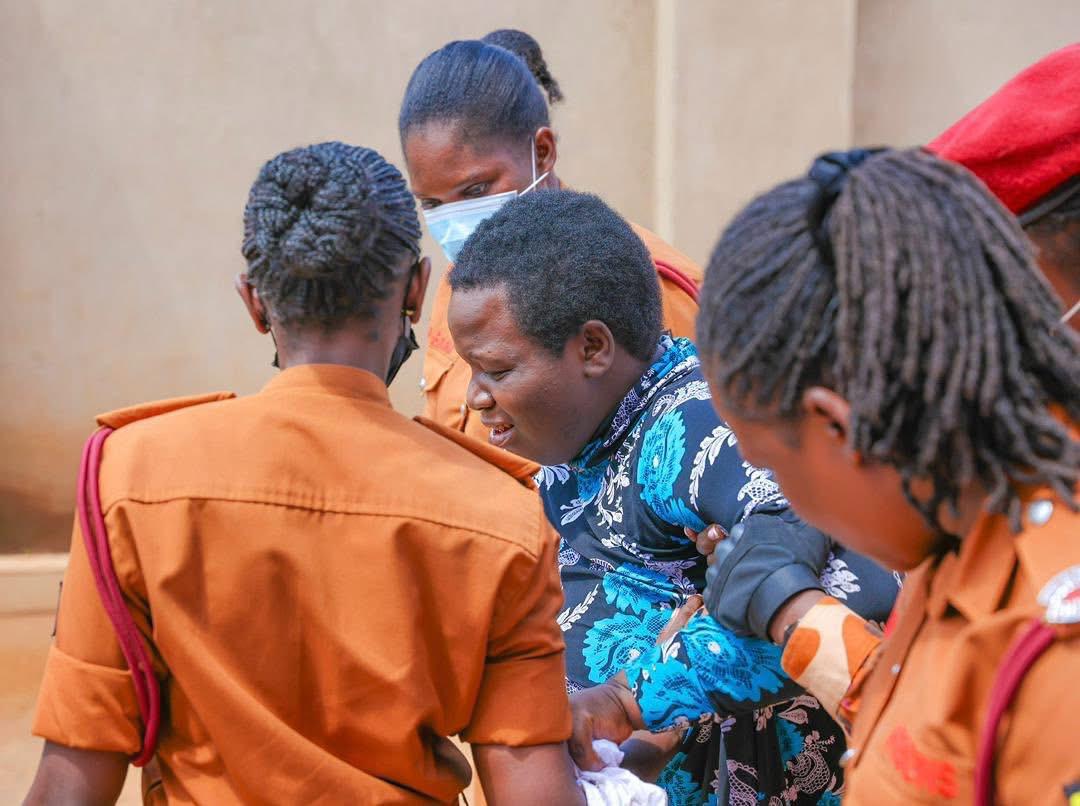
Sauda Madada was absent from Friay’s proceedings as the Kawempe Chief Magistrate’s Court delivered a key ruling on the bail applications of several prominent National Unity Platform (NUP) members.
Her absence followed a disturbing incident earlier in the week when she was evacuated from court in an ambulance after collapsing and reportedly vomiting blood. Lawyers said she had been using a urinary catheter at the time.
The court appearance involved other NUP figures including Alex Waiswa Mufumbiro, Edward Ssebuufu, Achileo Kivumbi and Calvin Tasi, who are jointly charged over allegations stemming from a February 12, 2025 meeting at the party’s headquarters in Makerere–Kavule. Prosecutors say the group conducted military-style drills without authorisation from the Minister of Internal Affairs, an offence under Section 45(1)(b) of the Penal Code Act.
Prosecutors also argue that the gathering amounted to an unlawful assembly and a conspiracy to commit a felony. If convicted, the accused face up to seven years in prison.
The arrests took place beginning in August 2025, when some of the suspects were detained at the Makerere–Kavule office, while others, including Madada, were later arrested at various locations, with some reports indicating she was picked up near the Uganda–Kenya border.
Madada’s deteriorating health has become central to the debate over bail. Her lawyers contend that continued detention without adequate medical care violates her constitutional rights and undermines her ability to mount a defence. They argue that her prolonged remand, now exceeding the 60-day threshold, should trigger eligibility for mandatory bail.
The prosecution maintains that the accused still pose a significant risk of interfering with witnesses, many of whom are said to be political associates within NUP.
State attorneys argue that this risk outweighs concerns about health and remand duration.
Opposition leaders, including Joel Ssenyonyi, criticised the court’s decisions, calling them politically driven and warning that repeated bail denials undermine confidence in judicial independence.
Human rights observers have also raised alarms, saying long pre-trial detentions of political figures ahead of the 2026 elections may amount to targeted repression rather than a legitimate law-and-order process.
For the detainees, the stakes remain high: continued remand could further compromise the health of suspects like Madada, while granting bail could heighten prosecution concerns over possible interference in a politically sensitive case.
The court is expected to continue reviewing bail and related applicatios as the case progresses.