
By Badreldeen Khalafallah
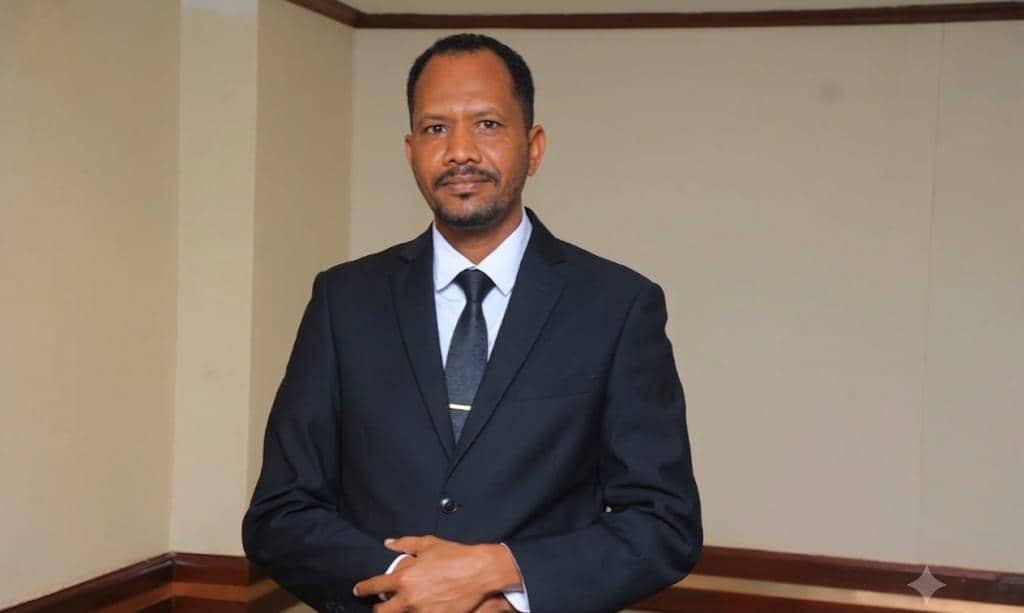
At a time when calls for reforming the United Nations are growing louder, the name of Ugandan diplomat Olara Otunnu stands out as one of the few candidates whose distinguished career speaks more of experience than ambition.
Uganda's nomination of Otunnu for the position of Secretary-General is not merely the endorsement of a seasoned diplomat seeking one of the world's highest offices. Rather, it brings back into the spotlight a man who has spent more than five decades navigating the corridors of international diplomacy, moving between the chambers of the Security Council, conflict zones, academic institutions, and global human rights advocacy, leaving behind a legacy that has shaped some of the United Nations' most significant institutional reforms.
Born on September 6, 1950, in northern Uganda, Otunnu received his early education in Gulu before enrolling at Makerere University. His outspoken opposition to Idi Amin's regime forced him into exile, a turning point that would define an extraordinary political and intellectual journey. He later earned a Bachelor of Laws from the University of Oxford as an international scholar, followed by a Master of Laws (LL.M.) from Harvard Law School under the prestigious Fulbright Program.
Otunnu was never merely an accomplished academic. As President of the Makerere University Students' Guild and Secretary-General of the Uganda Freedom Union in the early 1970s, he emerged as one of the most prominent student leaders opposing military rule before beginning his diplomatic career following Uganda's political transition.
Appointed as Uganda's Ambassador and Permanent Representative to the United Nations from 1980 to 1985, Otunnu quickly established himself as an influential figure within the organization. During that period, he served as President of the United Nations Security Council in December 1981, Vice President of the UN General Assembly, and chaired several key committees and international negotiating groups.
What truly distinguishes Otunnu, however, is that he did far more than occupy prestigious offices, he transformed institutions. While presiding over the Security Council, he introduced the informal secret ballot procedure for selecting the UN Secretary-General, a process that became known worldwide as the "Otunnu Formula." It remains the standard method used by the Security Council in every Secretary-General selection to this day. He is also credited with proposing the "Second Otunnu Formula," a diplomatic mechanism that helped break the deadlock between the United States and the Soviet Union during the 1983 Grenada crisis.
At home, Otunnu served as Uganda's Minister of Foreign Affairs from 1985 to 1986 and played a significant role in the peace negotiations that culminated in the Nairobi Peace Agreement. He later returned to the international stage as President of the International Peace Academy, now known as the International Peace Institute.
The defining chapter of his international career began in 1998, when then-UN Secretary-General Kofi Annan appointed him as the first Under-Secretary-General and Special Representative for Children and Armed Conflict. In that capacity, Otunnu fundamentally transformed the protection of children affected by war from a humanitarian concern into a core issue of international peace and security.
He was instrumental in securing the adoption of UN Security Council Resolution 1261, the first resolution to recognize children in armed conflict as a matter of international peace and security. He also designed the landmark Monitoring and Reporting Mechanism established under Resolution 1612, which continues to identify and publicly report grave violations against children in conflict zones.
His work further led to the creation of Child Protection Advisers within UN peacekeeping missions, the inclusion of crimes against children in the Rome Statute of the International Criminal Court, and the launch of the "Era of Application" campaign to strengthen enforcement of international child protection standards.
Otunnu's experience extends far beyond diplomatic conference rooms. He has undertaken missions in some of the world's most challenging conflict and post-conflict environments, including Afghanistan, Bosnia and Herzegovina, Rwanda, Sudan, South Sudan, the Democratic Republic of the Congo, Sierra Leone, Kosovo, and many others, acquiring unmatched practical expertise in mediation, peacebuilding, and post-conflict recovery.
Alongside his diplomatic service, Otunnu has built an impressive academic career, holding appointments at Albany Law School, the American University of Paris, and the French Institute of International Relations. He has also served on advisory boards for leading international organizations, including the International Committee of the Red Cross, the World Bank, the International Crisis Group, the Carnegie Endowment for International Peace, the Stockholm International Peace Research Institute (SIPRI), and the Aspen Institute.
After nearly three decades abroad, Otunnu returned to Uganda, where he was elected President of the Uganda People's Congress (UPC) in 2010 and later became the party's presidential candidate in the 2011 general election. In recent years, he has devoted much of his energy to reconciliation and peacebuilding efforts in northern Uganda.
Now seeking the office of United Nations Secretary-General, Otunnu advocates a vision centered on restoring the organization's moral authority, strengthening preventive diplomacy and mediation, reforming the UN to become more effective and accountable, and preparing it to confront emerging global challenges such as artificial intelligence, climate change, and migration.
His agenda also prioritizes ending conflicts in Ukraine, Gaza, Sudan, and the Democratic Republic of the Congo, while expanding development financing for poorer nations and ensuring a more equitable distribution of the benefits of technological progress.
Observers may differ in their assessment of his chances of securing the UN's highest office. Yet there is broad agreement on one point, Olara Otunnu is far more than another diplomatic candidate. He is among the rare international statesmen whose institutional legacy continues to shape the work of the United Nations decades after his reforms were introduced. For many, his candidacy represents not only Uganda's aspirations but also Africa's enduring call for stronger representation at the highest levels of global governance.
