
This year marks the 105th anniversary of the founding of the Communist Party of China (CPC). For China, it is a moment to honor a journey of development and renewal. For friends in Uganda and Africa, it is a timely occasion to understand today’s China, its development path and its vision for the world.
Understanding China requires looking not only at its industrial capacity, digital economy and rapid advances in science and technology, but also at the leadership behind them. The CPC is the leadership force behind China’s modernization. It has led the Chinese people to achieve national independence, pursue development and prosperity, and contribute more to humanity.
Why did the Chinese people choose the CPC?
The CPC was born in 1921, when China was suffering from internal turmoil and external aggression. After 1840, China gradually became a semi-colonial and semi-feudal society, marked by national weakness, social instability and deep hardship. Many advanced Chinese explored different ways to save the nation, including Western-style constitutional and parliamentary models, but none changed China’s fate.
The founding of the CPC was not an accident. It was a historic answer to China’s search for independence and rejuvenation. Under the leadership of the CPC, the Chinese people won the War of Resistance Against Japanese Aggression, in which China was the main Eastern battlefield of the World Anti-Fascist War and suffered over 35 million military and civilian casualties. Alongside other arduous efforts in the New Democratic Revolution, the CPC led the Chinese people to found the People’s Republic of China in 1949, realizing national independence.
How has the CPC led China toward modernization?
Since 1949, the CPC has led China toward modernization. In 1952, China’s per capita GDP was only 119 yuan, less than 50 U.S. dollars at the then official exchange rate. Average life expectancy was about 35 years around 1949 and reached 79 years in 2024. Today, China is the world’s second largest economy and an upper-middle-income country.
China’s development continues to show strong momentum. In 2025, its GDP exceeded 140 trillion yuan, more than 2,050 times the 1952 level. Facing unilateral tariffs, trade frictions and technology restrictions, China has continued to upgrade industries, expand innovation and defend its legitimate development rights.
Looking ahead, China aims to basically realize socialist modernization by 2035, and the 15th Five-Year Plan period will be crucial for moving toward that goal, with a focus on high-quality development, scientific and technological self-reliance, a modern industrial system, green development and common prosperity. To govern a country of more than 1.4 billion people and advance modernization on such a scale, there is no ready-made experience to copy. Today, with more than 100 million members and deep roots among the people, the CPC draws its strength from long-term planning, people-centered development, strong organization, policy continuity and effective implementation. China’s past achievements and future goals all show that the leadership of the CPC is the fundamental guarantee for China’s modernization.
Why is China Uganda’s companion on the path to modernization?
China and Uganda share memories of anti-colonial struggle, national independence and development. The CPC and Uganda’s National Resistance Movement both value national transformation and independent national paths. This deeper connection was visible when President Yoweri Museveni visited Shaoshan, the birthplace of Chairman Mao Zedong, in 2019, and called it a historic and revolutionary pilgrimage, showing that Uganda’s understanding of China is not only about roads, factories and trade, but also about shared ideas and paths.
President Museveni’s recent message on East African integration also speaks to this. In his 2026 address to the East African Community, he referred to China’s opening up since 1978, noting that China’s GDP rose from 149 billion U.S. dollars to more than 20 trillion U.S. dollars and that China attracted large-scale foreign investment. His point was clear: openness, investment, production and industrialization reinforce one another.
Uganda is implementing NDP IV, under the theme of sustainable industrialization for inclusive growth, employment and wealth creation. Guided by the CPC and the NRM respectively, China and Uganda both place development and people’s well-being at the center. This political trust and shared understanding support bilateral cooperation.
How does China-Uganda practical cooperation turn shared vision into reality?
China-Uganda cooperation is practical support for Uganda’s modernization. Chinese-supported projects, including the Kampala-Entebbe Expressway, Entebbe International Airport expansion and Karuma Hydropower Plant, etc., have improved Uganda’s transport, power supply and connectivity, helping turn Uganda’s landlocked location into a land-linked advantage.
Trade and industry are also advancing. Since December 2024, Uganda has benefited from China’s zero-tariff treatment for 100 percent of tariff lines. From May 1st 2026, China further expanded this policy to all 53 African countries having diplomatic relations with China. In 2025, Uganda’s exports to China reached about 138 million U.S. dollars, up 73.8 percent year on year, with coffee almost doubling. More Ugandan agricultural and value-added products can find wider opportunities in the Chinese market.
China’s medical teams have served Uganda for decades. During the recent Ebola outbreak, Chinese medical personnel worked with Ugandan colleagues to strengthen response and preparedness. The China-Africa Year of People-to-People Exchanges and the China-Uganda Year of People-to-People Exchanges have also brought friendship closer to the people through temple fairs, youth exchanges and the “Chinese Bridge” competition.
Why do China and Uganda call for fairer global governance?
China-Uganda cooperation also reflects developing countries’ shared aspiration for a fairer international order. Uganda’s hosting of the 19th Summit of the Non-Aligned Movement and the Third South Summit of the Group of 77 and China showed its role in promoting Global South solidarity. In 2024, Vice Premier Liu Guozhong visited Kampala as President Xi Jinping’s Special Representative for the two summits, showing China’s strong support for Uganda and for Global South cooperation.
For Uganda, Africa and the wider Global South, global governance concerns development rights, sovereign equality, fair rules and international voice. China recently released the white paper Building a More Just and Equitable Global Governance System: China’s Concepts, Initiatives and Actions. Foreign Minister Wang Yi said the Global Governance Initiative responds to the shared need to improve global governance and upholds sovereign equality, international rule of law, multilateralism, a people-centered approach and real action.
Together with the Global Development Initiative, the Global Security Initiative and the Global Civilization Initiative, the Global Governance Initiative forms a mutually reinforcing framework covering development, security, civilization and governance. China and Uganda both support a more just, inclusive and balanced international order, where developing countries’ voices are heard, rights respected and development space protected.
As the CPC marks its 105th anniversary, China will continue to work with Uganda to translate party-to-party trust into state-to-state cooperation, development ideas into practical results, and bilateral friendship into a stronger force for Global South solidarity and shared development.
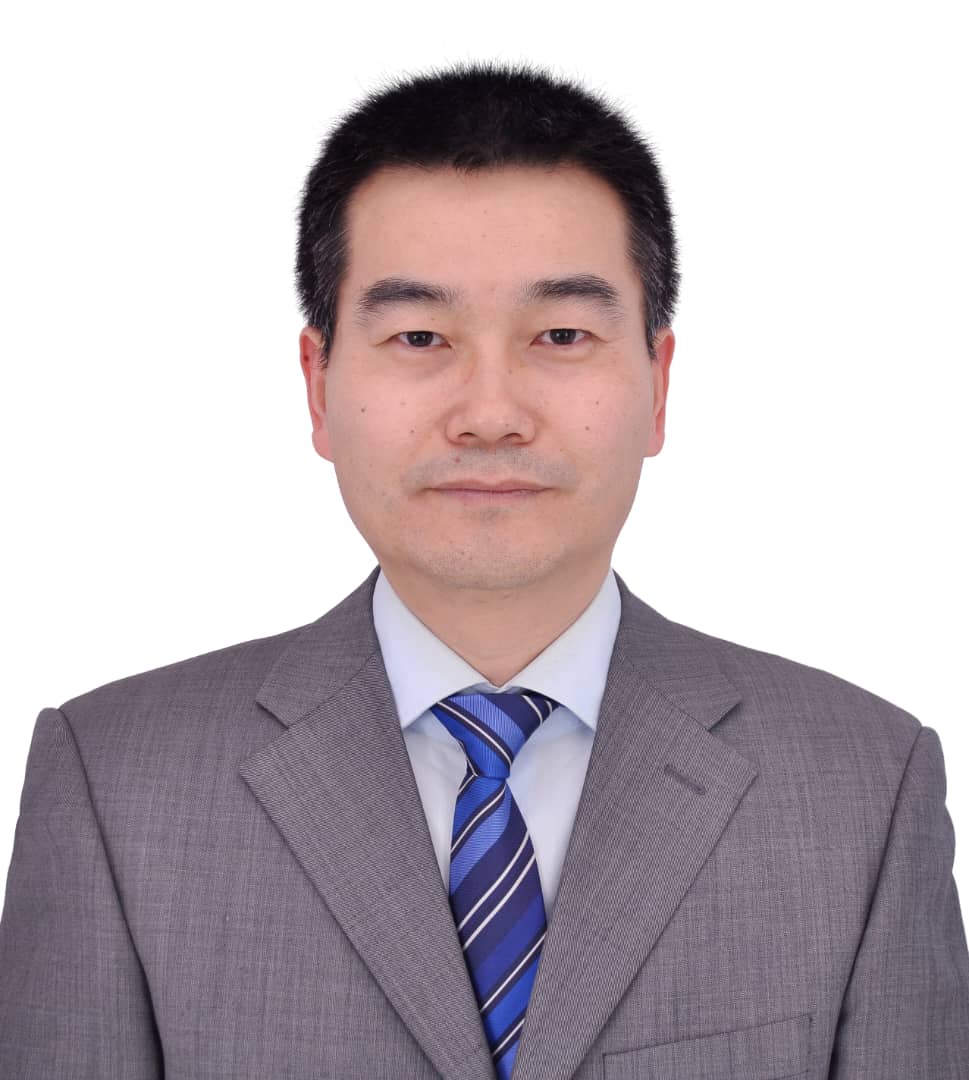
The writer is Mr. Fan Xuecheng, the Chargé d’Affaires ad interim of the Embassy of the People’s Republic of China to the Republic of Uganda.
