

By Faith Nassozi Kyateka
At this year’s United Nations General Assembly, world leaders reaffirmed a truth we can no longer ignore: there is no health without mental health.
The 2025 UN High-Level Meeting on Non-Communicable Diseases (NCDs) and Mental Health was a watershed moment—an urgent call for governments to translate global commitments into real progress by expanding access to mental health services in schools, clinics, hospitals, and communities.
As the world commemorates World Mental Health Day 2025, today offers a chance to shift from words to action—from promises to implementation. The question remains: When will we finally turn commitments into tangible change?
Across Africa, mental health remains one of the most underfunded areas of public health. On average, less than one percent of national health budgets is allocated to mental health, leaving services concentrated in urban centres while most citizens live in rural areas with little or no access to care.
In Uganda, mental disorders affect nearly a quarter of adults and almost as many children and adolescents—making mental illness one of the leading causes of disability.
Depression and anxiety are particularly prevalent: studies show a 17% rate of depression and 13% for anxiety among adolescents, especially those out of school.
Yet the country’s mental health workforce is critically stretched. Uganda has only 19 psychiatrists serving over 47 million people, most of whom are based in Kampala. For millions outside the capital, professional help remains out of reach.
Cultural stigma, poverty, and limited awareness further prevent people from seeking care. The message is clear: the need is urgent, the resources are few, and the time for action is now.
The 2025 UNGA High-Level Meeting was a pivotal moment. Governments—including Uganda—endorsed global recommendations to prioritise youth mental health, deinstitutionalise care, prevent suicide, and address the social and commercial determinants that undermine mental well-being.
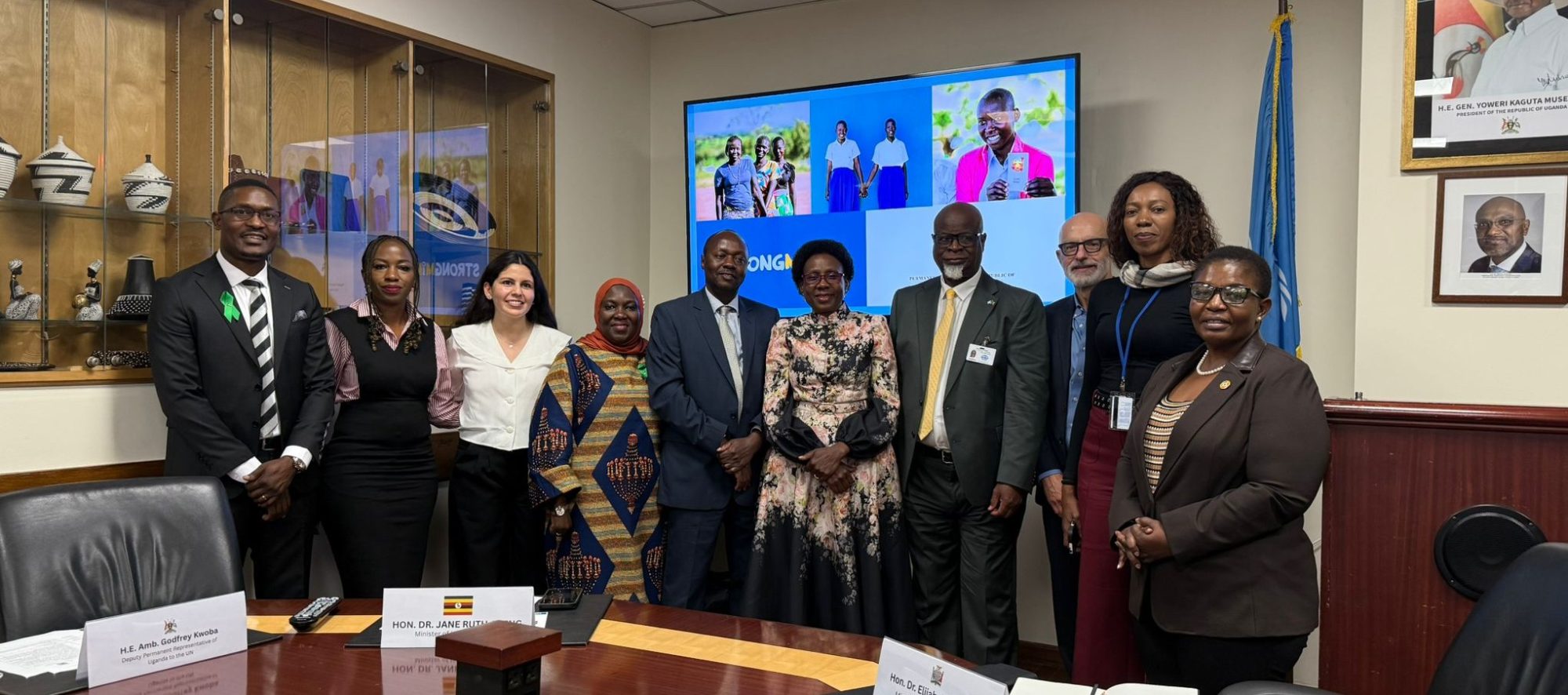
At a side event at Uganda House in New York, StrongMinds Uganda and the Ministry of Health demonstrated how partnerships can transform lives. StrongMinds’ six-week group talk therapy model—implemented in schools, refugee settlements, prisons, clinics, and communities—has reached over one million people across Africa since 2014, with the majority in Uganda and Zambia.
“All of our clients see reductions in their depression symptoms, and 74% are depression-free after therapy ends,” said Vincent Mujune, Country Director of StrongMinds Uganda.
Minister of Health Dr Jane Ruth Aceng reaffirmed Uganda’s commitment to scaling up mental health services under the Uganda Mental Health Act, which aligns national efforts with international standards.
Dr Hafsa Lukwata, assistant commissioner at the Ministry, highlighted ongoing training of health workers through the WHO mental health programme to strengthen diagnosis and treatment capacities nationwide.
Uganda’s focus on integrating mental health into community care—ensuring dignity, inclusion, and compassion—offers valuable lessons for the region.
Global Solidarity in Action
Change is also happening beyond policy halls. United for Global Mental Health has partnered with Lululemon for the “Move for Mental Health” campaign, mobilising people around the world to walk, run, dance, or practice yoga in solidarity with those facing mental health challenges.
In Uganda, everyone can take part—organising a community walk or run to raise awareness and show that mental health is a shared responsibility. Each step, each movement, is a statement: we care, we see you, and we stand together.
This global wave of movement is more than a campaign—it is a declaration of inclusion, visibility, and shared humanity. Advocacy must move beyond policy papers and conference rooms; it must live in our homes, schools, workplaces, and communities.
As we mark World Mental Health Day, Uganda stands at a crossroads. From the halls of the UN in New York to villages and towns across the country, one truth rings clear: mental health is not a privilege—it is a right.
The partnership between StrongMinds and the Ministry of Health shows that community-based mental health care is not just possible—it’s transformative.
The momentum is here. Now is the time to invest, to act, and to move together—for mental health.
Ms Faith Nassozi Kyateka is a communications consultant with United for Global Mental Health
