
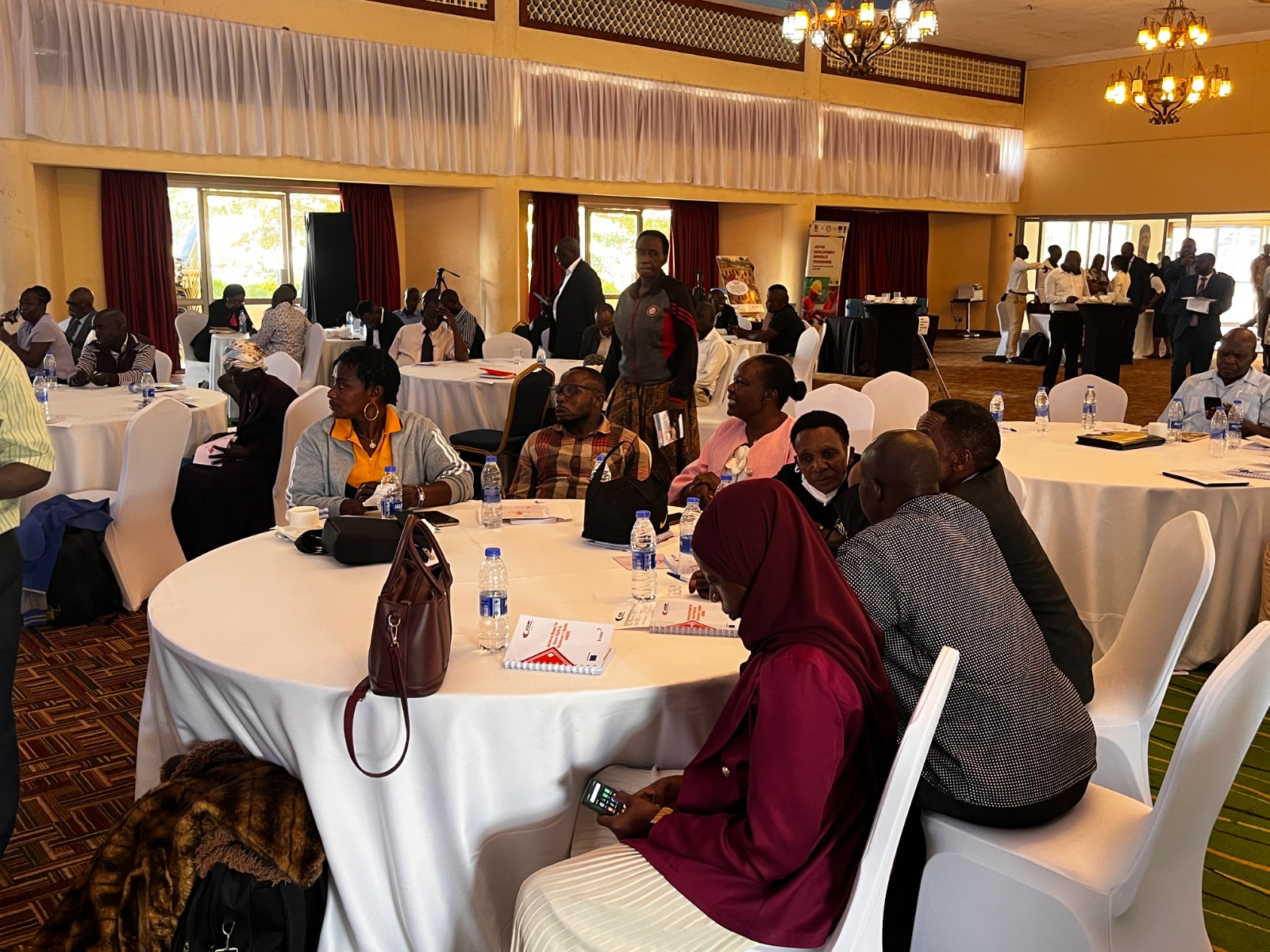
The two-day high-level conference, taking place at Golf Course Hotel, is being held under the theme: "Applying Business and Human Rights Practices to Improve Community Benefits from Mining Projects."
The conference has brought together about 120 participants, including artisanal and small-scale miners, community representatives, government officials, development partners, civil society organisations and private sector stakeholders from across the Great Lakes Region.
Discussions are focusing on how business and human rights principles can be integrated into mining projects to ensure communities living in mineral-rich areas benefit more equitably from the sector.
Opening the conference, ACEMP Executive Director Don Bwesigye Biyina said the Mkutano provides an important platform for stakeholders in the mining and energy sectors to exchange knowledge, discuss emerging market trends and review progress in research, policy and sector governance.
“We are having the sixth Mkutano, which brings together players in the mining sector and energy, to see how communities can work with them,” Biyina said.
He commended government efforts to strengthen the mining sector through the issuance of licences and implementation of the legal framework under the Mining Act, Cap. 159, which promotes responsible, transparent and traceable mining practices.
Biyina also highlighted the importance of geoscience research, including ongoing geological exploration in Karamoja, and called for greater support from development partners to unlock the sector's full potential.
The Great Lakes Region is endowed with several critical minerals that are increasingly essential to the global energy transition, including copper, cobalt, tin, tungsten, tantalum, gold, rare earth elements, nickel and graphite.
Uganda also possesses significant deposits of strategic minerals, including rare earth elements and graphite in Kitgum District, positioning the country as an emerging player in the global supply chain for clean energy technologies.
A major focus of this year's conference is the empowerment and formalisation of artisanal and small-scale miners (ASM), who remain key contributors to Uganda's mining industry.
Lucy Peace Nantume, a Business and Human Rights Expert at ENABEL, said the organisation is working with communities in Busoga, the Albertine region and the Greater Kampala Metropolitan Area to strengthen understanding of land rights, agreements and community negotiations.
“We teach Business and Human Rights to communities so that people are empowered,” Nantume said.
UGAASM President Bukya John Bosco said the association has made significant progress in advocating for the recognition of artisanal and small-scale miners.
He noted that the sector is now formally recognised within Uganda's mining policy and legal framework but identified lengthy licensing procedures, limited access to financing and bureaucratic bottlenecks as some of the major challenges still facing miners.
Bosco added that the association now supplies gold directly to the Bank of Uganda, which has become one of its major customers.
Kitgum Resident District Commissioner Ssegawa Jimmy Ebil said the mining sector has enormous potential to contribute to Uganda's socio-economic transformation.
He highlighted Kitgum's graphite deposits and said government efforts to issue licences and provide security for mining operations are intended to ensure that mineral resources generate broad-based economic benefits.
The first day of the conference is focusing on successful community engagement strategies and updates on major mining projects, including the Orom Graphite Project by Blencowe Resources and the Makuutu Rare Earths Project by Rwenzori Rare Metals.
Participants are also discussing human rights, community participation, inclusivity and the practical implementation of Community Development Agreements (CDAs) to strengthen relationships between mining companies and host communities.
The second day will focus on repositioning artisanal and small-scale mining through cooperatives, emerging legal and policy reforms, and recognising outstanding ASM cooperatives that have demonstrated best practices.
The Mkutano builds on five previous editions and has evolved from the Annual Artisanal and Small-scale Mining and Quarrying Conference, first held in 2019.
Organisers say the conference seeks to promote human rights, environmental, social and governance (ESG) standards, strengthen transparency and accountability, facilitate knowledge exchange and amplify the voices of artisanal miners, particularly women.
They hope the discussions will contribute to more sustainable mining governance, reduce environmental and social risks, and ensure that communities in mineral-rich areas derive lasting and meaningful benefits from Uganda's natural resources and those across the Great Lakes Region.
