
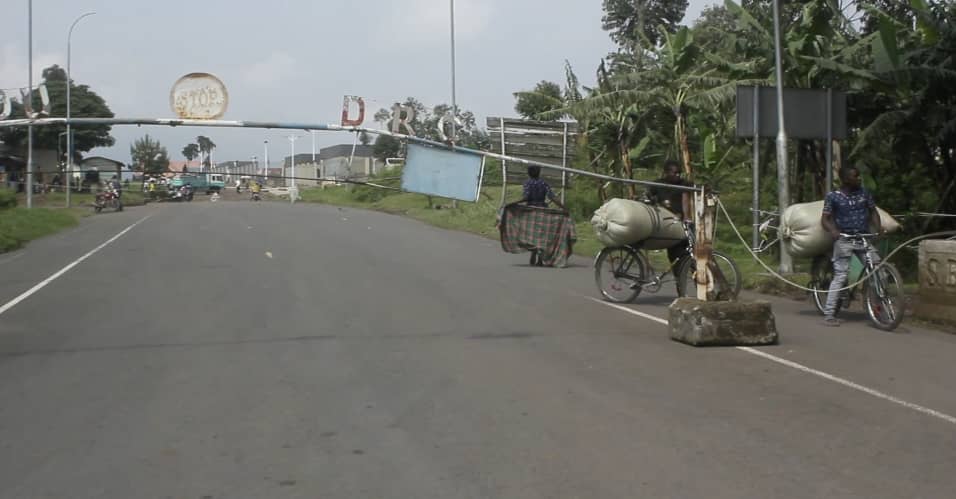
Cross-border trade at Bunagana Town Council in Kisoro District has come to a standstill due to the four-year conflict in eastern Democratic Republic of Congo, resulting in a loss of more than Shs150 million in local government revenue.
The crisis began in 2022 when the M23 rebel group captured Bunagana on the Congolese side, disrupting the movement of people and goods that had supported the local economy for years.
Bunagana Border is an official crossing point linking southwestern Uganda’s Kisoro District to Rutshuru Territory in North Kivu Province of the Democratic Republic of Congo.
The border has traditionally served as a major trade and transport route, but the Congolese side has remained largely under M23 control since 2022.
Trade has also been affected by an Ebola outbreak in eastern DRC, which has resulted in additional restrictions on cross-border movement.
Speaking to Nile Post, traders and residents in Bunagana Town Council and neighbouring Congolese communities described worsening economic conditions caused by the prolonged insecurity.
Businessman David Nkunzi said the conflict has severely affected businesses and slowed development in the border town, with the situation becoming worse after temporary movement restrictions linked to Ebola.
"Although the border has not been fully closed, many Congolese are now using unofficial crossing points, while formal trade remains restricted," Nkunzi said.
He said only traders using three-wheeled vehicles, commonly known as tukutukus, are currently able to move some goods across the border.
Many shops have closed, while some remaining traders struggle to make even Shs100,000 a day to cover expenses such as rent.
"I call on government to reopen designated trade routes to allow Ugandan and Congolese traders to operate safely," Nkunzi said.
Residents Didas Bizimana and Innocent Zabayo said the crisis has left many people jobless. They said they previously earned income by transporting goods and helping traders, but security restrictions have eliminated those opportunities.
On the Congolese side, traders said the conflict has destroyed their livelihoods. They explained that they previously sold agricultural products such as maize, sorghum, yams, beans and millet in Uganda to support their families, but insecurity has disrupted the trade.
Bunagana Town Council Mayor Ismail Ndayambaje said the area has suffered major economic setbacks since 2022, with the council losing more than Shs150 million in local revenue as businesses declined and traders abandoned the border town.
"The council now relies heavily on central government transfers to fund infrastructure and basic services," Ndayambaje said.
Kisoro District Assistant Resident District Commissioner Valence Hagumimana urged residents to remain hopeful, saying the border would eventually reopen once security conditions improve.
He encouraged communities to take advantage of government livelihood programmes such as Emyooga and the Parish Development Model to improve household incomes while waiting for cross-border trade to resume.
