
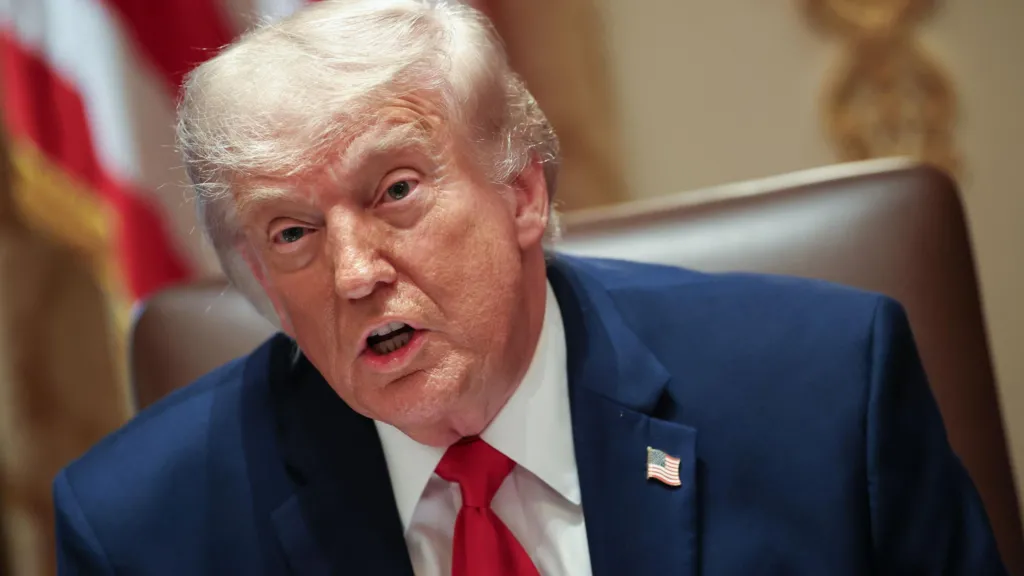
US President Donald Trump has threatened additional strikes on Iran and said he could reinstate a naval blockade after declaring that a ceasefire between the two countries was effectively over.
Speaking at the NATO summit on Wednesday, Trump said the United States was considering renewed pressure on Iran following attacks on commercial vessels near the Strait of Hormuz, a key global oil shipping route.
“We may put back the blockade,” Trump said. “And there’ll only be a blockade for Iran, anyone else can have whatever, of course.”
The move would represent a further escalation after Washington reimposed sanctions targeting Iranian oil sales and carried out a series of strikes on Tuesday.
Trump said he had become increasingly pessimistic about reaching a lasting peace agreement with Iran and suggested the United States could decide to conduct another round of attacks.
The US previously imposed a blockade after Iran effectively disrupted traffic through the Strait of Hormuz, a narrow waterway through which a significant share of global oil shipments pass.
Despite the threat of possible Iranian retaliation, Trump dismissed concerns that Tehran could seriously disrupt US operations.
“They’ll drop some mines if they can, if they can do it,” Trump said. “But it’s hard because we’re taking out those little boats now.”
Meanwhile, commercial shipping through the Strait of Hormuz has nearly come to a standstill as uncertainty grows over the future of a 60-day ceasefire between the United States and Iran.
Jorge Leon, head of geopolitical analysis at energy research firm Rystad Energy, said vessel movement had effectively stopped, reflecting heightened concerns among shipping operators.
“Traffic so far today appears to be completely halted,” Leon said in a Wednesday note, adding that the situation showed more about market fears than official statements from either Washington or Tehran.
Data from maritime intelligence firm Kpler showed that only four tankers had passed through the strait on Wednesday, highlighting the growing disruption in one of the world’s most important energy corridors.
