
By Gloria Pierina
KAMPALA: Government is shifting its energy strategy from expanding electricity generation to ensuring power drives industrialisation, creates jobs and increases household incomes, the State Minister for Energy and Mineral Development, Opolot Okasai, has said.
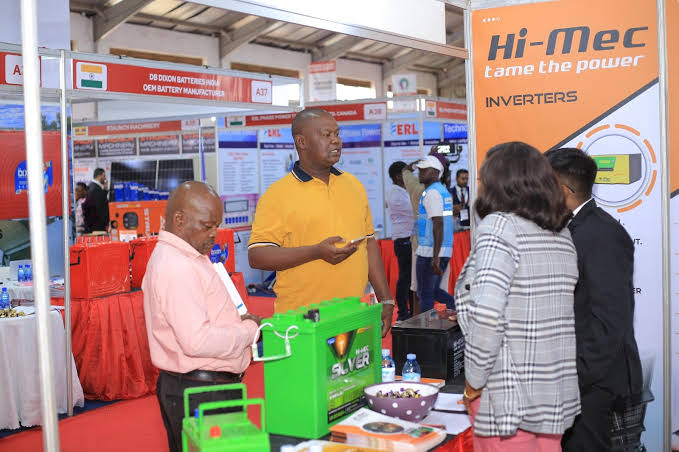
Speaking ahead of the 4th Edition of the Power & Electricity Uganda Exhibition, Okasai said Uganda's next phase of development depends on converting energy investments into productive economic activity.
"We must ask ourselves three questions: Where is the money? Where are the industries? And where is the energy?" Okasai said.
"These questions should guide every investment we make because electricity should translate into factories, innovation, increased production and jobs."
The three-day exhibition, which opens July 9 at the UMA Show Grounds in Lugogo, Kampala, is expected to bring together power utilities, energy regulators, investors, manufacturers, renewable energy companies, technology providers, importers, exporters and policymakers from Uganda and across East Africa to showcase emerging technologies and investment opportunities in the electricity sector.
According to the organisers, exhibitors from more than eight countries are expected to participate in what has become one of Uganda's largest international exhibitions dedicated to power, electricity, renewable energy, electronics, lighting and energy technologies.
Uganda has significantly expanded its electricity infrastructure over the last two decades through investments in hydropower, solar generation, transmission lines and rural electrification.
The country's installed electricity generation capacity now exceeds 2,100 megawatts, more than double the national peak demand of about 1,000 megawatts, giving Uganda surplus generation capacity that government hopes will attract new industries and large-scale investors.
Electricity is generated from a mix of hydropower, thermal plants, solar facilities and biomass cogeneration plants.
Major hydropower stations include Karuma (600MW), Isimba (183MW), Bujagali (250MW), Nalubaale, Kiira and Achwa II, while several solar plants and bagasse-fired cogeneration plants contribute additional capacity to the national grid.
Despite the increase in electricity supply, government says one of the biggest challenges is stimulating demand by encouraging industries, manufacturers and commercial enterprises to consume more power.
Okasai said the ministry's priority is no longer simply producing more electricity but ensuring affordable and reliable power supports value addition, manufacturing and enterprise development.
"The next phase is not about generation alone. It is about making sure energy creates wealth by supporting industries and productive enterprises," he said.
He added that government intends to stay ahead of future demand by investing in electricity infrastructure before new industries are established.
"We should not wait for demand to ask for electricity. We should be ahead of everyone across the world," he said.
The minister also said Uganda is positioning itself to adopt emerging technologies including artificial intelligence, smart grids, battery energy storage systems and digital metering to improve efficiency, modernise electricity distribution and create new employment opportunities in the energy sector.
Government views affordable and reliable electricity as a key pillar of the country's industrialisation agenda under Vision 2040, which seeks to transform Uganda into an upper middle-income economy through manufacturing, value addition and increased private sector investment.
As of recent government data, Uganda's electricity access rate has continued to improve through both grid expansion and off-grid renewable energy solutions, although extending reliable and affordable power to households and businesses remains one of the sector's biggest priorities.
