
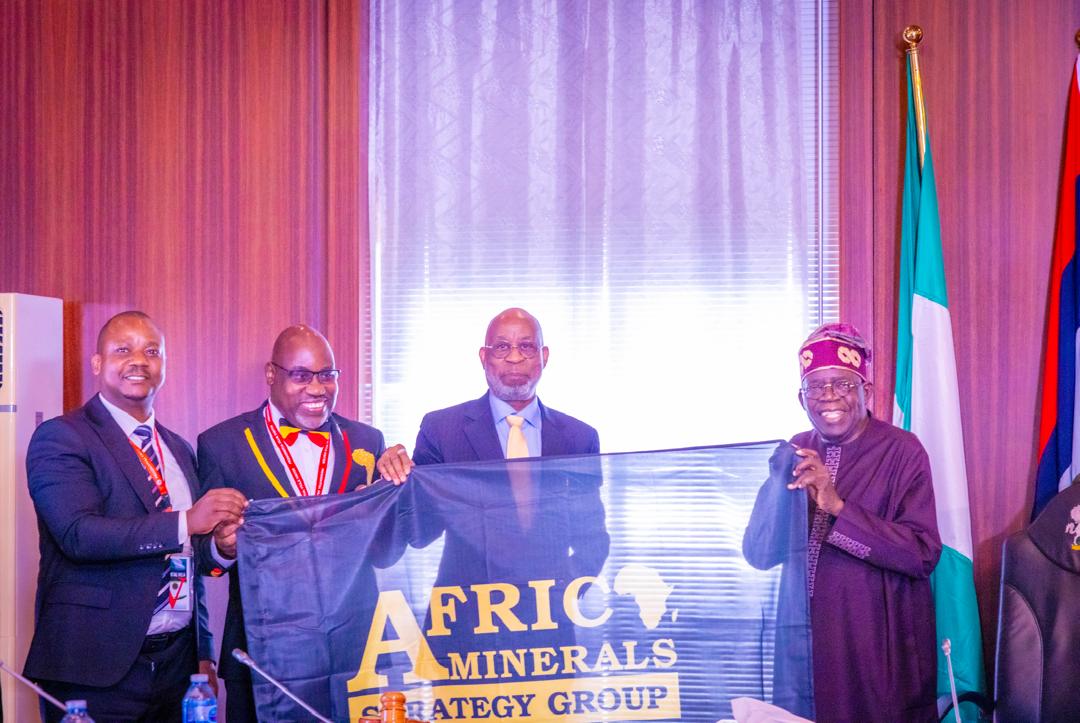
President Bola Ahmed Tinubu has renewed calls for African countries to stop exporting raw minerals and instead build industries that process the continent's vast natural resources, a position that closely aligns with President Museveni's long-standing campaign for value addition as the foundation of Africa's economic transformation.
Speaking at the Presidential Villa in Abuja while receiving a delegation from the African Minerals Strategy Group (AMSG), Tinubu urged African governments to present a united front in protecting the continent's mineral wealth and ensuring it generates jobs, technology and prosperity for Africans.
The Nigerian President, who serves as the Grand Patron of the group, said Africa must end the cycle of exporting raw materials while importing expensive finished products, arguing that the practice has denied the continent the full benefits of its natural resources.
"What we should do is avoid bureaucracy and deceit; we must put an end to exploitation. The rest of the world won't mind if your country is a cesspit of dams and rubbish and excavates your raw materials without giving value," Tinubu said.
He added that African countries should collaborate in research, mineral refining and industrial development to ensure the continent captures greater value from its critical minerals.
"It is our responsibility to collaborate and cooperate to ensure that these metals and minerals bring value to us, bring technology to us. We can do it," he said.
Tinubu's remarks reinforce a policy direction that Museveni has consistently advanced at regional and continental forums, arguing that Africa cannot achieve meaningful industrialisation while continuing to export its raw resources.
For decades, Museveni has maintained that exporting unprocessed minerals, agricultural products and other commodities amounts to exporting jobs, technology and wealth to foreign economies.
According to the Ugandan leader, retaining value chains within Africa would stimulate manufacturing, create millions of jobs and strengthen the continent's bargaining power in global trade.
Museveni has frequently cited the price differences between raw commodities and finished products, arguing that African countries lose billions of dollars in potential earnings by selling resources before processing them.
His administration has consistently maintained that processing minerals, coffee, timber and agricultural products locally would significantly expand industrial capacity while increasing incomes for producers.
The Ugandan President has also linked the continent's unemployment crisis, particularly among young people, to Africa's dependence on raw material exports. He argues that local beneficiation creates employment opportunities across mining, processing, manufacturing, logistics and technology, reducing the economic pressures that contribute to irregular migration and social instability.
His industrialisation strategy extends beyond Uganda's borders. Museveni has consistently advocated for regional coordination through the East African Community and the African Continental Free Trade Area, arguing that larger integrated markets are essential for sustaining African industries and attracting long-term manufacturing investment.
Uganda has backed this policy direction with several interventions, including restrictions on the export of unprocessed minerals, incentives for investors establishing local processing industries and tax exemptions on industrial manufacturing equipment.
Government policy has also sought to protect emerging domestic manufacturers through tariffs on selected imported finished products.
Tinubu similarly argued that Africa possesses sufficient mineral wealth to drive industrialisation if countries prioritise local value addition instead of exporting raw resources.
He said the era of exporting minerals without beneficiation should give way to investment in local industries, technology transfer and integrated value chains capable of retaining wealth within the continent.
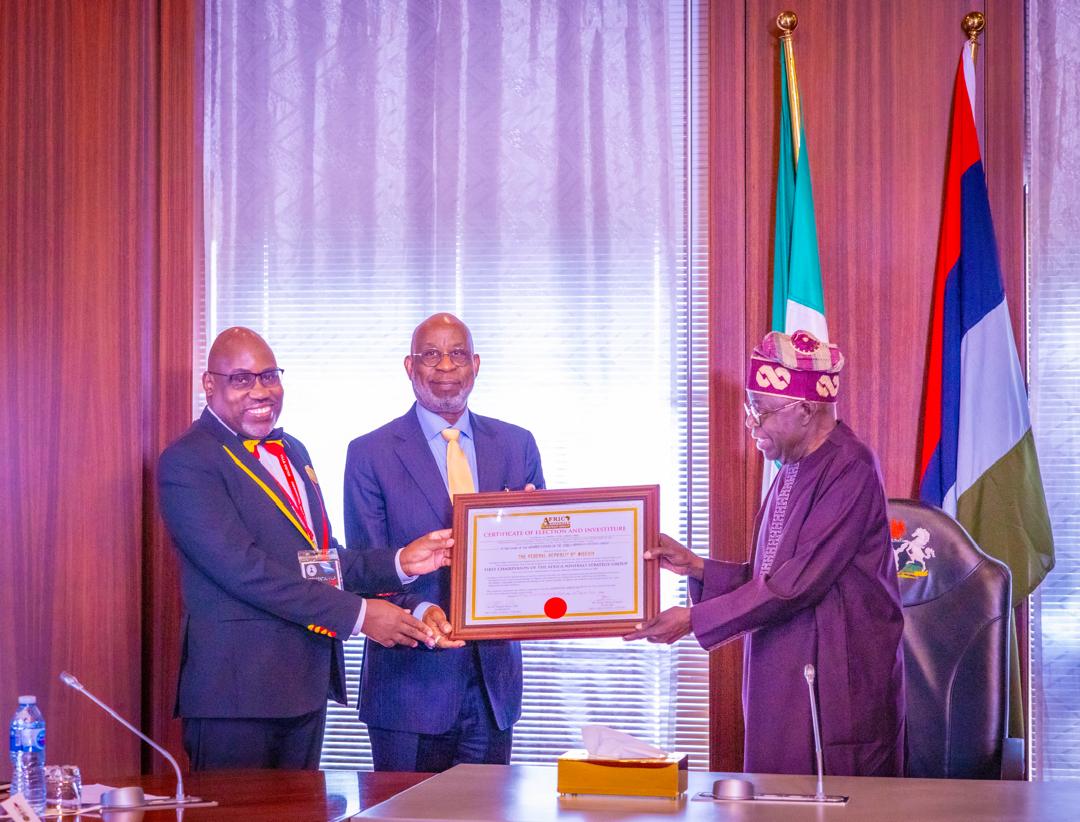
Chairman of the African Minerals Strategy Group and Nigeria's Minister of Solid Minerals Development, Dele Alake, credited Tinubu's leadership with strengthening Nigeria's mineral sector through policies focused on value addition and economic diversification.
Alake said the President had challenged African ministers to place local beneficiation at the centre of the organisation's agenda, adding that the message has gained traction across the continent.
"You charged us that we should set our sails very high and ensure that local value addition is a pivot around which all the objectives of this organisation should revolve. Today, local value addition is reverberating all over Africa," Alake said.
He revealed that several African countries have already moved to prohibit the export of raw minerals in favour of domestic processing.
The AMSG delegation is in Abuja for the fifth edition of the African Natural Resources and Energy Investment Summit (AFNIS 2026), being held under the theme, "One Africa. One Resource Vision."
The summit seeks to position Africa as a major player in the global critical minerals value chain through beneficiation, industrialisation and strategic cooperation among member states.
The growing convergence between Tinubu's message and Museveni's long-standing advocacy reflects an emerging continental consensus that Africa's development will depend not simply on extracting natural resources, but on building industries that transform them into higher-value products.
As global demand for critical minerals continues to rise amid the energy transition, African governments are increasingly adopting policies aimed at ensuring more of the economic value generated by the continent's abundant natural resources is retained within Africa.
With more countries tightening regulations on raw mineral exports and promoting domestic processing, value addition is steadily becoming a defining pillar of the continent's industrialisation agenda.
