
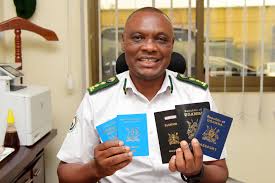
KAMPALA — Uganda's immigration laws do not prescribe a fixed period within which former public officials must surrender diplomatic or official passports after leaving office, but the government retains the authority to recall the documents at any time, legal expert Tonny Galandi has said.
The clarification comes amid ongoing public debate over whether former ministers, Members of Parliament and other government officials can legally retain state-issued passports after their terms in office have ended.
According to Galandi, the law does not specify a set number of days within which the passports must be returned. However, once the holder ceases to occupy the office that entitled them to the document, authorities can require its immediate surrender.
“There is no time frame that has been defined that you're supposed to surrender within a number of days,” Galandi explained.
“But the moment you've been asked to surrender and you don't surrender, the law provides for how they can proceed.”
He cited Sections 48 and 57 of the Citizenship and Immigration Control Act, which grant immigration authorities and the Minister responsible for Internal Affairs powers to recover passports from individuals who are no longer entitled to possess them.
Galandi rejected suggestions that the absence of a specific surrender deadline creates a legal loophole that former office holders can exploit.
“There is no loophole in my view because the ground rule is that the moment you are no longer in office, you're supposed to surrender and get an ordinary passport,” he said.
The legal expert emphasized that diplomatic and official passports are government instruments issued solely by virtue of public office and are not the personal property of the individuals to whom they are issued.
He explained that such passports confer privileges linked to official status and are intended to facilitate the performance of government duties rather than personal travel.
“The very law empowers the Minister of Internal Affairs to ask you to surrender. When you fail to surrender, the law is able to prosecute,” Galandi said.
He warned that former office holders who ignore directives to return the documents could face criminal proceedings and accusations of misrepresentation.
According to Galandi, the objective of the law is to preserve the integrity of Uganda’s travel documents and prevent individuals from continuing to enjoy privileges associated with offices they no longer hold.
“The moment you cease to hold that title, you cannot continue holding out as if you still occupy that office. It's against the law and prosecutable,” he said.
The issue has periodically resurfaced following cabinet reshuffles, parliamentary transitions and changes in public office, with questions often raised about the status of diplomatic and official passports issued to former leaders.
Legal analysts note that many countries require the return of official travel documents immediately after public service ends in order to safeguard the credibility of diplomatic credentials and prevent misuse.
Galandi advised former ministers, legislators and other public officials who may still possess government-issued passports to comply with any recall directives from immigration authorities and return the documents promptly.
He said doing so would help avoid legal complications while reinforcing respect for the country's immigration and public administration laws.
