
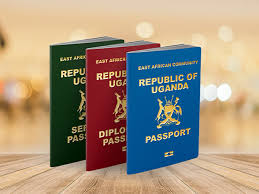
KAMPALA — Former government officials who continue to retain diplomatic or official passports after leaving public office risk prosecution under Uganda's immigration laws, according to legal expert Tonny Galandi.
Galandi says many former leaders mistakenly assume that government-issued travel documents remain their personal property even after they cease to hold the offices that entitled them to the passports.
"These are state instruments. They are tied to your office," Galandi explained. "Once your office lapses, they do not hold anymore."
His remarks come amid growing public discussion about former ministers, Members of Parliament and other public officials who continue to possess diplomatic and official passports long after cabinet reshuffles, retirement or the expiry of their terms of office.
Galandi noted that many Ugandans often confuse diplomatic passports with official, also known as service, passports.
Under Uganda's Citizenship and Immigration Control Act, diplomatic passports are reserved for holders of specified high-ranking offices, including the President, Vice President, Prime Minister, members of the First Family, senior judicial officers, chancellors and vice-chancellors of public universities, and heads of constitutional commissions.
Official or service passports are issued to other categories of public officials, including Members of Parliament and government officers travelling on official state business.
According to Galandi, both categories of passports remain the property of the Government of Uganda regardless of whether the holder paid processing or application fees during issuance.
"This is a state property. It's a state instrument. You've been given that instrument by virtue of your position," he said. "So it does not matter whether you paid when you were getting the passport."
He explained that once an individual ceases to hold the office that qualified them for a diplomatic or official passport, they are legally required to surrender it and, where necessary, apply for an ordinary passport for personal travel.
Failure to do so, he warned, could amount to misrepresentation and attract criminal sanctions.
"When you look at Section 48 of the Citizenship and Immigration Control Act, once you fail to surrender, it's criminal and you can actually be prosecuted," Galandi said.
He added that former officials who continue using such passports risk fines, imprisonment and embarrassment at airports if immigration authorities discover they are travelling on documents to which they are no longer entitled.
"You risk being embarrassed at the airport. You equally risk being prosecuted for misrepresentation because you are no longer that office holder, but you are representing yourself as one," he said.
The issue has periodically surfaced in Uganda following elections, cabinet reshuffles and changes in public office, with questions often raised about whether former office holders return government-issued travel documents as required by law.
Legal analysts note that diplomatic and official passports are not merely travel documents but instruments that signify an individual's official status and may facilitate access to privileges not available to ordinary passport holders. For that reason, governments worldwide typically require them to be surrendered immediately upon leaving qualifying offices.
Galandi urged all former public officials who may still be holding diplomatic or official passports to voluntarily return them to the relevant authorities before enforcement measures are taken.
He said compliance would not only prevent potential legal consequences but also uphold the integrity of Uganda's passport and immigration system.
