
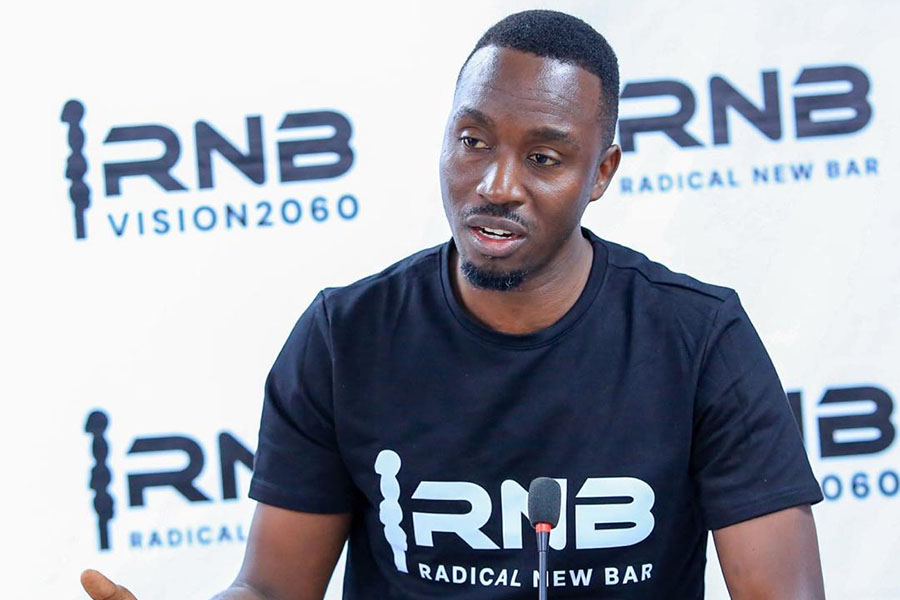
The Vice President of the Uganda Law Society (ULS), Anthony Asiimwe, has dismissed claims that the Radical New Bar (RNB) is opposed to Alternative Dispute Resolution (ADR), saying the organisation has consistently embraced mediation and dialogue despite numerous legal disputes involving the Society and its leaders.
Speaking at the ADR Awareness Conference organised by Butagira & Co. Advocates in conjunction with Mbarara High Court at Hotel Triangle in Mbarara on Friday, Asiimwe said recent events involving the legal profession and the Judiciary had underscored the importance of dialogue, reconciliation and adherence to ADR principles.
Representing the Radical New Bar Governing Council led by ULS President Isaac Ssemakadde, Asiimwe said Ssemakadde, who is currently in exile, became the subject of judicial action after criticising a High Court judge, an episode he described as a missed opportunity for tolerance and engagement.
“A judge of the High Court, who felt stung by the President’s criticism, chose not to let a hundred flowers bloom and a hundred schools of thought contend. Instead, judicial power was deployed swiftly in what felt like personal retribution,” he said.
Reflecting on events of February 2025, Asiimwe criticised what he described as a deterioration in Bench-Bar relations following actions that led to the isolation of the Uganda Law Society and its elected leadership.
“Many of us experienced that day as a historic low in the promotion of ADR, precisely the mechanism that the apex leadership of the Judiciary has long championed,” he said.
According to Asiimwe, tensions persisted into the current Law Year, with the Judiciary’s new leadership allegedly issuing warnings directed at critics of the institution.
“These are not comfortable truths, but they are part of the context we must confront if we are to heal and move forward,” he said.
Asiimwe revealed that he attended the conference after obtaining permission from the Radical New Bar Governing Council because he was involved in an ongoing mediation process concerning Uganda Law Society matters. He disclosed that a follow-up mediation session before former Chief Justice Bart Katureebe had been scheduled for the same day.
“I share this because mediation, by its nature, is private. However, there is an overriding public interest in understanding the Radical New Bar’s consistent philosophy and to dispel the false rumour that we are anti-ADR,” he said.
He stressed that under the current leadership, the Uganda Law Society had not initiated court action against private individuals, except where it had sued the Government through the Attorney General in execution of its statutory public-interest mandate.
Since assuming office in October 2024, Asiimwe said the Society and members of the Radical New Bar Governing Council had faced more than 40 lawsuits before the High Court and magistrates’ courts.
He alleged that some judicial officers in the Civil Division demonstrated limited willingness to pursue ADR, resulting in decisions that frequently went against the Society.
“Meetings were blocked, elections frozen, and our statutory representations to various public bodies were effectively paralysed,” he said.
Asiimwe credited the Court of Appeal for initially steering the parties towards mediation through the efforts of Justices Geoffrey Kiryabwire and Christopher Musisi.
He said that after those efforts appeared exhausted, four consolidated appeals, including one involving Ssemakadde’s contempt conviction, were scheduled for hearing in July 2025.
However, Asiimwe said then-Deputy Chief Justice Richard Buteera Zeija intervened shortly before the hearings, removing all Uganda Law Society-related matters from the cause list and directing that mediation efforts continue.
“On July 7, 2025, all Uganda Law Society matters were de-causelisted indefinitely on the basis that further mediation was required. That is where we remain today,” he said.
He welcomed what he described as a more conciliatory approach by the current leadership of the High Court Civil Division, which recently adjourned all ULS-related cases until September 2026 to allow mediation efforts to proceed.
According to Asiimwe, the Uganda Law Society has proposed a consolidated mediation process covering matters before both the High Court and the Court of Appeal and is currently awaiting a response.
He described the mediation process being led by former Chief Justice Bart Katureebe as unprecedented because it was initiated and driven by members of the legal profession rather than imposed by court order.
“This ongoing mediation is revolutionary. It is member-initiated and member-driven,” he said.
Asiimwe praised senior legal practitioners, including Prof. Fredrick Ssempebwa, Francis Gimara, Robert Rutaro and Zubeda Namutebi, for helping coordinate the initiative and commended Katureebe for volunteering his time and expertise.
“Our Council and President fully back this process. We are working earnestly towards an honourable, out-of-court settlement with all parties,” he said.
Rejecting suggestions that the Radical New Bar thrives on confrontation, Asiimwe said the organisation had deliberately chosen dialogue over litigation despite opportunities to pursue more aggressive legal strategies.
“We are not here to prolong conflict. We are here to normalise Bench-Bar relations and Bar-Government relations for the ultimate benefit of the people of Uganda whom we all serve,” he said.
He concluded by calling upon judges, senior advocates, mediators and other stakeholders to support ongoing reconciliation efforts and embrace genuine mediation in the interest of the rule of law and public confidence in the justice system.
