
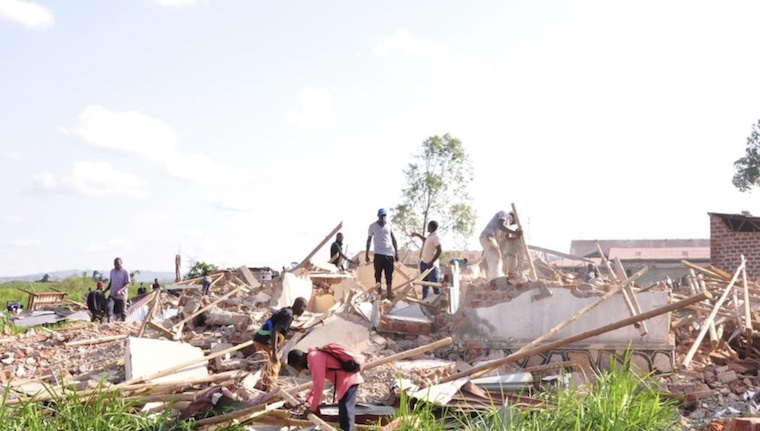
A major environmental victory has been recorded in Kampala after the National Environment Management Authority (NEMA) announced the successful restoration of the critical Lubigi Wetland.
The multi-agency operation led to the reclamation of approximately 25 acres of degraded wetland and the removal of 58 illegal structures that had encroached on the ecosystem. The achievement marks a turning point for Lubigi and offers renewed hope for environmental protection and climate resilience within the rapidly expanding Kampala Metropolitan Area.
The restoration exercise, which concluded on Thursday, May 28, 2026, was the result of coordinated efforts involving NEMA, the Wetlands Management Department under the Ministry of Water and Environment, local government authorities, the Uganda Police Force and the Uganda People’s Defence Forces (UPDF).
The collaboration reflects a growing national commitment to protecting Uganda’s fragile ecosystems from unchecked urbanisation and environmental degradation.
According to NEMA, the operation followed the expiry of a voluntary relocation grace period issued in 2025 to individuals illegally occupying sections of the wetland. The period allowed encroachers to vacate and remove their structures without penalties.
Most residents complied with the directive, enabling the operation to proceed peacefully and allowing affected persons time to salvage their property before demolition teams moved in. Authorities said the exercise was completed without any reported injuries or fatalities.
Located on the northwestern edge of Kampala, Lubigi Wetland plays a critical role in maintaining the city’s ecological balance.
However, years of encroachment, illegal construction and waste dumping have severely degraded the wetland, weakening its ability to regulate floods, filter water and sustain biodiversity.
The restoration is expected to deliver immediate and long-term environmental benefits, particularly in flood mitigation. Wetlands naturally absorb excess rainwater and release it gradually, reducing the severity of flooding in surrounding low-lying areas.
Kampala has in recent years suffered repeated flooding episodes that have destroyed property, displaced communities and disrupted transport networks. Environmental experts believe restoring Lubigi will significantly strengthen the city’s resilience against such disasters.
The rehabilitation is also expected to improve water quality across the Kampala Metropolitan Area. Wetlands act as natural filtration systems by trapping pollutants and purifying water before it flows into major water channels and supply systems.
A healthier Lubigi ecosystem will therefore contribute to safer water sources and improved public health outcomes for surrounding communities.
The restoration further supports biodiversity conservation. Wetlands provide habitat for numerous bird species, fish, amphibians and plant life that are essential to ecological stability.
Environmentalists say reclaiming Lubigi will help preserve Uganda’s natural heritage while restoring ecological functions that had been disrupted by human activity.
Lubigi also plays a vital role in climate regulation. Wetlands are among the world’s most effective natural carbon sinks, storing large amounts of carbon and helping to reduce greenhouse gas emissions.
By restoring the wetland, Uganda strengthens its broader climate action efforts while improving air quality and moderating temperatures within surrounding urban areas.
NEMA said the exercise also reinforces the constitutional right of Ugandans to live in a clean and healthy environment.
The authority stressed that protected ecosystems must be safeguarded for public benefit and future generations rather than sacrificed for short-term private interests.
Despite the largely peaceful operation, authorities reported isolated resistance from a small group of individuals who allegedly attempted to obstruct enforcement teams and incite violence.
Five suspects were arrested and detained at Lubigi Police Station over what officials described as violent conduct during the operation.
NEMA warned that wetland degradation remains a criminal offence under Section 55 of the National Environment Act, Cap 181, which prohibits illegal activities such as wetland encroachment, dumping of waste and unauthorised construction.
The authority said similar restoration and enforcement operations will continue across other degraded wetlands in the country, including Kaliddubi and Kyetinda, where restoration directives have reportedly not been fully complied with.
The successful restoration of Lubigi stands as a powerful example of what can be achieved through political will, institutional coordination and environmental stewardship.
For Kampala, a city increasingly threatened by rapid urban growth and climate change, the rehabilitation of Lubigi represents more than ecological recovery. It is an investment in a safer, healthier and more sustainable future.
