

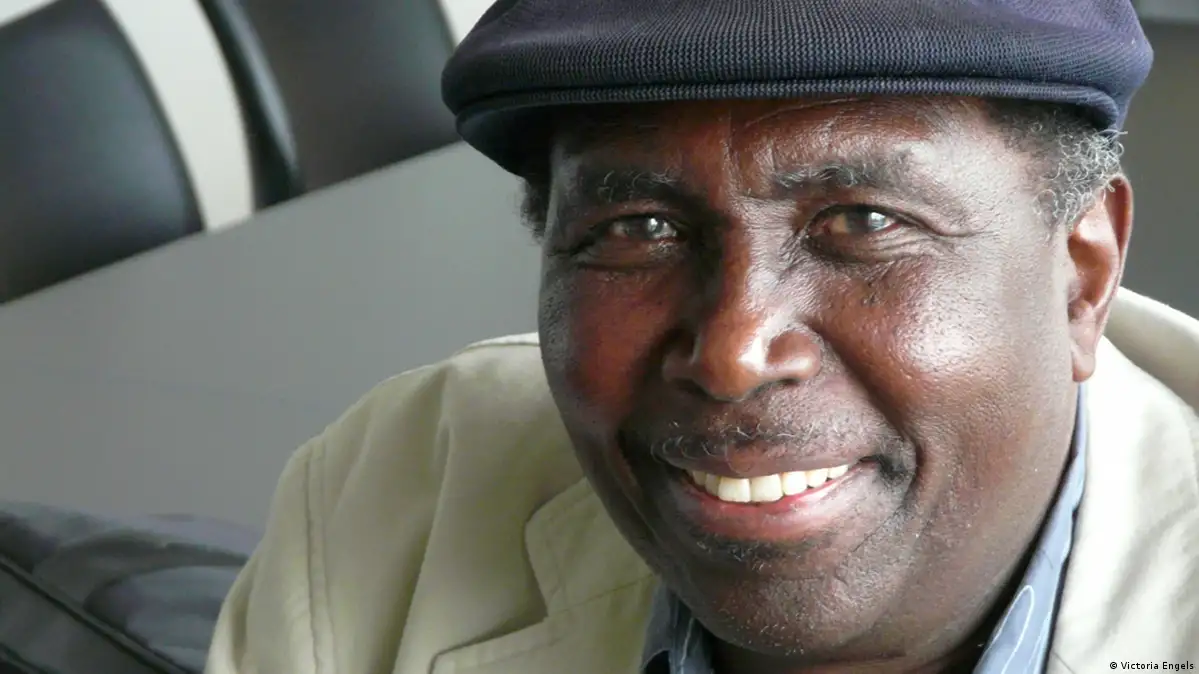
Renowned Kenyan novelist and storyteller Meja Mwangi has passed away, leaving a literary landscape forever shaped by his words.
Known for novels that pulse with urgency, humanity, and social insight, Mwangi’s work gave voice to the voiceless and illuminated the complexities of Kenya’s post-independence life.
Though his carcase rests, the stories he birthed continue to roam freely, carrying the struggles, triumphs, and dreams of ordinary Kenyans into perpetuity.
Born David Dominic Mwangi on December 27, 1948, in Nanyuki, his early life laid the foundation for the worlds he would later create.
The streets, the marketplaces, the narrow alleys, and the wide-open plains of Kenya all became stages for his narratives, capturing both the grit and the poetry of everyday life.
From these early experiences, Mwangi cultivated a literary lens attuned to social reality, human resilience, and the moral ambiguities of a nation in transition.
His debut novel, Kill Me Quick (1973), introduced readers to a Kenya that demanded honesty and urgency.
The story’s pulse-racing narrative captured young Kenyans grappling with survival, dreams, and despair.
It was a declaration that literature could both entertain and confront, offering a mirror to society while refusing to flinch from its truths. Going Down River Road and The Cockroach Dance continued this exploration, chronicling lives at the margins, depicting streets rife with opportunity and danger, and showing readers that even in struggle, humanity persists.
In Carcase for Hounds, Mwangi delved into Kenya’s colonial past and the moral complexities of the Mau Mau resistance.
The novel’s unflinching portrayal of history acknowledged the sacrifices of freedom fighters while exploring the cost of liberation.
It was a narrative both haunting and heroic, reflecting the echoes of a nation wrestling with its own past.
Later, The Last Plague confronted the devastation of the AIDS epidemic, revealing Mwangi’s commitment to bearing witness to society’s darkest moments while imbuing his stories with empathy and dignity.
Mwangi’s artistry extended beyond the page. He worked in film as a screenwriter, assistant director, and casting professional, translating his vivid imagination into moving visuals.
His time as a Writing Fellow at the University of Iowa sharpened his craft, allowing him to combine local authenticity with global literary perspectives.
This duality—rooted in Kenya, yet reaching the world—made his work resonate universally while remaining unmistakably Kenyan.
As his publisher Nuria Bookstore aptly described him, Mwangi was “Baba wa Riwaya,” the father of modern Kenyan fiction.
His novels walked readers down River Road, through alleys of survival, across landscapes scarred by history, and into the intimate lives of characters whose struggles and joys mirrored our own.
Every title, from Kill Me Quick to Carcase for Hounds, from Going Down River Road to The Last Plague, carried a message, a pulse, a call to witness the human story in all its complexity.
Even in death, his literary voice remains unyielding. Meja Mwangi’s carcase may have gone to rest, but his stories continue to traverse the streets of Nairobi, echo across Kenya’s highlands, and ripple through the hearts of readers across the globe.
They remind us that literature is not just about words on a page—it is the living memory of a people, a mirror reflecting struggle, courage, and hope.
Meja Mwangi leaves behind more than books; he leaves a nation’s story told with honesty, courage, and vision.
His novels are immortal testaments, ensuring that while the man has passed, the worlds he created, the voices he amplified, and the truths he dared to confront will continue to live, roam, and inspire.