
Young people and civil society leaders have called for stronger, more meaningful youth participation in the ongoing United Nations reforms, arguing that the next five years will be decisive for global progress on the Sustainable Development Goals (SDGs).
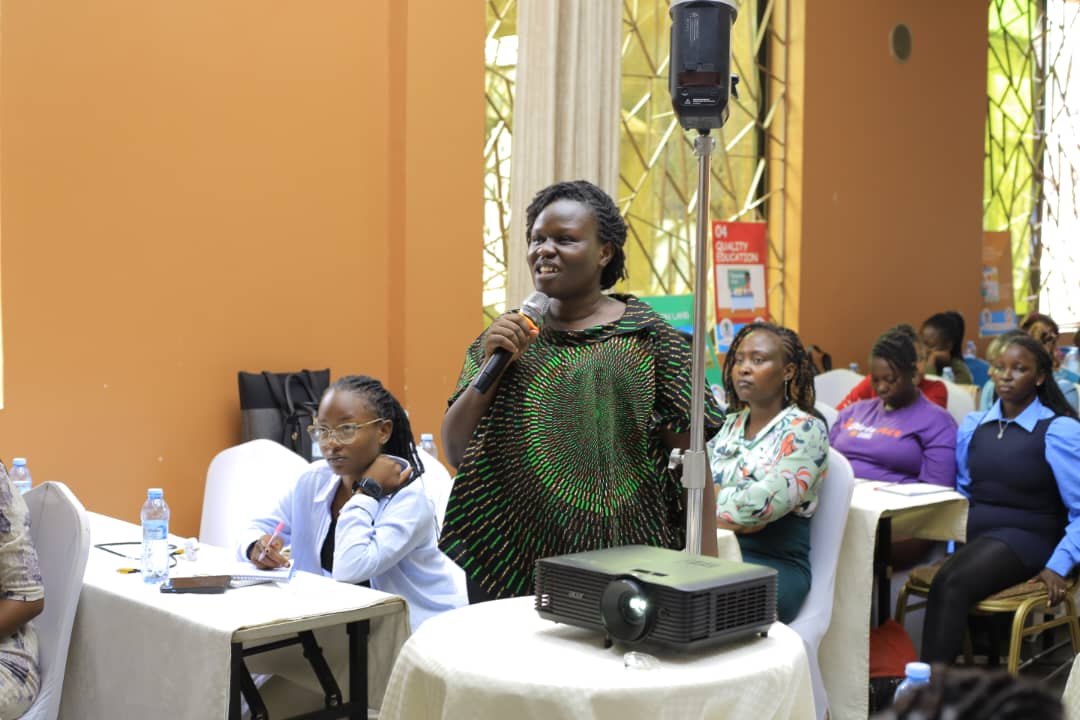
The calls were made during a peer-to-peer session held on Thursday at Ministers Village Hotel in Ntinda, where participants discussed the UN’s new reform agenda, the slowdown in SDG progress, funding challenges facing UN agencies, and the growing need for youth-led solutions.
Speaking to the press, Linda Asaba from the United Nations Association of Uganda said their Finland-supported programme, implemented in Uganda and Tanzania, is focused on accelerating SDG implementation at a time when global progress has stalled.
“We are here to have a discussion around the UN reforms that are happening. The UN, after 80 years, is trying to make a few changes to help make it better,” she said.
Asaba noted that the reforms focus on youth and future generations, data and artificial intelligence, and better governance. With the SDGs now 10 years into their 15-year global plan, she said urgency is rising.
“Globally we are only 15% on track. We are remaining with five years to evaluate whether we have actually attained the SDGs,” she said.
She emphasised that Uganda and Africa’s youthful population — over 70% under the age of 30 — must be recognised as decision makers rather than passive beneficiaries.
“We want to move from having young people as beneficiaries, but rather as decision makers. When you give them a seat at the table, they should be able to make meaningful contributions,” she said.
Asaba also highlighted new opportunities for African youth as more UN agencies shift operations to Nairobi.
“It has always been hard to get a US visa or afford the costs of travelling. But now it is in Nairobi; a bus is only Shs60,000. Are we able to go, engage, discuss and make networks?” she asked.
She encouraged young people to familiarise themselves with emerging platforms such as the UN Youth Office and youth-focused sessions held ahead of major UN events.
Alvin Mutebi, a member of the Royal Danish Embassy Youth Sounding Board, said recent global funding cuts have forced the UN system to rethink its operations.
“Funding from the United States of America towards UN agencies like the World Health Organization, UNAIDS and UNESCO has reduced. That alone affected the way they operate,” he said.
Mutebi explained that these financial shocks have forced the organisation to reconsider how it adapts to a changing world.
“As the world is regenerating and trying to see how to move forward, this crisis of funding brings us to ask: what do we do and how do we think differently?” he said.
He added that although the UN is marking 80 years, it must evolve to respond to new realities — from AI and digital transformation to global conflicts and climate change.
“Trends in technology have changed. Peace and conflict have changed. Migration, climate change, the Russia-Ukraine war, the Palestine-Israel conflict, all these have an impact on young people and on how the UN is structured,” Mutebi said.
According to him, Africa now carries a significant share of global challenges, especially those linked to climate, migration and security. He urged young Africans to position themselves to shape these global debates as the continent becomes increasingly central to the world’s future.
