

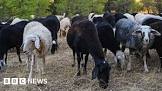
BBC | Hundreds of thousands of sheep and goats are being culled in Greece, due to the outbreak of an infectious disease. It may affect production and exports of the country's famous feta cheese.
Anastasia Siourtou walks through her deserted farm on the outskirts of Karditsa, a city in the Thessaly region of central Greece.
An eerie silence hangs over the place where 650 sheep were being raised.
On 12 November veterinary officials culled all the livestock after a case of sheep and goat pox was detected.
"There is another farm two kilometres away. They had pox cases, but hid it," she says, alluding to how she believes her herd contracted the disease.
Ms Siourtou is a veterinarian herself and has expanded the farm that her father built.
Losing the animals means financial ruin - besides the livestock the farm lost, the sheep's milk, which is sold for the production of feta cheese, is often referred to as Greece's "white gold".
More than the financial blow, however, Ms Siourtou speaks of the emotional toll. "I was here the day the sheep were culled. It is very cruel, I felt that I failed to protect them."
Sheep and goat pox is a viral infection. The first cases were detected in northern Greece in August 2024, and the disease has since spread across many regions of the country.
A total of 1,702 incidents had been recorded by mid-November, according to the latest data from the Ministry of Rural Development and Food.
Detecting a single case on a farm means the entire herd must be culled for preventive reasons. Some 417,000 sheep and goats have been disposed of so far, which is roughly 4-5% of the previous total