
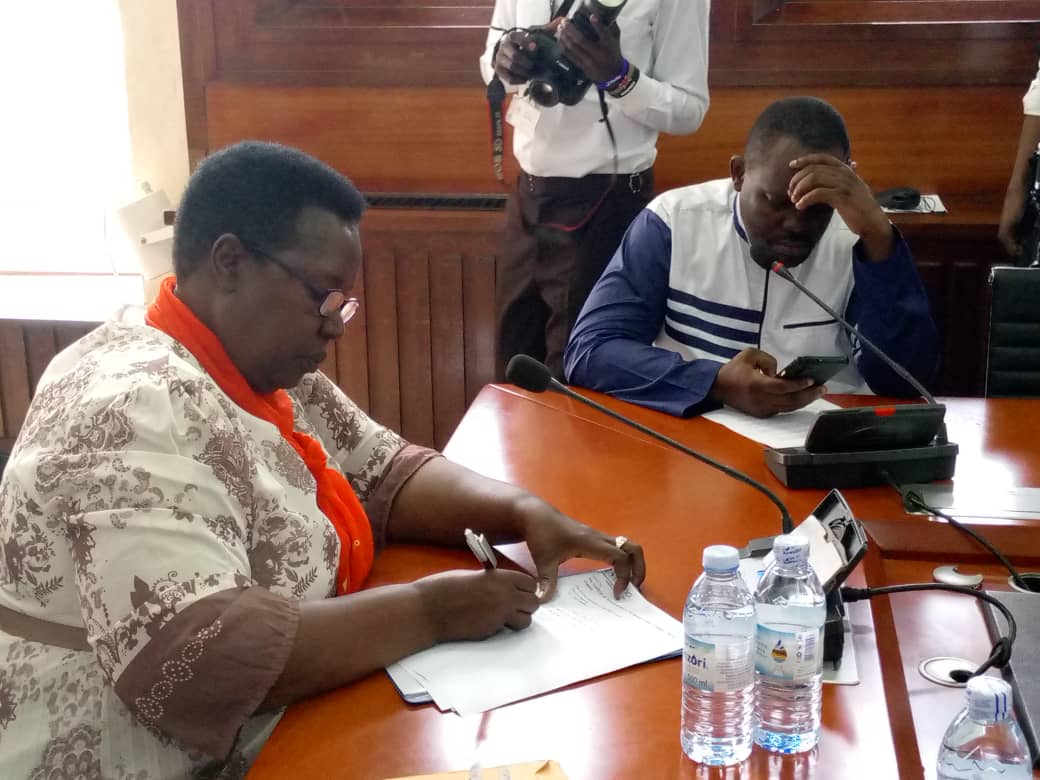
Ugandan lawmakers are urgently appealing for a significant increase in domestic funding and a reduction in reliance on foreign aid to sustain the nation’s fight against malaria.
Members of the Coalition of Parliamentarians to End Malaria in Africa (COPEMA) asserted that this financial shift is critical if Uganda is to achieve its goal of eliminating the disease by 2030.
The call was made during a press briefing held at Parliament under the theme: Uganda at a Crossroads: Investing to Save Lives.
A Crisis of Sickness and Death
Santa Okot (Aruu North), a Co-Chair of COPEMA, highlighted that despite considerable progress over the past decade, malaria remains a devastating public health threat.
"Malaria remains one of the country’s leading causes of sickness and death, accounting for nearly 30–40% of outpatient visits and thousands of preventable deaths every year," Okot stated. She emphasised that these statistics represent profound human suffering.
"Which numbers she says reflects real human stories characterised by children missing school, families losing breadwinners, and communities trapped in cycles of poverty due to a disease we already know how to prevent and treat," she added.
Yusuf Mutembuli (Bunyole East), also present at the briefing, echoed the urgent need for action.
Alarming National and Global Data
The press briefing cited alarming new data from the World Health Organisation's (WHO) World Malaria Report 2024. Globally, the report revealed an estimated 263 million cases and 597,000 malaria deaths in 2023, marking a rise of about 11 million cases compared to 2022. Worryingly, approximately 95% of these deaths occurred in the WHO African Region.
At the national level, the situation in Uganda is particularly dire. In 2023, the country registered nearly 12 million malaria cases and 2,793 deaths. Malaria is responsible for 30–40% of outpatient visits, 20% of hospital admissions, and up to 10% of inpatient deaths.
Even more alarming is the high severity rate. The WHO noted that while globally only 1–3% of uncomplicated malaria cases become severe, Uganda’s hospitalisation rate was around 6% in 2023, four times higher than the global average, with delays in diagnosis and treatment cited as the leading culprits.
The Donor Dependency Trap
Okot squarely placed the blame for the stalled progress on insufficient government investment.
"Uganda’s health sector remains chronically underfunded, with only 4–8% of the national budget allocated to health - well below the 15% Abuja Declaration target," Okot asserted.
This chronic underfunding has led to a crippling dependence on external aid.
"This shortfall has left the malaria program 95% dependent on donor funding, primarily from the Global Fund and the U.S. President’s Malaria Initiative (PMI). Government contributes roughly US$19 million annually, just a fraction of what is required to sustain essential interventions," she said.
The lawmakers' plea serves as a critical warning that without a substantial, sustainable commitment of domestic funds, Uganda's vision of ending malaria within the next five years is unlikely to materialise.
