
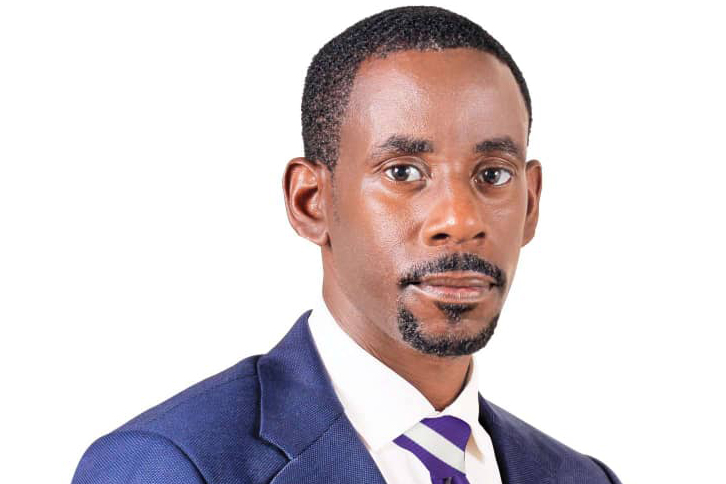
By Agaba Muzoora
There are moments in the life of a nation when silence becomes dangerous. Uganda may well have reached such a moment.
Recent events surrounding the arrest, detention, and subsequent remand of former Kampala Lord Mayor and senior advocate Erias Lukwago on allegations of misprision of treason have reignited public concern about governance, the rule of law, civil liberties, and Uganda’s political future.
According to public reports, Lukwago was arrested by armed security operatives at his home on 15 June 2026, detained for two days in a “basement” facility, and later charged with misprision of treason in a case involving Dr. Kizza Besigye, whom he represents. The arrest attracted criticism from sections of the legal fraternity, opposition leaders, civil society, and ordinary citizens who viewed it as another troubling development in Uganda’s increasingly polarized political environment.
Other reports also indicate that Lukwago had been preparing to serve a legal notice on the Chief of Defence Forces, Gen. Muhoozi Kainerugaba, on behalf of Dr. Besigye, regarding alleged social media threats directed at Dr. Besigye by the CDF himself. Some observers believe this may have contributed to his arrest and subsequent prosecution. Indeed, many Ugandans subscribe to this view. Following the arrest, Gen. Kainerugaba publicly commented on the matter on social media, ridiculing the former Lord Mayor and posting demeaning images accompanied by mocking messages.
To many Ugandans, regardless of political affiliation, these developments have raised fears and uncertainty about the state of democracy, civil liberties, and the rule of law in Uganda. More importantly, they have intensified anxiety about Uganda’s political future, particularly the increasingly blurred line between military authority and partisan politics, and whether the country possesses institutions strong enough to guarantee stability and a peaceful transfer of power in the post-Museveni era.
Indeed, these fears are not without historical grounding. Uganda’s past offers painful lessons. The 1966 constitutional crisis, which saw the removal of President Edward Mutesa II and the suspension of constitutional order, weakened democratic institutions and entrenched the notion that political disputes could be resolved through force rather than law.
This was followed by the 1971 military coup, which ushered in eight years of fear, arbitrary arrests, killings, economic collapse, and institutional decay. Later, the disputed elections of 1980 and the subsequent bush war once again demonstrated the dangers of political exclusion and contested legitimacy. Thousands of Ugandans lost their lives because political disagreements could not be resolved through trusted democratic institutions.
The lesson from Uganda’s history is clear: when leaders place themselves above the law, weaken institutions, centralize power, and use state authority to suppress dissent, nations begin a long and painful descent into instability, division, and economic decline.
The same lesson is evident beyond Uganda’s borders. Across Africa and elsewhere, countries that have subordinated institutions to powerful individuals have often experienced political crises, weakened public trust, and economic stagnation. No nation can indefinitely prosper where the rule of law is replaced by the rule of individuals.
For four decades, President Yoweri Museveni has dominated Uganda’s political landscape. During much of that period, the country has enjoyed relative stability compared to the turbulent years that preceded the National Resistance Movement’s rise to power in 1986. Yet history also teaches that stability built around individuals rather than institutions eventually faces serious tests.
Today, many Ugandans are increasingly concerned about the growing overlap between military authority and political activity, particularly the actions of the Chief of Defence Forces, Gen. Muhoozi Kainerugaba, who is also the son of the sitting President, Gen. Yoweri K. Museveni.
Gen. Muhoozi Kainerugaba is not only the son of the President; he is also the commander of one of the country’s most powerful institutions—the Uganda People’s Defence Forces. Yet he has simultaneously emerged as a prominent political actor, frequently commenting on political parties, threatening opposition figures, and engaging in political discourse, in ways many argue contradict constitutional principles. He has also publicly alluded to involvement in the arrest and mistreatment of certain political actors, including the case of former Kampala Lord Mayor Erias Lukwago.
Many Ugandans view these developments as evidence of the gradual normalization of military involvement in politics and the emergence of succession dynamics operating outside established democratic norms. Military institutions exist to defend the nation and protect constitutional order—not to shape political outcomes, influence succession debates, or participate in partisan contests.
One of the defining characteristics of stable democracies is a clear separation between military power and civilian politics. Whenever that boundary is blurred, tensions inevitably emerge. The concern, therefore, is not merely about individuals, but about precedent.
If a serving military commander can publicly ridicule politicians, threaten critics, engage in partisan messaging, and dominate succession discussions while simultaneously commanding the armed forces, confidence in democratic governance and constitutional order is inevitably weakened.
Uganda’s challenge today is therefore deeper than the arrest of one lawyer or the detention of one opposition figure. The greater concern is the gradual replacement of institutional authority with individual authority. Left unchecked, such a trend carries serious political and economic consequences for the country.
Investors monitor political risk. Businesses value predictability. Development partners assess governance standards. Economic growth thrives where institutions are respected and citizens have confidence in the rule of law. When uncertainty rises and institutions weaken, investment retreats, opportunities diminish, and countries risk sliding into poverty, vulnerability, and social unrest. This is not what Ugandans want. Yet it is precisely what may unfold if current trends are not addressed in time.
This is why all Ugandans must speak up—and speak up now. The consequences of institutional decay do not discriminate by political party, religion, ethnicity, or social class. They affect everyone.
Beyond public voices, however, there is a group that can act—and must act urgently: Uganda’s elders—religious leaders, retired judges, former prime ministers, former ministers, retired military commanders, cultural leaders, academics, and other respected national figures. It is time for them to rise above partisan interests and convene a national dialogue on Uganda’s political future.
They should engage President Museveni and encourage a national conversation on constitutionalism, political tolerance, respect for democratic institutions, civil liberties, and a peaceful democratic transition. They should advocate for stronger institutions capable of outliving current leaders and reassure Ugandans that the country’s future will remain anchored in law rather than personality.
Most importantly, they should reinforce the principle that future leadership must emerge through constitutional and democratic processes rather than fear, uncertainty, or military influence.
President Museveni remains uniquely positioned to provide such reassurance. No other individual possesses the political authority, historical influence, and institutional reach necessary to calm growing anxieties surrounding succession and the militarization of Uganda’s politics.
Statesmanship requires looking beyond one’s tenure and safeguarding the nation that will remain long after current leadership has passed. Uganda must not be left in uncertainty to determine its fate. Ugandans are capable of shaping their future through strong democratic institutions rather than individual power.
If Uganda’s elders fail to act, future generations—the Bazukulu—will rightly ask whether they spoke when warning signs became visible, whether they acted when national unity required courage, and whether they placed country above fear and partisan interests when the moment demanded it.
Dear Elders, the time for action is now. The country, especially the Bazukulu, is counting on you to help avert an impending national tragedy.
For God and My Country.
The writer is a concerned citizen of Uganda
