
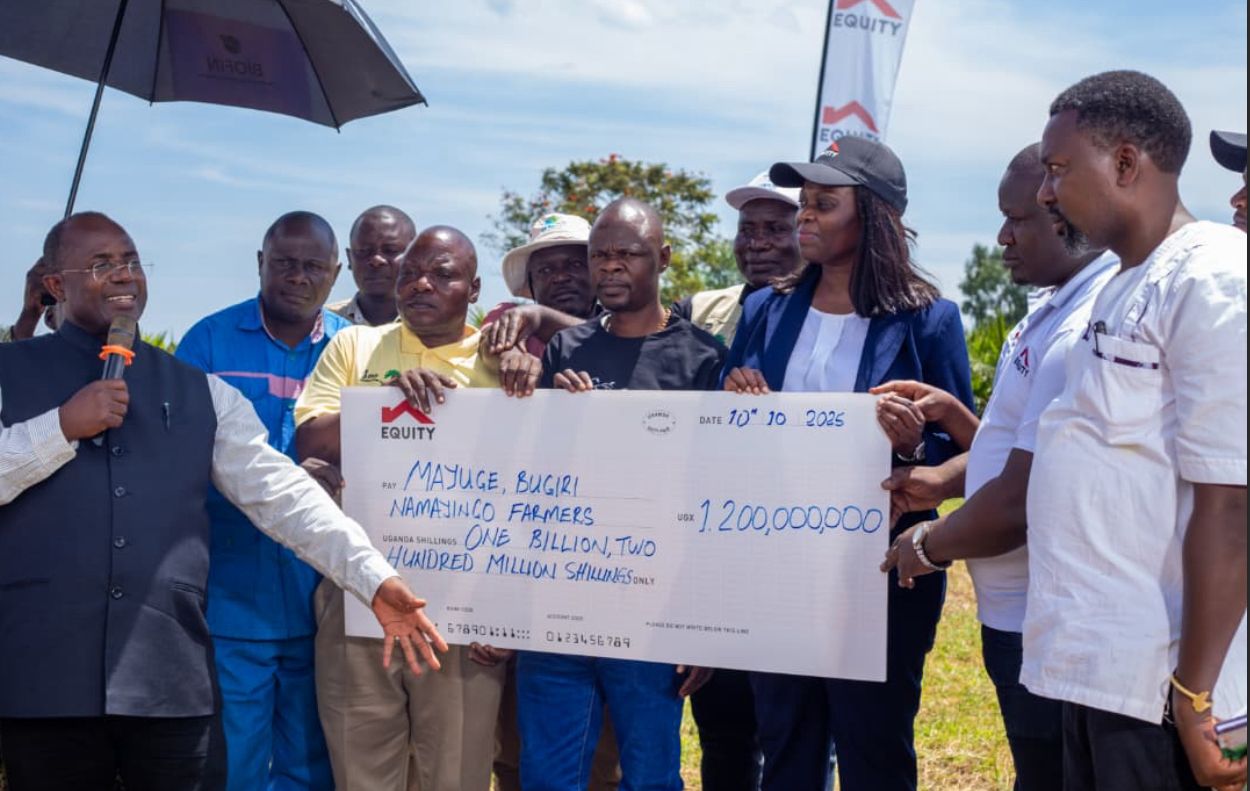
Government has officially launched the National Oil Palm Project (NOPP) in the Busoga sub-region, marking a major milestone in its efforts to transform agriculture, create jobs, and eradicate poverty.
The project was inaugurated on Friday at the Mayuge District Headquarters by the Minister of State for Agriculture, Animal Industry and Fisheries, Fred Bwino Kyakulaga.
Speaking during the launch, Kyakulaga reaffirmed the government’s unwavering commitment to agricultural modernization and inclusive economic growth.
“This initiative will go a long way in transforming the people of Busoga from the chronic poverty that has affected them for so longZ Uganda already has a ready market for palm oil, soap, cosmetics, and other related products. Each farmer is expected to earn about Shs 2.5 million monthly at harvest for up to 30 years. With this project, the government has truly answered Busoga’s poverty and job crisis, Kyakulage said.
The National Oil Palm Project is financed through a loan from the International Fund for Agricultural Development (IFAD) and is designed to promote sustainable commercial agriculture, enhance food security, and create long-term employment opportunities.
As part of the implementation framework, the government appointed Equity Bank Uganda as the Fund Manager to oversee the project’s credit facility, manage disbursements, and build the financial capacity of participating smallholder farmers.
“It is an honour for Equity Bank to partner with the Ministry of Agriculture and IFAD on this transformative initiative,” said Catherine Psomgen, Director for Public Sector and Social Investments at Equity Bank Uganda.
“Our role goes beyond disbursing funds — we are here to build trust, ensure efficiency, and promote sustainable agricultural growth.”
In under two years, Equity Bank has extended Shs 1.23 billion in financing to 896 farmers across the pilot districts of Mayuge, Namayingo, and Bugiri. The funding has enabled farmers to access high-quality seedlings, fertilisers, pesticides, and hands
-on training in modern farming practices.
“We employ advanced banking systems to track every transaction, verify beneficiaries, and ensure funds reach genuine oil palm farmers in record time. This approach has minimised risk, strengthened accountability, and built confidence among stakeholders;” said Psomogen
Under the project, each participating farmer is required to have at least five hectares of land, qualifying them for up to Shs 25 million in financing. Farmers with smaller land holdings receive proportional support. Part of the financing is directed to certified suppliers who provide inputs and technical assistance to guarantee proper project implementation.
Driving Broader Agricultural Resilience
Equity Bank reaffirmed its wider commitment to agriculture through its Africa Resilience and Recovery Plan, under which 30% of its loan portfolio is dedicated to the food and agriculture sector.
“When we empower farmers, we empower entire communities. Farming is not just work — it is hope in action. Every seed planted is a dream, and every harvest is a reward for faith, patience, and dedication,” Psomgen said.
Phase One of NOPP currently covers Buvuma, Mayuge, Bugiri, and Namayingo districts, with additional districts — Kamuli, Iganga, Jinja City, Bugweri, Namutumba, Luuka, and Kaliro — slated for inclusion in the next phase.
Kyakulaga also revealed that the government is supporting complementary livelihoods such as aquaculture and piggery to ensure that non-
participating community members also benefit.
“This project is not just about cultivating oil palm. It’s about uplifting every household within these communities and ensuring that no one is left behind,” he said.
Equity Bank reiterated its long-term commitment to supporting Ugandan farmers “from farm to market,” ensuring access to both financial and technical resources.
“Together with the Government of Uganda, development partners, and farmers, we aim to make the National Oil Palm Project a shining example of how collaboration can transform the agricultural landscape of our country,” Psomgen said.
The National Oil Palm Project is a government-led initiative implemented by the Ministry of Agriculture, Animal Industry and Fisheries (MAAIF) with support from IFAD. The project aims to promote sustainable oil palm cultivation, strengthen smallholder participation in agribusiness, and foster rural development across Uganda.
