
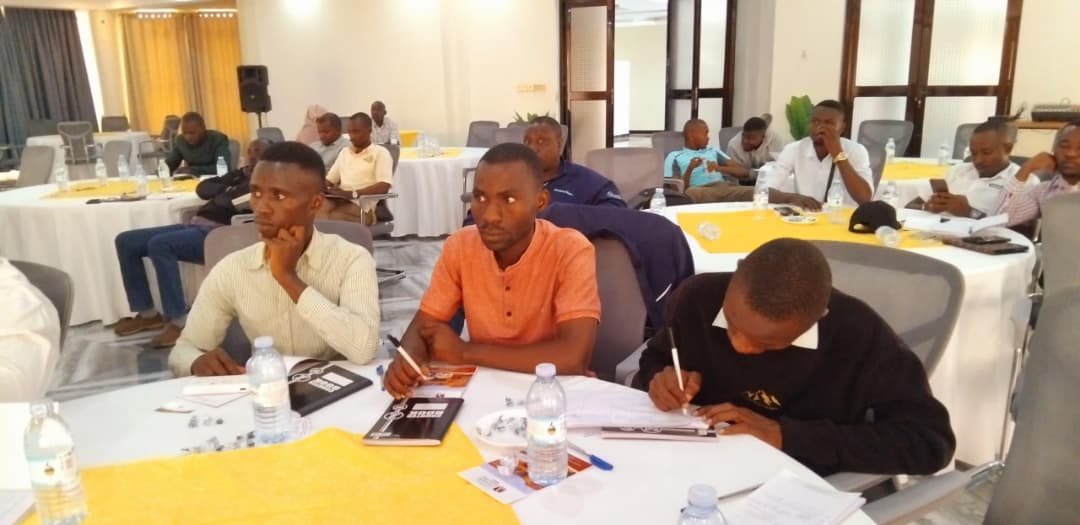
Journalists from across Western Uganda have been equipped with skills and knowledge to report more effectively on agriculture, including crop production, animal husbandry, fisheries, and forestry.
The training, held on Wednesday at Las Vegas Garden Hotel in Mbarara City, was organised by the National Agricultural Research Organization (NARO) and brought together media professionals from the Ankole, Kigezi, Rwenzori, and Tooro sub-regions.
The initiative aims to strengthen the capacity of journalists to communicate agricultural research more accurately, with a view to informing public policy, guiding farmer practices, and increasing the uptake of innovations in the sector.
“We saw the need to engage journalists so they can better understand what NARO does , from our innovations and technologies to ongoing research,” said Frank Mugabi, Head of Communications at NARO.
“This training is meant to enhance the capacity of journalists to report accurately and help bridge the gap between the media and NARO.”
Mugabi further emphasised the importance of data accuracy and reliable information in agricultural reporting.
“Research information must be communicated correctly. Journalists play a crucial role in ensuring the public and policymakers get the right context and facts,” he added.
During the training, participants were introduced to NARO’s governance structure, the network of seven National Agricultural Research Institutes (NARIs), and nine Zonal Agricultural Research and Development Institutes (ZARDIs). They learned about ongoing research on climate-smart crop varieties, improved livestock breeds, and innovations such as the newly developed anti-tick vaccine.
The journalists also toured the Mbarara Zonal Agricultural Research and Development Institute (ZARDI), where they interacted with researchers and saw field-based projects that cater to Uganda’s agro-ecological zones.
Dr. Halid Kirunda, Director of Research at Mbarara ZARDI, underscored the media’s pivotal role in shaping public opinion and disseminating scientific findings.
“The media is like the fourth arm of government. It can build or destroy reputations, so we urge you to avoid misinformation and always verify facts,” Dr. Kirunda told participants.
“Please don’t hesitate to reach out to NARO when in doubt. We are available to support your work with the right information.”
The training also provided journalists with insights into Uganda’s agricultural transformation agenda, including key government programs such as the Parish Development Model (PDM) and the Agro-Industrialisation Strategy. It aligned with national efforts to meet the UN Sustainable Development Goals (SDGs) and the African Union’s Agenda 2063, especially in areas of food security, climate resilience, and innovation.
“Agriculture is the backbone of our economy. Over 70% of Ugandans depend on it for a livelihood, yet the sector continues to face numerous challenges , from climate shocks to market barriers,” Mugabi said.
“We believe research-driven solutions are the way forward, but they must reach the farmers. That’s where journalists come in.”
Speaking to Nile Post after the training, several journalists expressed appreciation for the new insights and pledged to report on agriculture more responsibly.
“This was an eye-opener. I now have a deeper understanding of what agricultural research means and how it affects the farmer on the ground,” said Alex Mugasha, a journalist at Next Media.
“I will use the knowledge I’ve gained to help farmers make informed decisions,” added Aggrey Twegigye , a reporter from Isingiro
The initiative marked a significant step toward strengthening partnerships between the media and research institutions, with the shared goal of transforming Uganda’s agricultural sector through informed, evidence-based communication.
