
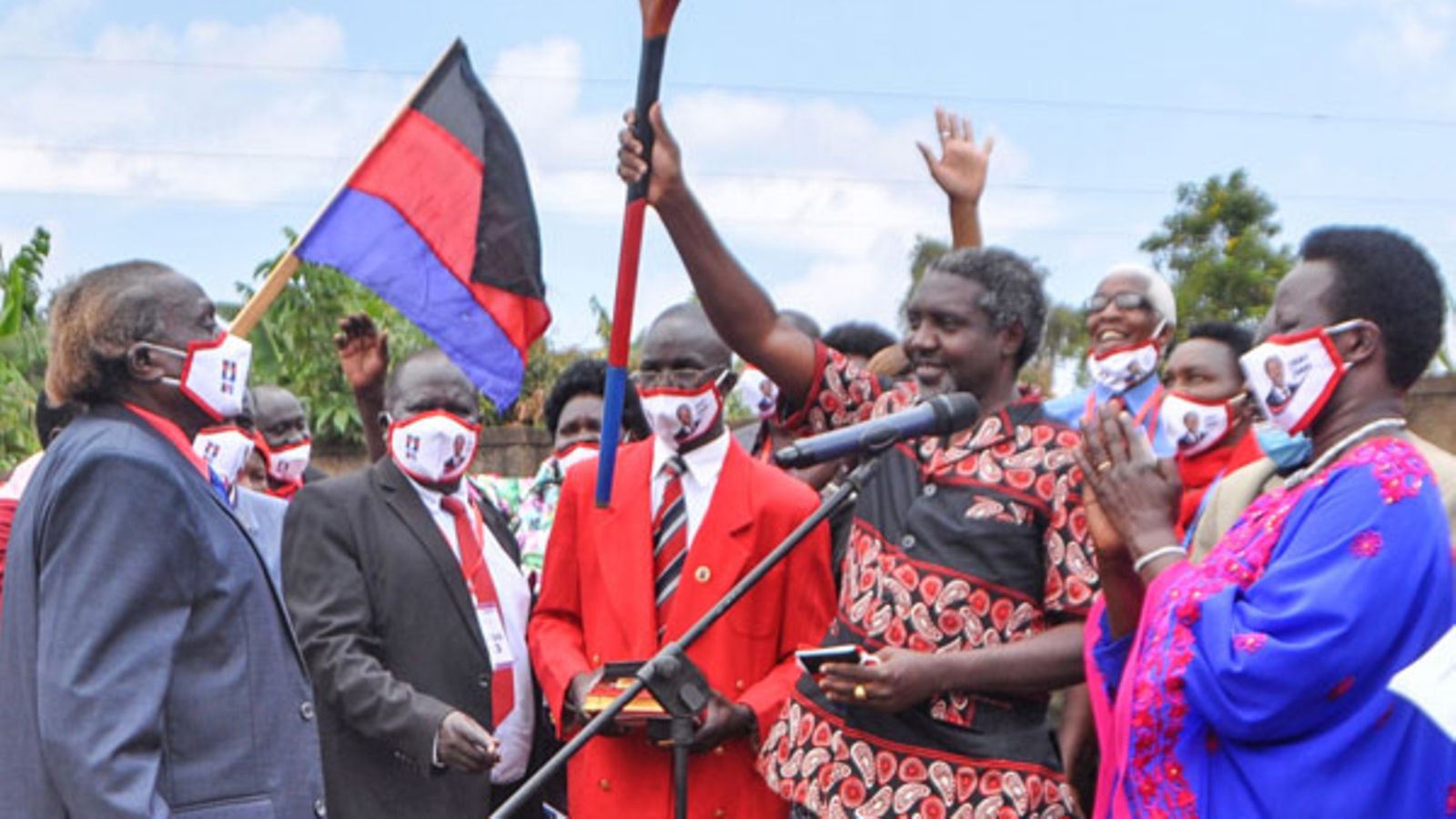
The Uganda People's Congress (UPC) is engulfed in deepening internal strife as three rival factions now lay claim to the party's presidency, sparking a power struggle that threatens to paralyze the once formidable opposition outfit.
Peter Walubiri, a veteran lawyer and long-time member of UPC, has formally petitioned the national Electoral Commission to reject the application of Dennis Adim Enapu as the newly elected party president.
Walubiri insists that Enapu’s claim is illegitimate and that he himself is the rightful leader of the party.
His move comes in the aftermath of a court ruling that nullified Jimmy Akena’s controversial third term as UPC president, creating a leadership vacuum that has only intensified factional tensions.
In a bold move following the court decision, three members of the party’s internal electoral commission—Naume Natukunda, Jack Habusi, and Magero Emmanuel Mere—wrote to the national Electoral Commission introducing Dennis Adim Enapu as the newly elected president of UPC.
But Akena, son of UPC founding leader Apollo Milton Obote, remains defiant.
He dismissed the three officials who endorsed Enapu, accusing them of insubordination and gross misconduct.
He insists that he is still the legitimate party leader despite the court decision.
Peter Walubiri, however, has declared that both Akena and Enapu are “impostors” who have undermined the UPC for personal gain.
“Neither of them has the legal or moral authority to lead this party. They are responsible for the collapse of internal structures and the erosion of our party’s reputation,” Walubiri said in a scathing statement.
He further accused Akena of flouting the party’s constitution during his extended tenure, while also dismissing Enapu's ascension as a hastily arranged power grab orchestrated without due process.
Enapu, in turn, maintains that his election followed proper internal procedures and that he is committed to steering the party toward a new chapter of stability and grassroots revival.
“I am the legitimate president of UPC, elected by the will of party delegates who want change,” Enapu said in a brief response to the controversy.
The leadership confusion has now spilled beyond the party's headquarters, drawing in the national Electoral Commission.
Its spokesperson, Julius Mucunguzi, said the Commission is limited in what it can do given the internal nature of the disputes.
“These are matters that must be resolved within UPC structures. The Electoral Commission cannot impose leadership or mediate internal party disagreements. We can only act on clear, lawful instructions from a legitimately recognized party leadership,” Mucunguzi said.
The infighting has cast a shadow over UPC’s preparations for the 2026 general elections and has deepened concerns among party loyalists about its future viability.
Founded in the early 1960s and once a dominant political force, the UPC has in recent decades struggled with internal divisions, leadership disputes, and dwindling public support.
With all three factions now claiming legitimacy, observers warn that unless a unifying figure or court intervention emerges soon, the party could fracture irreparably before the next electoral cycle.
