
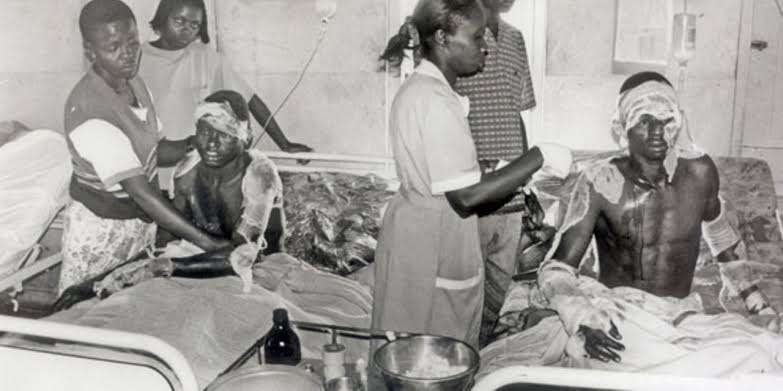
One of the darkest days in Uganda's modern history unfolded on this day in 1998, when Allied Democratic Forces (ADF) rebels attacked Uganda Technical College, Kichwamba, in Kabarole District, killing 80 students and abducting more than 100 others.
The assault began in the early morning hours when hundreds of rebels descended on the institution, then known as Kichwamba National Technical Institute.
Investigators later concluded that the attackers had intended to abduct students and force them into the rebel movement as fighters and porters.
As the raid began, frightened students rushed into their dormitories and locked themselves inside in an attempt to keep the attackers out.
What followed became one of the most horrific episodes of the ADF insurgency. Unable to gain access to the residence halls, the rebels blocked the exits, poured fuel around the buildings and set them on fire.
Kahaya, Rukiidi and Balya dormitories were quickly engulfed by flames, trapping dozens of students inside. Many were burned beyond recognition, while others who attempted to escape through windows were reportedly shot by rebels positioned outside.
By the time the attackers retreated towards the Rwenzori Mountains, 80 students had been killed and more than 100 had been taken captive.
Some of the abducted students later escaped or were rescued during military operations, but others never returned.
The rebels also destroyed workshops, laboratories and vehicles, leaving extensive damage to the institution.
The scale of the tragedy left the country in shock. Because many of the victims could not be identified, 27 were buried in a mass grave within the college grounds, where a memorial still stands today.
The attack prompted a major review of security around educational institutions and intensified military operations against the ADF in western Uganda.
For 25 years, the Kichwamba massacre remained the deadliest attack on a school in modern Ugandan history.
Its memory was revived in June 2023 when ADF rebels carried out another deadly assault on a secondary school in Kasese, drawing painful comparisons with the events that unfolded at Kichwamba a quarter of a century earlier.
