
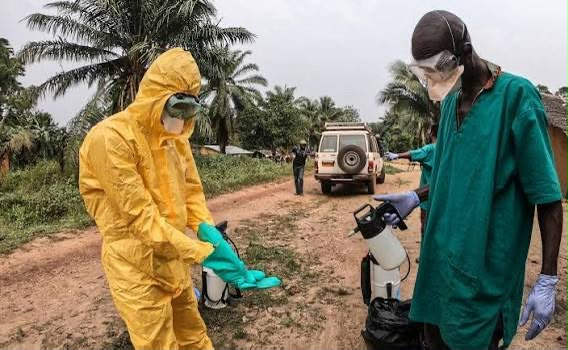
Uganda has developed sufficient expertise to support Ebola response efforts beyond its borders, with Ugandan health workers now operating treatment facilities in the Democratic Republic of Congo (DRC), Minister of State for Primary Health Care Dr Charles Ayume has said.
Ayume said Uganda’s experience responding to repeated Ebola outbreaks has strengthened the country’s public health systems, enabling it to contribute directly to regional disease control efforts.
Speaking after the Ministry of Health declared the end of the 2026 Ebola outbreak, Ayume said Uganda has moved from managing domestic outbreaks to supporting neighbouring countries in containing the disease at its source.
“We have built a lot of capacity and we are now even able to export it. We have opened two Ebola treatment centres in the Democratic Republic of Congo, and these are not foreign experts. These are Ugandan doctors and Ugandan health workers,” Ayume said.
He said Uganda’s Ebola response protocols have gained international recognition and are increasingly being referenced by global public health experts.
“As a country, we have built our own protocols, and these are now being referenced by international scholars,” he said.
Ayume attributed the progress to lessons learned from nine Ebola outbreaks, saying each response has contributed to strengthening Uganda’s emergency preparedness and health systems.
He said public awareness has also improved significantly since the 2001 Ebola outbreak, which claimed many lives, including health workers.
According to the minister, communities are now more aware of Ebola symptoms and are increasingly reporting suspected cases to health authorities.
“We have seen people volunteering information. Even when some of the information turns out to be false, it is still important because it shows people are alert,” he said.
Ayume also highlighted Uganda’s contribution to Ebola research, saying local institutions continue to support studies on vaccines through the Uganda Virus Research Institute.
He said the government has improved its ability to finance emergency responses without relying entirely on external support.
“This time round, we did not wait for financing from outside. Parliament was able to allocate the initial Shs5 billion that enabled us to immediately begin managing the outbreak,” Ayume said.
He added that the availability of domestic funding enabled health authorities to quickly deploy response teams, strengthen surveillance and provide treatment without delays.
Despite the outbreak response, Ayume said essential health services continued across the country.
“The health sector remained functional. Maternal and child health services, malaria programmes and other essential services continued in the background,” he said.
Uganda declared the end of the 2026 Ebola outbreak after completing the mandatory 42-day monitoring period without recording any new infections.
Health authorities have, however, maintained heightened surveillance, particularly along the border with the Democratic Republic of Congo, where Ebola remains a regional public health concern.
Ayume said Uganda will continue strengthening preparedness and regional cooperation to ensure the country remains ready to respond to future outbreaks while supporting neighbouring countries in controlling disease spread.
