
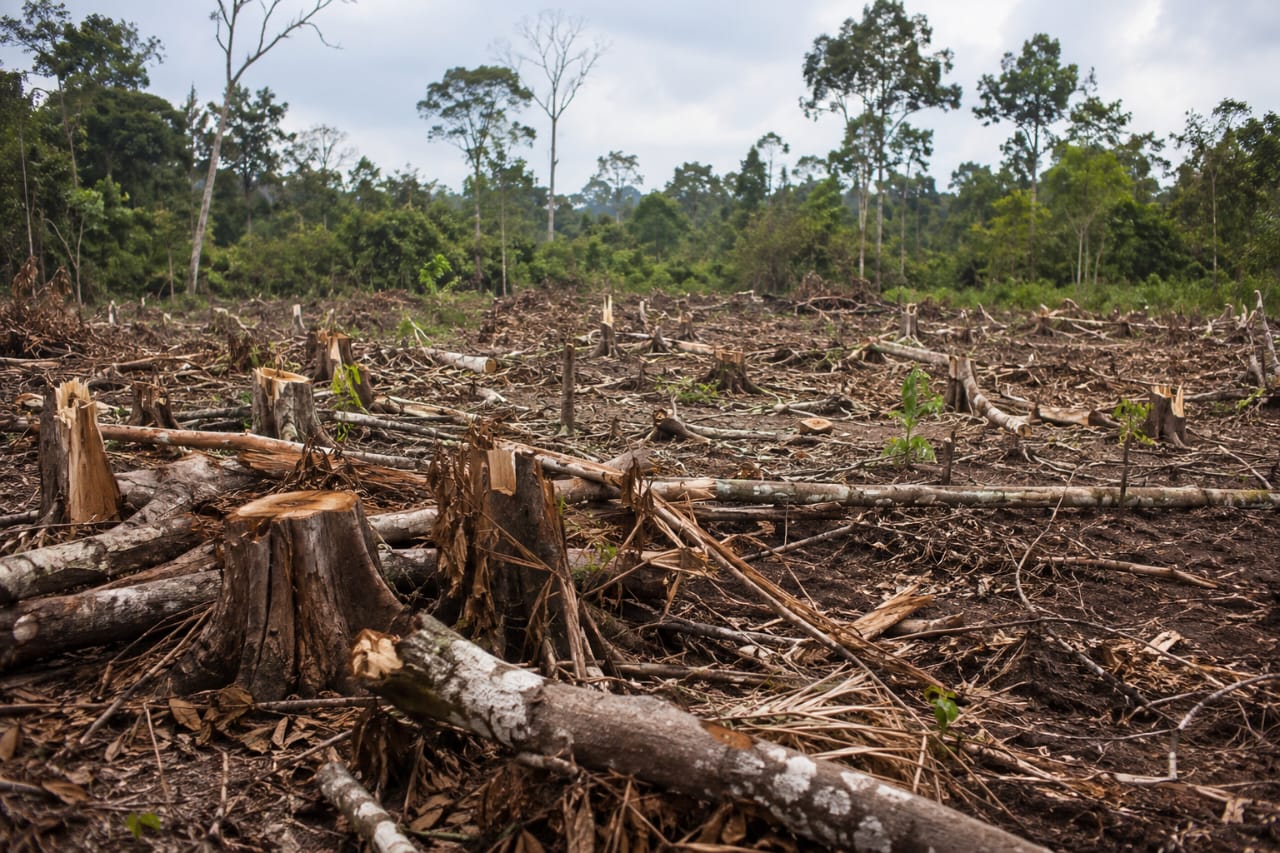
In Part II of this exclusive conversation, ACODE Deputy Executive Director Onesmus Mugyenyi discusses one of Uganda’s most sensitive environmental debates—refugees and forest degradation.
He explains why refugees should not be blamed for Uganda’s forest crisis, why their presence has increased pressure on already fragile ecosystems, why Karamoja’s environmental challenges are unique, and why Uganda must rethink conservation before climate change overtakes development.
West Nile hosts one of the largest refugee populations in Africa. To what extent are refugee settlements contributing to forest degradation?
There is no denying that refugee settlements have increased pressure on forest resources.
Evidence from our field engagements clearly points in that direction. While I may not be able to quantify the exact percentage of degradation attributable to refugees, I can confidently say the pressure is substantial.
When large refugee populations arrive, demand for basic necessities rises immediately. People need poles for shelter construction, firewood for cooking, timber for household use and land to support their livelihoods.
Naturally, nearby forests become the primary source of these resources.
In West Nile, forest reserves neighbouring refugee settlements have experienced increasing pressure because they provide readily available building materials, fuelwood and other forest products.
Even where refugees may not directly engage in charcoal production, their presence creates a growing market for charcoal. That demand encourages commercial producers and illegal loggers to exploit forests more aggressively.
The issue, therefore, goes beyond individual actions. Population growth around forest landscapes inevitably increases demand for natural resources, and unless that demand is managed sustainably, forest degradation accelerates.
The challenge is not refugees alone, but the absence of adequate systems to absorb that pressure without destroying the environment.
Some people may hear your findings and conclude that refugees are destroying Uganda’s forests. Is that a fair conclusion?
No. That would be an oversimplification of a much more complex issue.
Uganda’s forests were already under pressure long before the refugee influx. Illegal logging, commercial charcoal production, agricultural expansion, weak law enforcement, corruption and inadequate forest management have contributed to forest degradation for many years.
What refugee settlements have done is increase pressure on systems that were already struggling.
We should therefore avoid blaming vulnerable populations for problems rooted in governance failures.
Refugees need shelter. They need energy. They need food.
If planning for refugee settlements fails to integrate environmental protection, forests inevitably suffer.
The responsibility lies in designing humanitarian responses that protect both displaced people and the ecosystems supporting them.
Should Uganda’s refugee response include stronger environmental safeguards and restoration investments?
Absolutely.
Environmental conservation cannot be treated as an afterthought.
Every refugee response programme should have a deliberate conservation component.
Government, the Office of the Prime Minister, development partners and humanitarian agencies have started integrating environmental restoration into refugee programming, and that is encouraging.
However, our research suggests that current efforts remain inadequate.
There is still a significant imbalance between population growth and investment in environmental restoration.
We need much larger investments in tree planting, alternative energy technologies, landscape restoration, agroforestry and sustainable natural resource management.
Unless environmental considerations become central to refugee planning, forests will continue to pay the price.
Who should bear the cost of protecting forests in refugee-hosting districts—the Government of Uganda, development partners or the international community?
Ultimately, responsibility rests with the Government of Uganda.
Government has a constitutional obligation to protect the country’s natural resources. That responsibility cannot be delegated.
However, Uganda has also made an extraordinary humanitarian contribution by hosting one of Africa’s largest refugee populations.
The international community therefore has a moral obligation to support those efforts.
Many industrialised countries have historically contributed far more to global greenhouse gas emissions than countries like Uganda. They have made commitments under international climate agreements to finance climate adaptation and resilience.
Unfortunately, the support reaching countries like Uganda remains insufficient.
Government should continue leading conservation efforts while mobilising additional support from development partners, climate finance mechanisms and the international community.
Environmental protection in refugee-hosting districts should be viewed as a shared global responsibility.
Are we asking already vulnerable host communities to carry an environmental burden that should be shared internationally?
Yes.
Host communities often bear enormous environmental and economic costs.
They share land, water, forests and public services.
Yet the environmental burden rarely receives the same attention as humanitarian assistance.
Communities living alongside refugee settlements frequently experience declining forest resources, increased competition for firewood, reduced grazing areas and greater pressure on agricultural land.
Supporting refugees must therefore go hand in hand with supporting host communities.
Otherwise, resentment grows, environmental degradation worsens and social tensions become more likely.
Karamoja appears to face different environmental challenges from West Nile. What are the key drivers of forest degradation there?
Karamoja is unique. Its environmental challenges differ significantly from many other regions of Uganda. The first factor is climate. Karamoja experiences some of the country’s longest and harshest dry spells.
During prolonged droughts, pastoral communities are forced to move livestock into wetlands, protected areas and forest reserves in search of water and pasture.
That places enormous pressure on already fragile ecosystems. Secondly, Karamoja has historical land-use challenges. Some indigenous communities have lived inside forest reserves for generations.
When many protected areas were gazetted, questions surrounding community rights and land ownership were never fully resolved.
Today, many families continue living inside or adjacent to forest reserves without clear legal recognition of their rights.
Population growth has only intensified the pressure. As households expand, demand for agricultural land increases, yet much of Karamoja’s productive land falls within protected areas.
This creates inevitable conflicts between conservation and survival. Unlike West Nile, where refugee pressure is a major concern, Karamoja’s challenges are deeply rooted in climate, historical land tenure issues and pastoral livelihoods.
How much of what you are seeing in Karamoja is driven by climate change, and how much is simply poverty?
It is both. Climate change and poverty reinforce one another. However, I would caution against assuming poverty is the sole cause of environmental degradation.
Often, some of the biggest environmental destruction is caused by actors with significant financial resources. Mining companies, commercial operators and organised illegal resource exploiters cannot be described as poor.
Poverty contributes because vulnerable households sometimes rely heavily on forests for survival.
But degradation is also driven by commercial interests seeking profit. That is why addressing poverty alone will never solve Uganda’s environmental challenges.
Governance must also improve.
Can conservation succeed where communities are struggling simply to survive?
Conservation cannot succeed if survival is ignored. Communities facing hunger, drought and unemployment will naturally prioritise immediate needs.
That is understandable. But conservation and livelihoods should never be treated as competing objectives.
They should reinforce one another. Communities need economic opportunities that reward conservation rather than destruction.
When sustainable enterprises become profitable, conservation becomes part of local development instead of an obstacle to it.
That is the future Uganda should pursue.
What lessons should the rest of Uganda learn from Karamoja?
Karamoja offers an important warning. For many years, prolonged droughts were viewed as unique to that region. Today, we are witnessing similar climate patterns across much of Uganda.
Longer dry spells are becoming more frequent. Water sources are shrinking. Agricultural productivity is declining.
What has happened in Karamoja demonstrates what environmental degradation combined with climate change can do. If Uganda continues losing forests elsewhere, other regions may begin experiencing similar ecological conditions.
The lesson is simple: protect forests before environmental decline reaches irreversible levels. Waiting until landscapes collapse is far more expensive than preventing degradation in the first place.
By the midpoint of this exclusive conversation, one message had become unmistakable: Uganda’s forest crisis cannot be blamed on one institution, one community or one region.
It is the result of weak governance, limited financing, corruption, inadequate community incentives, climate change and competing development pressures.
Yet perhaps the most difficult question remains: Does Uganda have a forest policy problem—or simply an implementation problem?
