
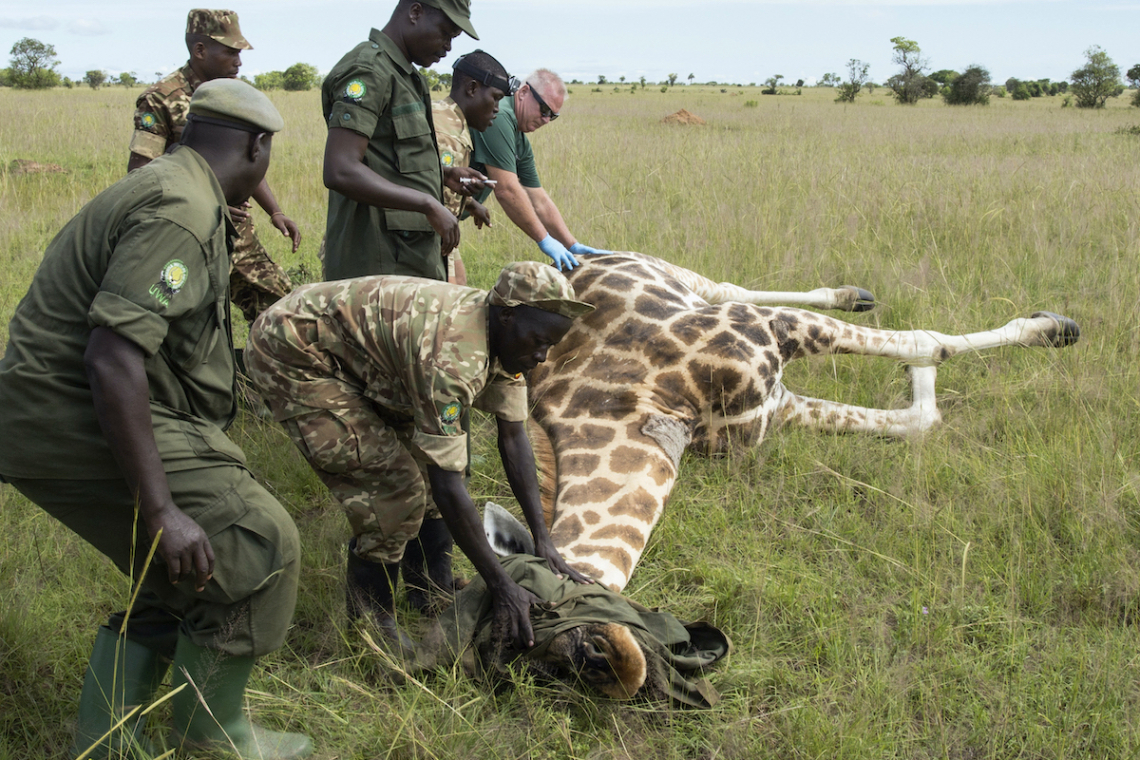
Every ranger who walks into Uganda’s national parks understands the risks. Protecting wildlife is not just a job—it is a duty that can demand the ultimate sacrifice. For some families, conservation has meant losing a parent, a partner and a provider. Yet even in loss, stories of resilience continue to emerge.
As the Uganda Wildlife Authority (UWA) celebrates encouraging conservation gains and looks ahead to a promising 2026, the agency is also reflecting on the lives of rangers who died in the line of duty—and the children who now carry their legacy forward.
Across Uganda’s protected areas—from the savannah plains of Queen Elizabeth National Park to the rugged landscapes of Kidepo Valley National Park—wildlife rangers patrol daily, confronting threats that range from armed poachers to dangerous wildlife encounters.
Over the years, several rangers have lost their lives while protecting Uganda’s natural heritage. Some were shot by poachers, others attacked by wild animals, while some died in accidents during patrols.
According to Bashir Hangi, Head of Communications and Public Relations at UWA, the loss of rangers is deeply felt across the conservation community.
“In the line of duty, we have colleagues who have lost their lives. Some were shot by poachers, others were killed by animals, and some died in accidents. It is very painful, especially when a breadwinner loses their life,” Hangi said.
Behind every fallen ranger is a family grappling with grief and uncertainty—widows forced to rebuild their lives and children growing up without the presence of a parent who died protecting wildlife.
Recognizing this reality, UWA established the Fallen Rangers Fund, an initiative designed to support the education and welfare of children whose parents died while protecting Uganda’s wildlife.
The programme currently supports about 150 orphaned children across the country, ensuring they remain in school despite the loss of their parents.
“As Uganda Wildlife Authority, we created the Fallen Rangers Fund to support children of our colleagues who died strictly in the line of duty,” Hangi explained.
“We are currently supporting the education of about 150 orphaned children across the country. We already have one graduate, and many others are still in school.”
The fund covers school fees, uniforms and scholastic materials—offering stability and opportunity to children who might otherwise face an uncertain future.
Among the families whose lives were forever changed is that of Hope Kobusheshe.
Her husband, Angel Kobusheshe, worked as an accounts officer with the Uganda Wildlife Authority at Queen Elizabeth National Park. In February 2013, armed thieves stormed the Ishasha accounts office during working hours. Angel was shot dead during the attack.
He never returned home.
Hope was left widowed with three children—and one month pregnant.
More than a decade later, she says the support from UWA has helped her family remain strong despite the tragedy.
Her children, once in primary school, are now progressing through secondary education. The youngest child—born after his father’s death—is now preparing to join Senior One.
In 2022, UWA committed to supporting the education of Hope’s children through to university, ensuring that their father’s sacrifice would not leave their future uncertain.
For families like hers, the Fallen Rangers Fund is not charity—it is a lifeline.
To sustain the programme, UWA organises the Fallen Rangers Conservation Marathon, an annual event aimed at raising awareness and mobilising support for families of fallen rangers.
The 2026 marathon is scheduled to take place at Kitante Primary School in Kampala.
The event will bring together elite runners, professional athletes, recreational runners and individuals running simply to support the cause.
“We are organising this marathon to create awareness, raise funds and amplify the sacrifices made by our rangers,” Hangi said.
“We shall have elite runners, professional runners, fun runners and cause runners—people who simply want to stand with these families.”
Participants will purchase marathon kits, with proceeds going directly toward supporting the education of the children.
The gold marathon kit, priced at shs 50,000, includes a vest, cap, armband and marathon bag. Corporate organisations and well-wishers are also being encouraged to contribute.
Among the beneficiaries is Tashobya Kelvin, now a Senior Two student and one of the children of the late Angel Kobusheshe.
Understanding the sacrifice his father made has shaped Kelvin’s perspective on conservation and the work of rangers protecting Uganda’s wildlife.
For him, the support from UWA represents more than financial assistance—it is a reminder that his father’s sacrifice is remembered.
Even as UWA honours fallen rangers, the authority is also reporting encouraging conservation progress.
One of the most ambitious initiatives involves expanding Uganda’s rhino population. UWA plans to relocate 16 more rhinos to Ajai Wildlife Reserve while also importing 30 additional rhinos that will eventually be moved to Kidepo Valley National Park.
Four rhinos already relocated to Ajai are reportedly thriving following extensive habitat preparation and conservation planning.
“We improved feeding areas, installed solar-powered water pumping systems and constructed a permanent electric sanctuary fence,” Hangi said.
“Communities welcomed the rhinos and assured us that past mistakes will not happen again.”
Technology is also transforming conservation efforts.
Through integrated monitoring systems, UWA can now track activity in several parks in real time from its headquarters in Kampala—enabling faster responses to poaching threats and emergencies.
“There is now stronger use of technology. From Kampala, we can monitor what is happening in our parks and respond quickly,” Hangi said.
There is also growing optimism in primate conservation.
Recent gorilla births suggest increasing populations in Uganda’s mountain forests, while about 1,400 chimpanzees have been recorded in the Rwenzori Mountains.
The development has sparked discussions around the possibility of chimpanzee trekking experiences in the future, which could further strengthen Uganda’s tourism sector.
Despite this progress, challenges remain—particularly human-wildlife conflict and continued pressure on wildlife habitats.
UWA says long-term conservation success will depend heavily on the support of communities living near protected areas.
“Conservation is a calling for everyone,” Hangi said.
“When you conserve, you leave a legacy—forests, rivers and wildlife. We call upon Ugandans to stand with the families of those who died protecting this heritage.”
As Uganda looks toward stronger tourism and conservation prospects in 2026, the Uganda Wildlife Authority says it will continue to honour the rangers who paid the ultimate price.
Because behind every thriving national park, every roaming rhino and every newborn gorilla—there is a ranger who stood guard.
And in some cases, never came home.
