

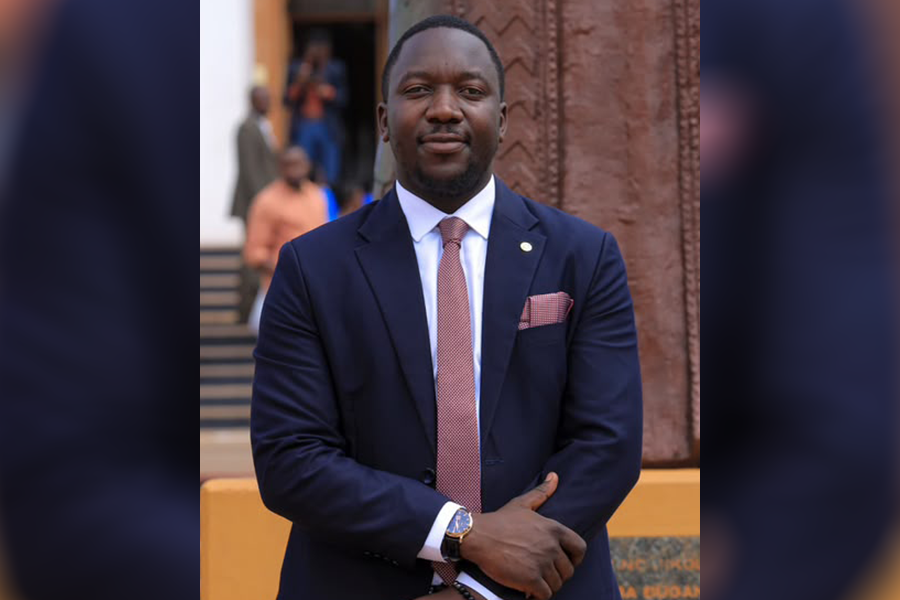
By John Cliff Wamala
When Uganda announced temporary restrictions along parts of its border with the Democratic Republic of the Congo following the resurgence of the Bundibugyo strain of Ebola, many people viewed the move as the country's strongest defence against the disease.
Border controls, screening points, surveillance systems and movement restrictions are important. They help reduce the risk of cross-border transmission and buy valuable time for health authorities.
But Uganda's experience with Ebola has consistently shown that outbreaks are rarely defeated at border posts.
They are defeated in communities.
They are defeated in villages where trusted volunteers walk door-to-door dispelling myths. They are defeated in crowded trading centres where local leaders convince families to report symptoms early. They are defeated in schools, churches, mosques, refugee settlements, taxi parks and burial grounds where ordinary people begin trusting health messages over fear, misinformation and stigma.
That is where the real battle now lies.
With borders partially shut and movement tightly controlled, Uganda's Ebola response is entering a phase where community-based interventions will determine whether the country succeeds in containing the outbreak or faces wider transmission.
The Bundibugyo strain presents a particularly difficult challenge because, unlike the Zaire strain, there is currently no approved vaccine available for widespread use. This means prevention, early detection, community surveillance and public cooperation become even more critical.
In other words, every Ugandan has a role to play.
Past Ebola outbreaks across the region have demonstrated that fear and misinformation can spread faster than the virus itself. Communities sometimes hide sick relatives, avoid health workers, resist contact tracing efforts or rely on unverified information circulating through social networks and informal channels.
Such actions, though often driven by fear, create opportunities for the disease to spread.
The most effective response therefore depends not only on hospitals, laboratories and emergency operations centres, but also on trust between communities and the people working to protect them.
Uganda has seen this before.
During previous Ebola outbreaks in Bundibugyo, Mubende and Kassanda districts, community volunteers worked alongside health authorities to raise awareness, identify suspected cases, support contact tracing and encourage early reporting.
Many of these volunteers came from organisations such as the Uganda Red Cross Society, Village Health Teams, local community structures and other humanitarian partners. Their strength was not simply their training but their connection to the communities they served.
They were neighbours speaking to neighbours.
They were local people answering questions, calming fears and helping families understand how to protect themselves.
Today, as Uganda strengthens preparedness measures in districts considered at high risk, similar efforts are underway. Community volunteers are supporting public awareness campaigns, household sensitisation, surveillance activities, hygiene promotion and the dissemination of verified health information.
Their work often happens quietly and away from the headlines, yet it remains one of the most important components of outbreak control.
The Uganda Red Cross Society, as in previous outbreaks, already has teams on the ground. During Uganda's seventh Ebola outbreak, the organisation trained and deployed more than 3,000 volunteers to support risk communication, community engagement, surveillance and contact tracing in affected districts.
Those volunteers are once again supporting community sensitisation, public awareness campaigns, community-based surveillance, contact tracing, hygiene promotion, coordination with district health teams and Village Health Teams, screening at points of entry and dissemination of verified public health information.
The organisation continues to draw upon a network of trained epidemic preparedness volunteers developed through previous Ebola responses.
However, volunteers cannot succeed alone.
Communities must be willing to listen, cooperate and support those working to keep them safe.
When volunteers visit homes, they should be welcomed. When health workers advise on preventive measures, their guidance should be followed. When rumours emerge, they should be verified before being shared. When symptoms appear, they should be reported immediately.
Protecting communities from Ebola is not solely the responsibility of government or humanitarian organisations.
It is a shared responsibility.
The coming weeks will require vigilance from all of us.
Parents should talk to their children about Ebola prevention. Religious leaders should continue sharing accurate health information. Community leaders should encourage openness and early reporting. Media organisations should prioritise facts over speculation.
Above all, communities must stand with the volunteers and frontline workers who often place themselves at risk to protect others.
These individuals are not outsiders. They are members of our communities serving on the frontlines of public health.
Uganda has successfully contained Ebola outbreaks before. The country has the experience, the expertise and the community networks needed to respond effectively.
But success will depend on more than policies and restrictions.
It will depend on whether communities remain informed, alert and united.
Border controls may slow the virus.
Communities will stop it.
That is why the most important frontline in Uganda's Ebola response is not found at a checkpoint or a border crossing. It is found in our homes, our villages, our markets, our places of worship and our communities.
Because outbreaks are ultimately contained one informed family, one vigilant neighbour and one supportive community at a time.