
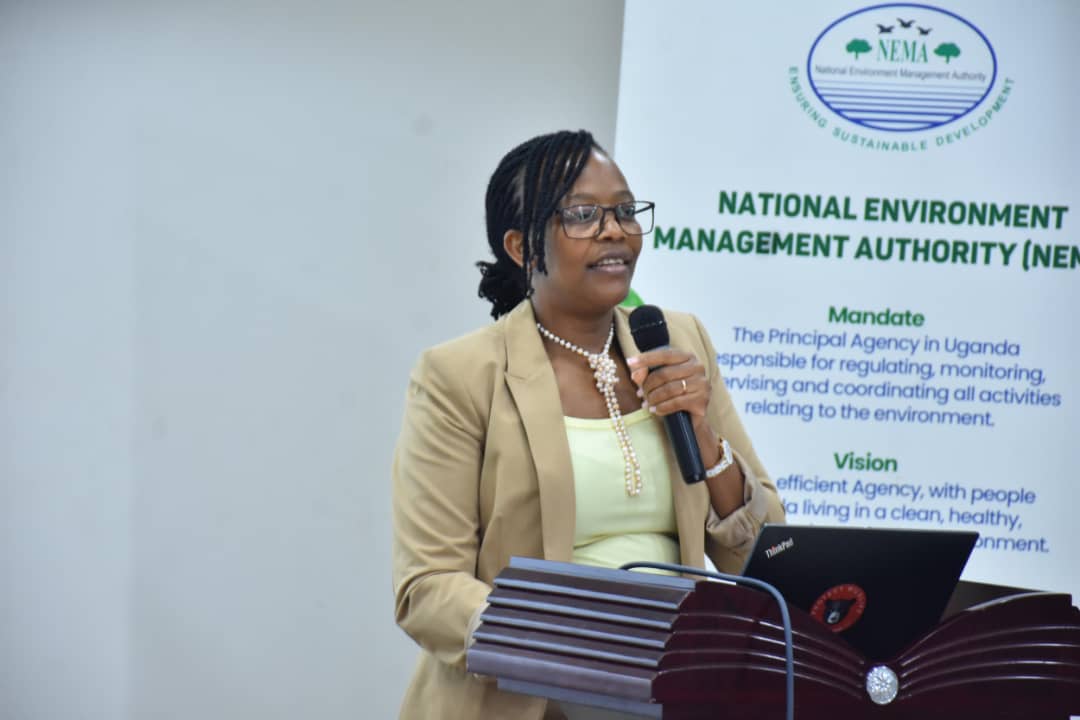
KAMPALA — Lady Justice Gladys Kamasanyu has urged Ugandans to become active participants in environmental conservation, saying the fight against climate change and environmental degradation cannot be left to governments and international organisations alone.
Speaking during a community outreach event focused on environmental stewardship, the Utility Court (a specialized court division established to handle cases involving environmental protection, public health, sanitation, utilities, and related regulatory offences) judge called on citizens to embrace everyday practices that contribute to a cleaner, healthier and more sustainable environment.
"The sheer scale of the environmental crises we face can sometimes feel overwhelming," Kamasanyu said.
"We look to national governments for robust policies and to international bodies for global agreements, and rightly so. But to depend solely on these high-level solutions would be to neglect the most potent force for change available to us – ourselves."
She argued that meaningful environmental protection begins with individual choices and collective community action, stressing that every citizen has a role to play in safeguarding natural resources for future generations.
"The ultimate resilience and health of our environment are inextricably linked to the collective will and the daily endeavours of every person in this nation," she said.
Kamasanyu encouraged Ugandans to reduce their dependence on single-use plastics, embrace recycling and composting, and adopt more responsible consumption habits.
She also highlighted the importance of conserving water and energy through simple measures such as fixing leaking taps, reducing electricity consumption and investing in energy-efficient technologies.
According to the judge, small actions undertaken consistently by millions of people can produce significant environmental benefits over time.
Beyond individual behaviour, Kamasanyu called for greater community participation in environmental initiatives, including neighbourhood clean-up campaigns and efforts to protect public spaces.
She said such activities not only improve local environments but also strengthen civic responsibility and community ownership.
"Environmental protection is not an abstract concept reserved for policymakers and experts. It is an everyday responsibility that belongs to all of us," she said.
A key part of her message centred on public education and advocacy. Kamasanyu urged citizens to deepen their understanding of environmental challenges and share that knowledge within their communities.
"Knowledge is power, especially when it comes to protecting our environment. We must educate ourselves about the challenges we face and help others understand the consequences of environmental degradation," she said.
She further encouraged Ugandans to support environmentally responsible policies and engage local leaders on issues affecting their communities.
Her remarks come at a time when Uganda is grappling with growing environmental challenges, including plastic pollution, wetland degradation, deforestation, rapid urbanisation and the increasing effects of climate change.
In recent years, experts have warned that changing weather patterns, prolonged droughts, floods and land degradation are posing significant risks to agriculture, water resources and livelihoods across the country.
Kamasanyu said addressing these challenges will require a combination of government action, private-sector commitment and citizen participation.
She noted that environmental sustainability cannot be achieved through legislation alone and that individual responsibility remains a critical component of long-term solutions.
Her message resonated with attendees, many of whom welcomed the call for greater public involvement in environmental conservation efforts.
As Uganda continues to confront mounting environmental pressures, Kamasanyu's appeal places citizens at the centre of the conversation, arguing that the country's environmental future will ultimately be shaped not only by policies and institutions but also by the choices made in homes, schools, workplaces and communities every day.
