

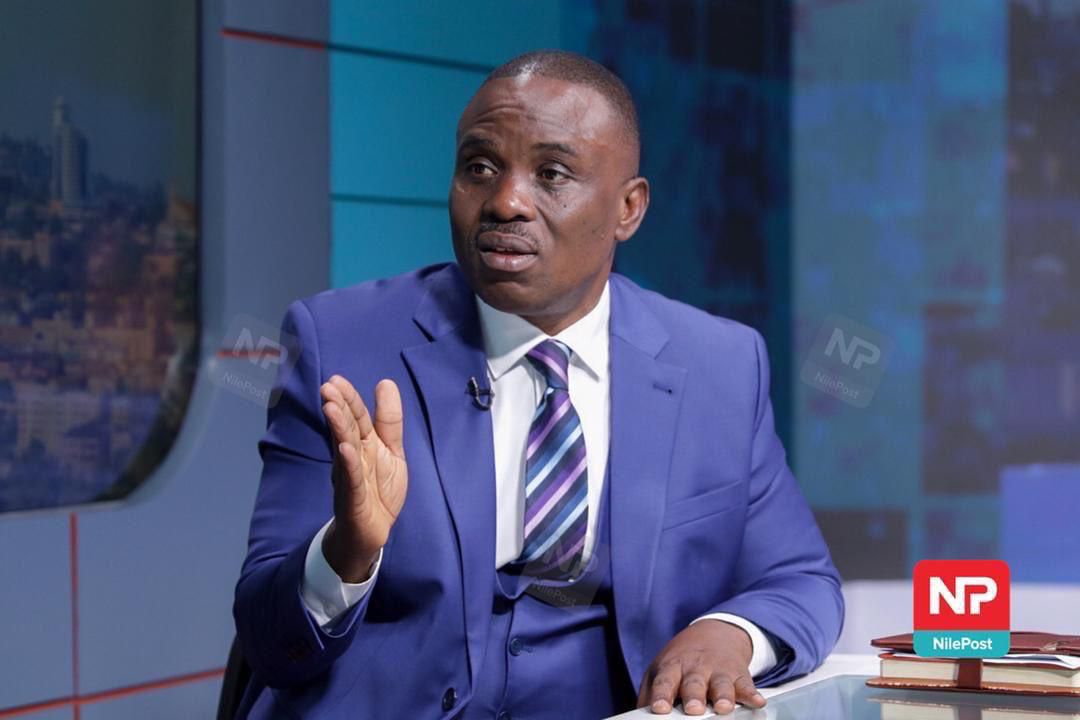
The arrest of People’s Front for Freedom (PFF) president Elias Lukwago may have temporarily disrupted the party’s activities, but political analyst and city lawyer Isaac Atukunda believes it could ultimately strengthen the fledgling opposition formation by increasing its national visibility.
Lukwago was arrested on Monday under unclear circumstances, triggering debate among opposition supporters and political observers over whether the move was linked to his political activities.
His arrest comes at a time when People’s Front for Freedom is already grappling with the continued detention of one of its founding figures, Kizza Besigye, whose legal troubles have dominated opposition politics in recent months.
Speaking to Nile Post, Atukunda urged caution against drawing conclusions before authorities formally disclose the charges against Lukwago.
“As of now, you cannot tell with certainty why he was arrested,” Atukunda said.
“Speculation links his arrest to issues surrounding Dr Kizza Besigye, while another school of thought looks at it as the arrest of the president of PFF. We need to wait and know the exact charges before we can conclusively determine the circumstances.”
However, Atukunda argued that if the arrest is found to be connected to Lukwago’s position as leader of PFF, historical precedent suggests it could end up benefiting both the politician and his party.
He noted that Uganda’s political environment has often seen arrests of prominent opposition figures generate public sympathy, media attention, and increased political visibility.
He pointed to Besigye as a key example.
“When Dr Besigye was arrested, it gave him leverage and actually made him the face of the opposition in Uganda,” Atukunda observed.
For years, Besigye’s repeated arrests and confrontations with security agencies elevated his national and international profile, cementing his status as one of Uganda’s most recognisable opposition leaders.
Atukunda believes a similar dynamic could emerge from Lukwago’s arrest.
“If you arrest the president of PFF, which is still a young party, it suddenly becomes visible. It gives the leader a national opposition profile and creates public interest in the party,” he said.
He added that PFF has struggled to match the visibility of larger opposition formations, particularly the National Unity Platform (NUP), which has dominated opposition politics in recent years.
According to him, the arrest could inadvertently provide the publicity and recognition that political mobilisation alone might take years to achieve.
“If PFF uses this arrest to garner public sympathy and support, it could actually end up promoting the party rather than weakening it,” he said.
However, he acknowledged that the immediate consequences are likely to be disruptive.
The absence of Lukwago from active leadership, combined with ongoing legal challenges facing Besigye, could strain the party’s organisational structure and mobilisation efforts.
“In the short term, there is disruption because the president is in jail and one of the party’s key founders is also facing legal challenges. The party has to reorganise and adjust its leadership operations,” he noted.
Despite these challenges, Atukunda maintained that the long-term political implications could still favour PFF if it successfully frames the arrests as part of a broader struggle for political freedoms and democratic space.
He argued that if Lukwago’s arrest is ultimately linked to his role as an opposition leader, it would raise broader questions about the environment in which opposition parties operate.
“It poses questions about political space, mobilisation and whether opposition parties are being allowed to operate freely,” he said.