
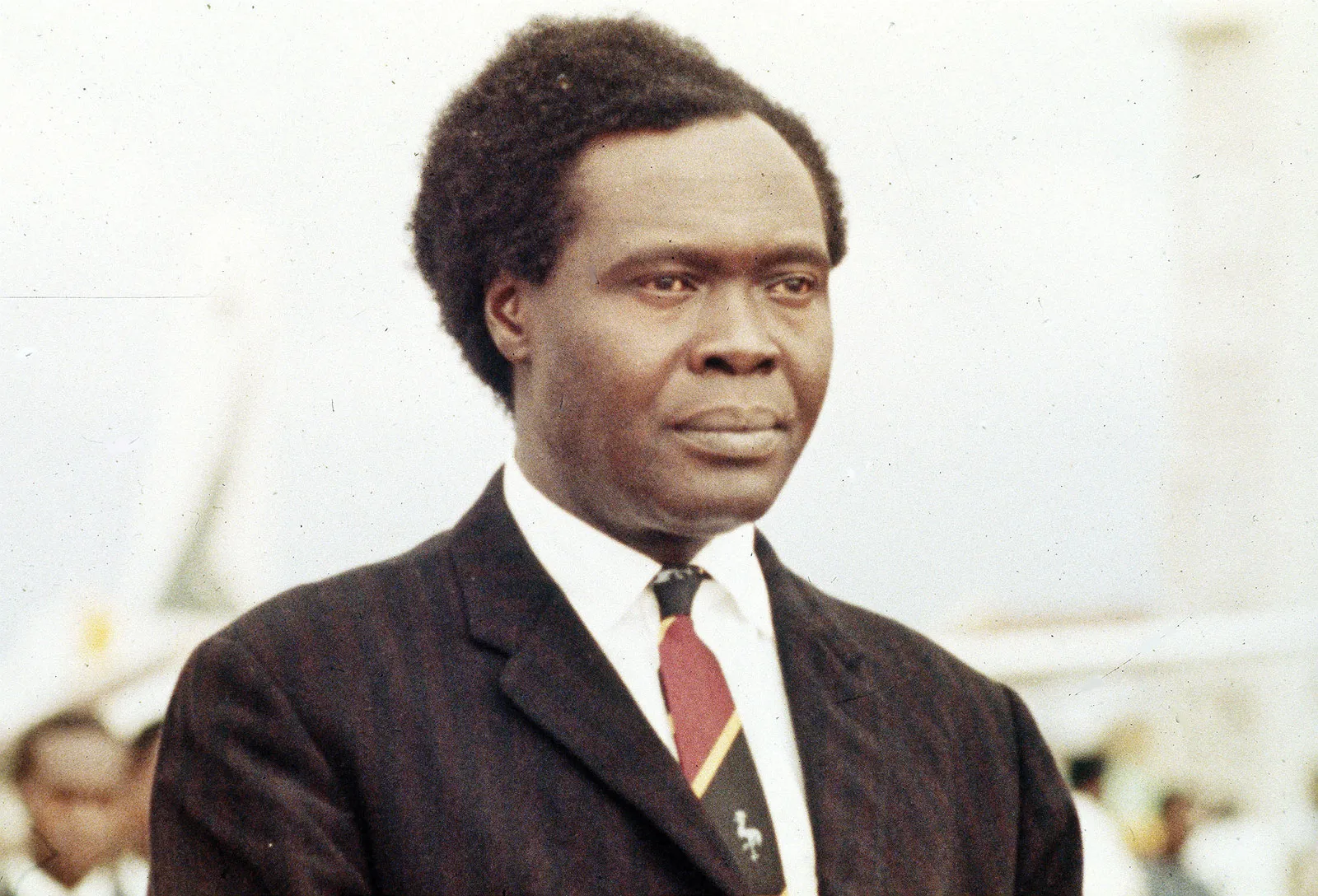
On April 15, 1966, Uganda witnessed one of the most dramatic constitutional shifts in its history when Prime Minister Milton Obote introduced a new constitution under heavy military deployment and without prior notice or parliamentary debate.
Members of Parliament were instructed to collect copies of the document from their pigeonholes—an unusual process that earned it the nickname “Pigeonhole Constitution.”
A “pigeonhole” is simply a small personal slot or compartment—like a mail cubby—where documents are placed for someone to pick up.
In lay terms, it was like being handed a new rulebook without any discussion—just finding it on your desk and being expected to accept it immediately.
The new arrangement replaced the 1962 Independence Constitution and fundamentally altered Uganda’s governance structure. It abolished the federal status of traditional kingdoms and concentrated executive authority in Obote’s hands by merging the offices of President and Prime Minister. Uganda was subsequently declared a republic.
The move came at a time of heightened political tension, particularly following the 1965 gold scandal and a deepening rift between the central government and Buganda’s leadership.
Edward Muteesa II, who was also serving as President, rejected the new constitution, setting the stage for a major political confrontation.
The crisis escalated in May 1966 when the national army, led by Idi Amin, attacked the Kabaka’s palace at Mengo. Muteesa fled into exile in United Kingdom, where he later died.
Although initially presented as a temporary measure, the “Pigeonhole Constitution” marked a turning point in Uganda’s post-independence history.
It centralised state power and laid the groundwork for the 1967 Republican Constitution, further entrenching executive dominance and redefining the country’s political trajectory.
