
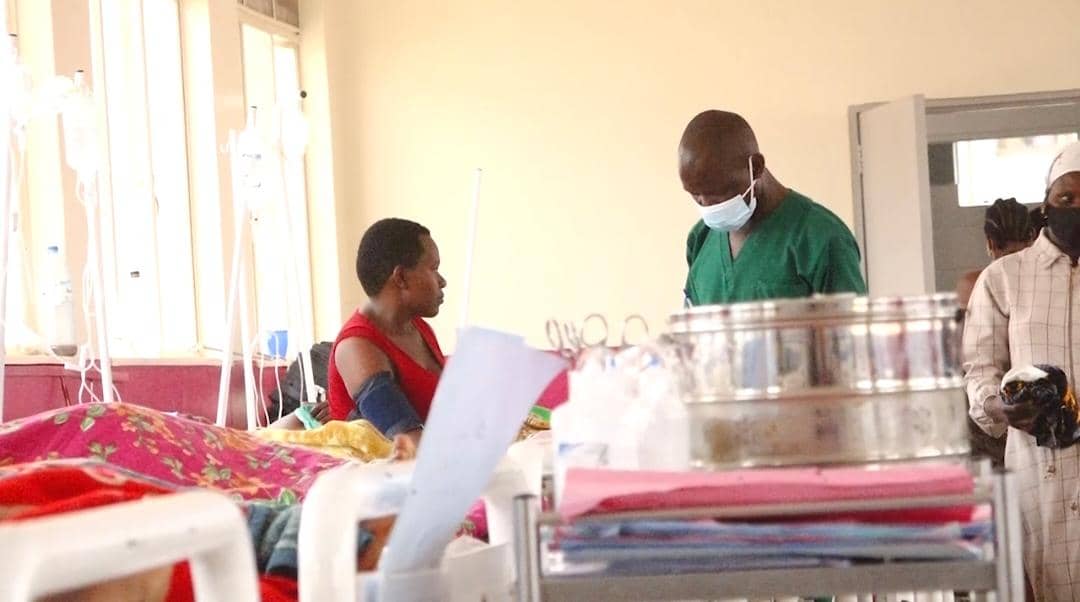
A six-week investigation by the State House Health Monitoring Unit (HMU) has uncovered financial and administrative challenges at Mbarara Regional Referral Hospital (MRRH), including failure to account for Shs4.1 billion, ghost utility payments, fraudulent fuel claims and high staff absenteeism.
The investigation, led by HMU Executive Director Dr Warren Naamara, found that hospital management could not provide accountability for the funds in question.
"The hospital management has failed to account for Shs4.1 billion. Hospital administrators claimed to have paid over Shs2 billion towards utility bills. However, we have found no physical receipts," Dr Naamara said.
He added that the National Water and Sewerage Corporation (NWSC) had not confirmed receiving the alleged payments.
"They claim to have paid over Shs2 billion but no receipt and NWSC doesn't acknowledge receipt," Naamara said.
The probe also uncovered alleged irregularities in fuel consumption involving hospital vehicles and generators.
"We have discovered that drivers have been fueling cars and retaining money that is not accounted for. They requisition 80 litres, fill 40 litres and take the balance in cash," Dr Naamara said.
The investigation further pointed to a human resource crisis at the hospital, which is operating with far fewer staff than required.
According to HMU findings, Mbarara Hospital has only 318 workers against an approved requirement of 1,256 staff. Investigators also reported a high rate of absenteeism among available workers, affecting service delivery.
"The audit revealed a staggering 50% absenteeism rate among the hospital's active staff, severely compromising patient care," Dr Naamara said.
Acting Executive Director of Mbarara Regional Referral Hospital Dr Deus Twesigye acknowledged the staffing challenges, saying the hospital is operating under immense pressure.
"We have only 331 staff out of the required 1,256. We are overwhelmed," Twesigye said.
On absenteeism, he said the hospital is introducing a digital attendance system linked to the Human Capital Management (HCM) system to monitor staff presence and ensure salaries are paid to only those who report for duty.
"On the inability to account for the funds, we shall wait for the investigators' report. The investigators found out that fuel for cars and generators has been exaggerated by drivers and managers," he said.
The HMU has since handed over an official memorandum of the audit findings to relevant authorities, with Dr Naamara warning that the issues raised require urgent action from hospital administrators.
The unit has given implicated officials and hospital managers until December to account for the funds, respond to the findings and provide measures to address the identified failures.
The HMU warned that failure to resolve the issues could lead to further action, including possible criminal prosecution.
