
By Tamara Nalubowa
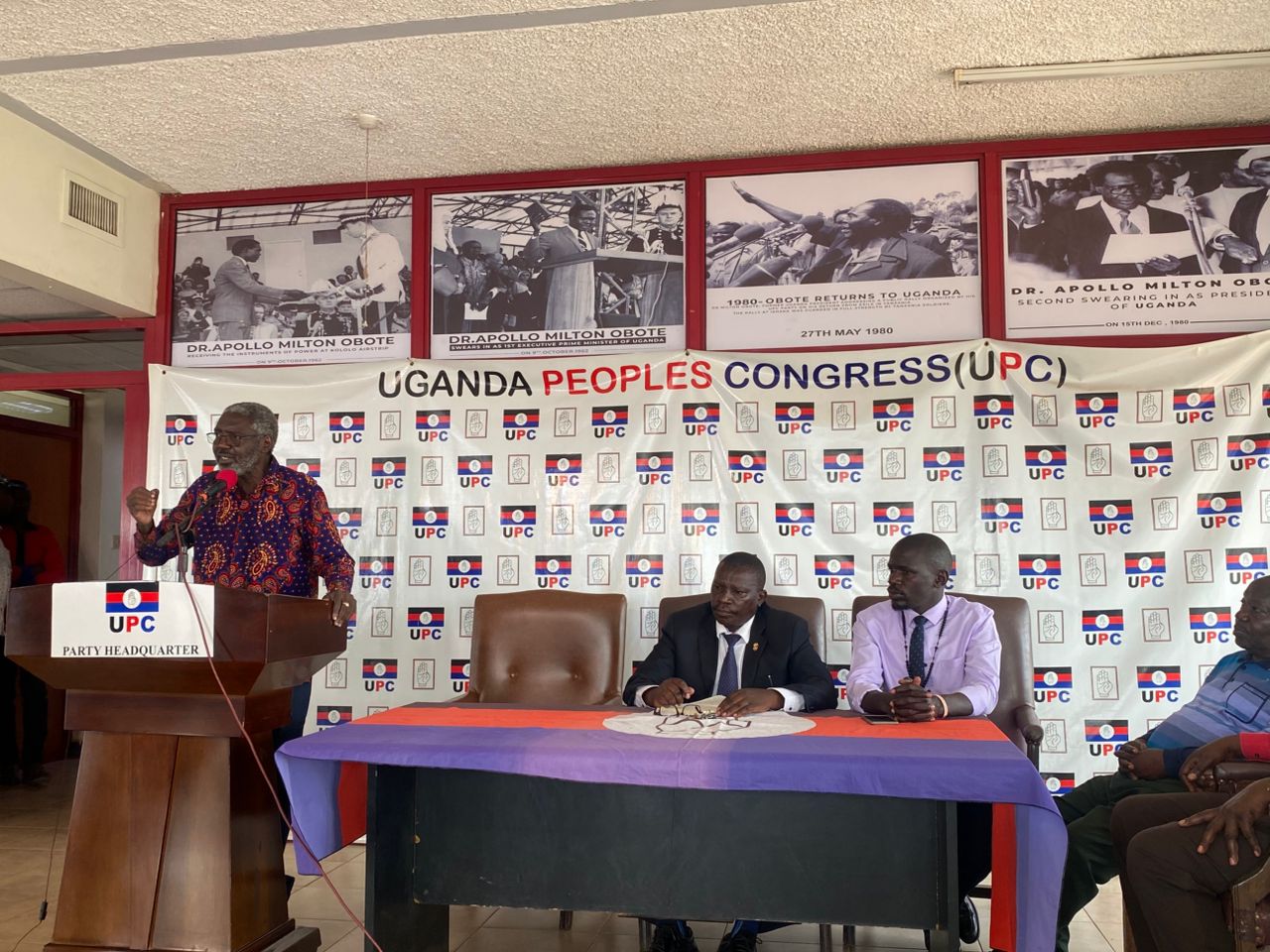
Uganda People’s Congress (UPC) President Jimmy Akena has intensified his call for the deployment of Biometric Voter Verification Kits (BVVK) in the forthcoming Local Council I (LCI) and LCII elections, saying their use is necessary to uphold transparency and the rule of law at the grassroots level.
Addressing a press conference on February 25, 2026, Akena argued that the biometric machines are legally mandated tools and should not be sidelined in favor of traditional voting methods.
“We need a system representative of the rule of law,” Jimmy Akena said, adding that the kits are a “creature of the law” and ignoring them would amount to disregarding established legal instruments.
Akena pointed to the substantial public investment in biometric technology, noting that approximately Shs 268.38 billion was spent to procure more than 100,000 units.
Although the Electoral Commission faced widespread technical challenges with the machines during the January 2026 general elections, he maintained that the upcoming LCI elections provide an opportunity to restore confidence in the system and deliver a verifiable voting process.
During the briefing, Akena also criticized the conduct of the 2026 general elections, saying he contested “with hands tied behind his back” and a “boot on his neck.”
Despite what he described as heavy-handedness and military interference, he said the UPC secured 12 parliamentary seats.
He cited Lira as one of the areas where he believes the presence of the military influenced outcomes, reiterating his opposition to the involvement of security forces in electoral processes.
Akena urged the ruling National Resistance Movement (NRM) government to embrace alternative policy perspectives and called on President Museveni to engage constructively with opposition voices.
The UPC leader further revisited historical political debates, asserting that his party legally won the 1980 general elections and cautioning against what he described as false narratives surrounding UPC’s legacy.
His remarks come as Local Government Minister Raphael Magyezi has indicated that the upcoming grassroots elections will proceed using the traditional lining-up method, citing cost considerations.
Akena’s insistence on biometric verification now sets up a debate over whether financial constraints should outweigh the enforcement of what he describes as legally established electoral safeguards.
With Local Council elections scheduled for March, the disagreement signals renewed tension over the credibility and administration of Uganda’s electoral processes at the village and parish levels.
