
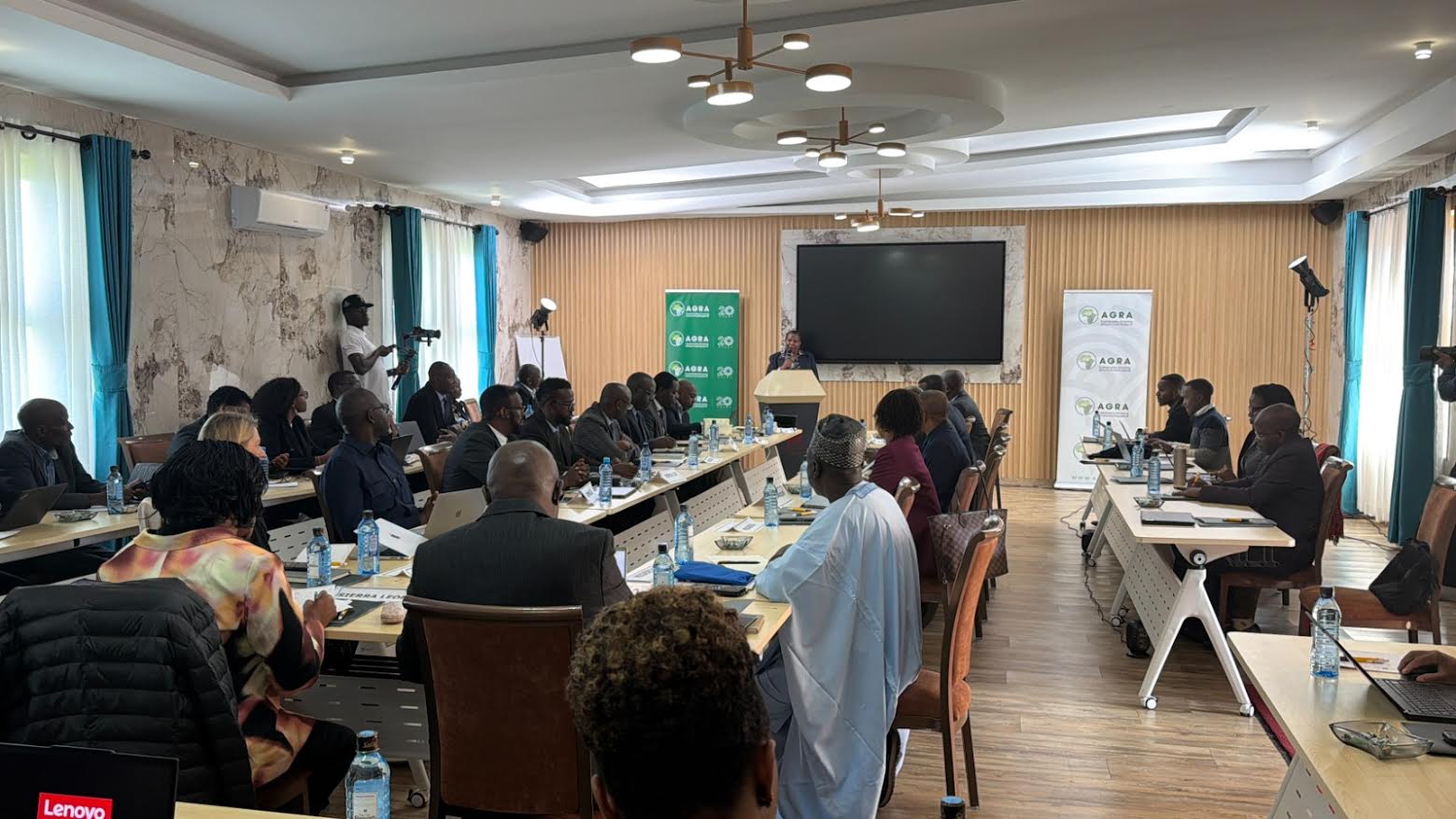
Uganda is among 14 African countries challenged to deliver measurable improvements in farmer incomes within the next three agricultural seasons, as a high-level retreat of Permanent Secretaries opened in Limuru.
Delivering the opening remarks, president Alice Ruhweza called on senior civil servants to shift from policy commitments to execution, urging them to prioritise practical interventions that can quickly improve farmer productivity and earnings.
“What can you, as Permanent Secretaries, do within the next three farming seasons to materially improve farmer prosperity?” she asked.
The call comes at a critical moment for Uganda, where agriculture remains central to the economy but continues to underperform relative to its potential. According to the Uganda Bureau of Statistics (UBOS), agriculture employs more than 70 percent of the population, yet contributes only about 24 percent of Gross Domestic Product (GDP), reflecting low productivity and limited value addition.
Despite sustained public investment and multiple reform programmes, farmer incomes in Uganda remain constrained by structural challenges. These include limited access to quality inputs, weak extension services, post-harvest losses estimated at 20–30 percent for major staples, and inadequate access to affordable agricultural finance.
Government initiatives such as the Parish Development Model (PDM) and agro-industrialisation programmes have sought to address these gaps, but implementation bottlenecks and coordination challenges continue to limit their impact at scale.
Ruhweza emphasised that this implementation gap, rather than policy absence, is now the primary barrier to progress across many African countries, including Uganda.
“Over the next two days, I encourage a spirit of candour and a shared focus on advancing what we must do differently, together, for agriculture to become Africa’s next truly investable opportunity,” she said.
For Uganda, the retreat places renewed focus on practical, high-impact interventions that can deliver results within a short timeframe. These include strengthening access to certified seed and fertiliser, particularly for staple crops such as maize, beans, and rice; expanding aggregation systems through cooperatives and farmer groups; and improving post-harvest handling through investment in drying, storage, and quality management infrastructure.
There is also growing emphasis on structured trade systems, including warehouse receipt systems, which are critical for stabilising prices and enabling farmers to access better markets. Uganda has made progress in this area, supported by institutions such as the Uganda Grain Council and partners including AGRA, but coverage remains limited relative to national demand.
Access to finance remains another key constraint. While initiatives under the Agricultural Credit Facility and PDM are expanding rural financing, many smallholder farmers remain excluded from formal financial systems due to high interest rates, collateral requirements, and limited financial literacy.
The retreat reflects a broader continental shift toward positioning agriculture as a viable investment sector capable of attracting private capital. In Uganda, agriculture contributes significantly to export earnings, including coffee, fish, maize, and beans, yet value chains remain underdeveloped, with limited agro-processing and weak linkages to regional and international markets.
Experts argue that improving farmer profitability is essential not only for rural livelihoods but also for national economic transformation. With a rapidly growing population and increasing demand for food, Uganda’s ability to modernise its agricultural sector will be critical for both food security and export competitiveness.
The three-season timeline set by Ruhweza introduces a clear accountability framework, requiring governments to demonstrate visible impact within a defined period. The participation of Permanent Secretaries, who oversee policy implementation across ministries, signals a deliberate focus on execution, coordination, and results.
For Uganda, this will require stronger alignment between the Ministries of Agriculture, Finance, Trade, and Local Government, as well as more effective engagement with the private sector.
“We know that when farmers prosper, Africa prospers,” said Ruhweza.
The outcomes of the retreat are expected to include concrete country-level commitments, with progress likely to be tracked over the next planting cycles—a period that will test Uganda’s ability to translate policy ambition into measurable gains for farmers.
