
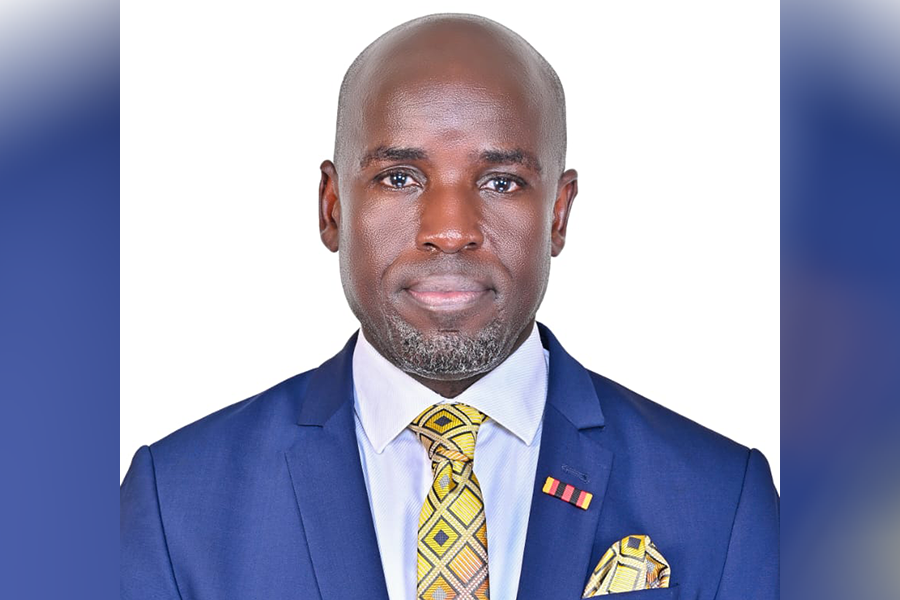
By Ronex Kisembo Tendo
History is often unkind to nations that interrupt serious work halfway. Time and again, states that confuse momentum for completion have paid a heavy price. Burkina Faso’s early revolutionary discipline under Thomas Sankara collapsed into stagnation after his assassination. Libya’s sudden removal of Muammar Gaddafi dismantled state security without a replacement, plunging the country into militia fragmentation. Iraq’s 2003 state collapse unleashed prolonged sectarian violence after institutional continuity was broken.
Closer to the region, Ethiopia’s rapid political rupture exposed unresolved federal and ethnic tensions, culminating in civil war. South Sudan’s independence, achieved before institutions were fully consolidated, gave way to internal conflict within two years. In each case, systems still under construction were exposed too early, and political impatience outran state capacity.
The pattern is structural. State-building is not linear. It cannot be rushed or sustained by optimism alone. It requires time for institutions to mature, continuity to preserve stability, and restraint to avoid reversing fragile gains. Where these conditions are ignored, regression becomes more likely than renewal.
It is within this context that President Yoweri Kaguta Museveni’s recurring question must be understood: “I have hunted the game and cut off its head. Now you tell me to go. Where should I go?” It is not merely a personal reflection. It is a political warning about abandoning unfinished work in a fragile environment.
Uganda’s history gives that question weight. Before 1986, the country had experienced prolonged institutional breakdown. Under Milton Obote I, constitutional order weakened as power centralised and political dissent was increasingly criminalised. The 1966 crisis and the suspension of the constitution marked a turning point where coercion began to replace institution-building.
That breakdown deepened under Idi Amin. The state ceased functioning as a coherent governing system and became an instrument of fear. Extrajudicial killings became widespread, professional classes were decimated, and the expulsion of Asians destroyed commercial networks that had anchored the economy. Inflation surged, production collapsed, and Uganda became internationally isolated. Governance gave way to survival.
Obote II did not restore stability. Instead, militarised politics and renewed conflict, particularly in the Luwero Triangle, further eroded trust in state institutions. Civilian populations bore the brunt of violence, while the economy remained fragile and exhausted. By the mid-1980s, the state was structurally weakened, with institutions unable to guarantee security or continuity.
It was in this context that the National Resistance Movement emerged, framing Uganda’s crisis as fundamentally institutional rather than cosmetic. The argument was that frequent political turnover without institutional consolidation would repeatedly reproduce instability. In that sense, the struggle was not only for power, but for a different theory of governance anchored in order, legitimacy, and continuity.
When the NRM assumed power in 1986, it inherited a severely weakened state. Infrastructure was degraded, public trust was minimal, and the economy was in distress. The task was not routine administration but reconstruction of basic state functions—security, governance, and economic recovery.
Over time, Uganda rebuilt core institutions. The armed forces were restructured into a national army with a defined doctrine and role in regional stability. Internal insurgencies were contained, and relative territorial cohesion was restored. While challenges remain, the state did not fragment in the way seen elsewhere in the region.
Uganda also became a destination for displaced populations from across the region, including South Sudan, the Democratic Republic of Congo, Burundi, Somalia, Rwanda, and Ethiopia. This influx reflects both humanitarian policy and relative internal stability in a volatile neighbourhood.
Regionally, Uganda has positioned itself as an active diplomatic and security actor, participating in peace processes in South Sudan and the wider Great Lakes region, and engaging in continental frameworks such as the African Union. This reflects a foreign policy shaped by security considerations and regional interdependence.
Domestically, political and social institutions have expanded in scope. Women occupy senior positions across government, the judiciary, and the military. Cultural institutions, including traditional kingdoms, were restored and integrated into the broader governance framework as part of post-conflict accommodation and identity management. Religious freedom has also remained broadly protected within the constitutional framework.
Supporters of the current order argue that this continuity has provided predictability in a region marked by volatility. Critics, however, raise concerns about political longevity and succession planning. The tension between continuity and renewal remains central to Uganda’s political debate.
Comparative history shows that leadership duration alone is not a sufficient measure of political success or failure. Long tenures in countries such as Germany under Helmut Kohl or Angela Merkel are often associated with periods of consolidation, while other extended administrations have produced stagnation. The determining factor is less duration than institutional direction and adaptability.
The central question for Uganda is therefore not simply about departure or continuity, but about readiness for transition without destabilisation. In fragile states, abrupt political shifts without institutional depth can risk reversing gains achieved over decades.
Museveni’s metaphor of the hunter reflects this dilemma: whether it is safe to leave the field while the environment remains uncertain and the institutional “game” is still consolidating. The underlying argument is that premature exit may create a vacuum that weaker systems are unable to manage.
Ultimately, Uganda’s trajectory illustrates the tension between stability and renewal in post-conflict state-building. The challenge is to preserve institutional gains while ensuring that political evolution remains possible without triggering systemic disruption.
The question is not only where the hunter should go, but whether the field is stable enough to sustain what comes after him.
