
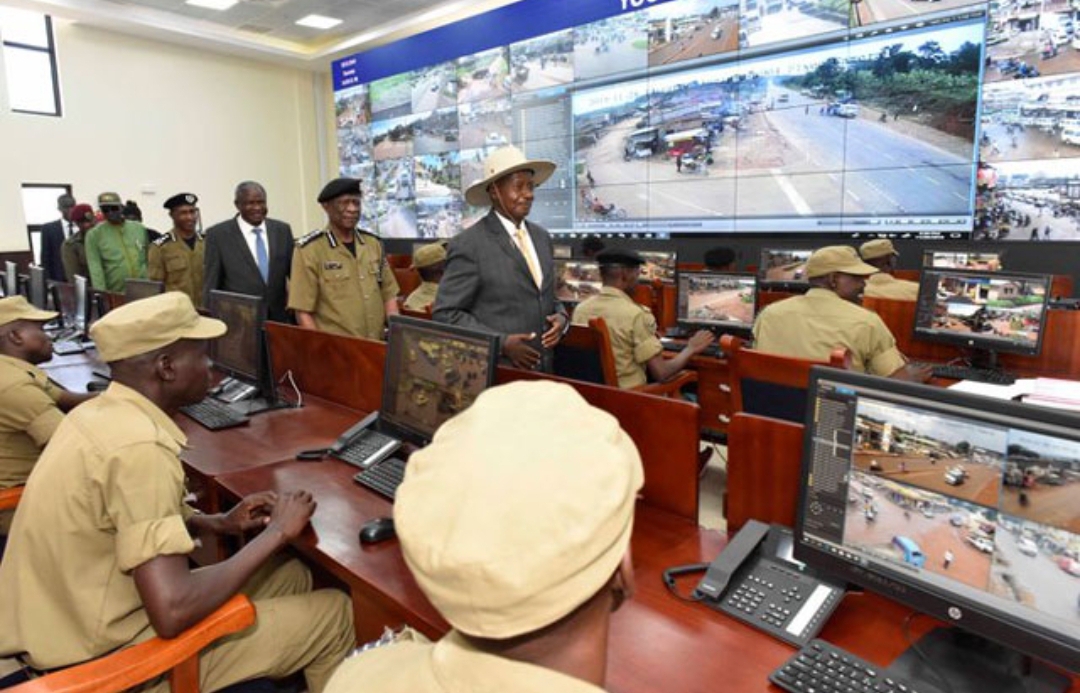
President Museveni has ordered the forced leave of three top officials in the Ministry of Internal Affairs and the Uganda Police over alleged corruption linked to the maintenance of the national CCTV surveillance system.
The decision, made almost at the same time with Tuesday's Cabinet announcement that saw General David Muhoozi defenestrated from the ministry and replaced with Dr Lawrence Muganga, deepens scrutiny around a ministry he only days ago placed under the political stewardship of an academic once reported as being a dual citizen.
In a May 23, 2026 letter addressed to Head of Public Service and Secretary to Cabinet Lucy Nakyobe Mbonye, Museveni directed that Permanent Secretary Lt Gen Joseph Musanyufu, Under Secretary for Police Aggrey Wunyi, and AIGP Felix Baryamwisaki step aside for six months as investigations proceed.
“I now direct that the Permanent Secretary, Ministry of Internal Affairs- Lt. Gen. Joseph Musanyufu and the Under-Secretary Police, Mr. Aggrey Wunyi, go on forced leave for six months as the Anti-corruption Unit is investigating their matter to its conclusion,” Museveni wrote.
“By the copy of this letter, AIGP Felix Baryamwitsakyi, should go on forced leave as this investigation is reviewed and concluded.”
The President said he had received a report from former Internal Affairs minister Maj. Gen. Kahinda Otafiire regarding corruption in the maintenance of the police camera system.
According to Museveni, Huawei, which had supplied Uganda’s road surveillance cameras, shifted maintenance responsibilities to a private Ugandan contractor after facing sanctions from the United States and European Union in 2019.
The contractor, Dealan Associates Limited, owned by Ugandan scientists, was allegedly denied payment despite the Ministry of Finance releasing Shs31.37 billion for the work.
Museveni claimed ministry officials, working through a middleman identified as Hassan Serunjogi, demanded bribes before processing payment.
“Yet, the Ugandan contractor was not paid because the Ministry officials, through a middleman, Hassan, were demanding for bribes,” Museveni wrote.
He further directed that Barbra Katisi of Dealan Associates Limited be paid and ordered criminal charges against Serunjogi if evidence supports prosecution.
The sackings come at a politically sensitive moment for the Internal Affairs ministry, which on Tuesday received a new political leadership team during Museveni’s Cabinet reshuffle.
Among the most controversial appointments was that of Victoria University Vice Chancellor Lawrence Muganga as State Minister for Internal Affairs — a move that has triggered renewed debate over identity politics, security, and political rehabilitation within Museveni’s government.
Muganga was arrested in September 2021 by operatives from the Chieftaincy of Military Intelligence (CMI) and Crime Intelligence in a dramatic operation at Victoria University.
Security operatives at the time reportedly suspected him of espionage and illegal stay, allegations linked to his Rwandan associations and foreign citizenship status.
Though he was never charged and was released within days, the episode placed him at the centre of one of Uganda’s most politically sensitive fault lines: the intersection of citizenship, regional identity, and national security during a period of strained Uganda-Rwanda relations.
Muganga, who has publicly acknowledged holding Canadian citizenship and previously worked as an internal auditor at the Rwanda Revenue Authority, later reinvented himself as an advocate on citizenship and identity rights, particularly for Ugandans of Rwandan heritage.
His appointment to Internal Affairs — the ministry overseeing immigration, citizenship regulation, police coordination, prisons, and internal security administration — was therefore interpreted by some analysts as both symbolic and strategic.
The latest forced leave of senior technocrats now further intensifies focus on the ministry Muganga has just entered.
The CCTV project itself sits at the core of Uganda’s modern internal security architecture. Museveni personally championed the Huawei surveillance system as part of efforts to combat urban crime and monitor security threats.
That the President is now intervening directly over alleged corruption surrounding its maintenance suggests growing concern about dysfunction within one of the country’s most security-sensitive institutions.
The developments also raise questions about whether Museveni is attempting a broader restructuring of influence within Internal Affairs by simultaneously introducing a politically unconventional minister while removing long-serving technocrats.
Observers note that Museveni has historically used moments of scandal, investigation, or institutional weakness to reset power balances inside sensitive ministries.
In Muganga’s case, the symbolism is particularly striking. A man once detained as a suspected spy now enters a ministry where top officials are being pushed aside over corruption allegations tied to national surveillance infrastructure.
Internal Affairs has long occupied a central position in Uganda’s governance system, handling immigration, national identification, border management, police oversight, and coordination of internal security policy.
The forced leave of the ministry’s senior administrative leadership, coming just days after Muganga’s appointment, now places the institution under intense political and public scrutiny.
Government had also not announced who would temporarily take over as acting Permanent Secretary during the investigations.
The Anti-Corruption Unit is expected to lead the inquiry into the alleged bribery scheme linked to the CCTV maintenance contract.
