
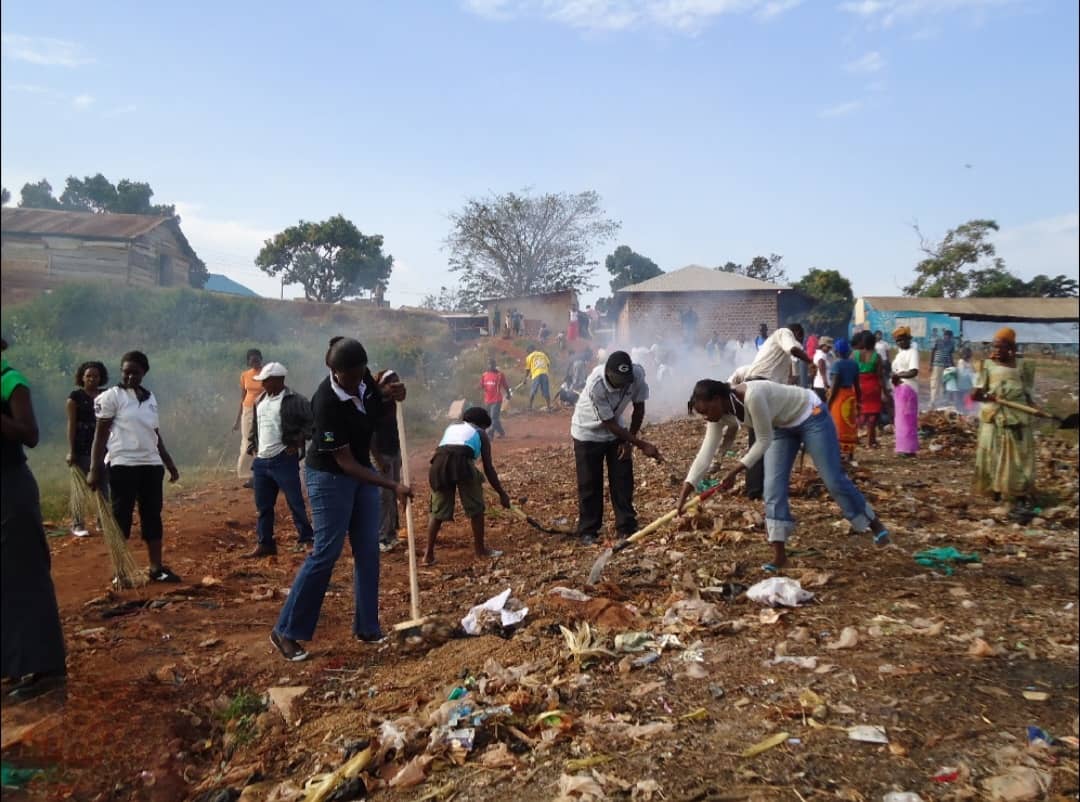
Exiled lawyer and author Kakwenza Rukirabashaija has said the government's newly introduced National Cleaning Days is unconstitutional, while the Seventh-day Adventist Church has appealed for an exemption because the monthly exercise coincides with its Sabbath worship.
The twin objections emerged hours before the first nationwide cleaning exercise scheduled for Saturday, July 25, with security agencies ordering the public to comply with movement restrictions and participate in the mandatory exercise.
Kakwenza argued that Cabinet lacked the legal authority to impose compulsory community labour through an administrative circular.
"Cabinet exceeded its legal authority by creating binding obligations without parliamentary legislation," he said.
He further contended that the directive conflicts with several constitutional provisions, duplicates responsibilities already provided for under the Local Governments Act and Public Health Act, and imposes an unreasonable burden on taxpayers.
"The Executive cannot substitute administrative directives for legislation enacted by Parliament," Kakwenza said.
At the same time, the Uganda Union Mission of the Seventh-day Adventist Church said it supports efforts to improve sanitation but cannot compromise the sanctity of the Sabbath, which members observe from Friday sunset to Saturday sunset.
"While the Seventh-day Adventist Church fully supports initiatives that promote a clean and healthy environment, we remain committed to the sanctity of the Seventh-day Sabbath as ordained by God," Uganda Union Mission President Pastor Samuel Kajoba said in a pastoral letter.
Kajoba said church leaders were engaging government to allow Adventists to participate in the exercise either on Friday or Sunday.
"I wish to assure you that the Church leadership is actively engaging the Government in a spirit of mutual respect to seek an amicable solution that upholds both the national objective and our constitutional freedom of worship," he said.
The government has nonetheless directed that the first National Cleaning Day will proceed on Saturday between 7am and 10am.
In a statement, the Uganda Police Force said all vehicles, motorcycles, bicycles and vessels would be barred from roads and water bodies during the exercise except for emergency and essential services.
"Members of the public are encouraged to remain in their areas, take part in the cleaning exercise and resume normal activities at 10am," the police said.
Police spokesperson Kituuma Rusoke told the Nile Post their policing will mainly be on the roads due to restriction on movement.
"Essentially we shall oversee enforcement especially on the roads by way of restriction," he added.
Government spokesperson Alan Kasujja was contacted on the issues raised by Kakwenza and SDA community but said he would revert later. He had not done so at the time of publishing this article.
The initiative, introduced through Cabinet Circular No. 1 of 2026 signed by Prime Minister Robinah Nabbanja, requires Ministries, Departments and Agencies, local governments, businesses, institutions and citizens to participate in organised monthly clean-up exercises aimed at improving sanitation, protecting public health and promoting environmental stewardship.
Government says poor sanitation continues to contribute to disease outbreaks, blocked drainage channels, flooding and environmental degradation.
The programme has also drawn praise as an important public health intervention. Similar initiatives have been successful in countries such as Rwanda, where the monthly Umuganda community service programme has become part of the country's civic culture, while Uganda has long practised the voluntary Bulungi Bwansi tradition.
The debate, however, centres on implementation.
Unlike Rwanda's Umuganda, which evolved over decades into a deeply embedded national culture, critics argue Uganda's programme is being introduced through compulsory directives, business closures and nationwide movement restrictions with little public consultation.
The Office of the Prime Minister has warned that failure by government institutions to implement the Cabinet directive will be treated as failure to implement a Cabinet decision, while police have urged the public to cooperate with security personnel during Saturday's exercise.
