
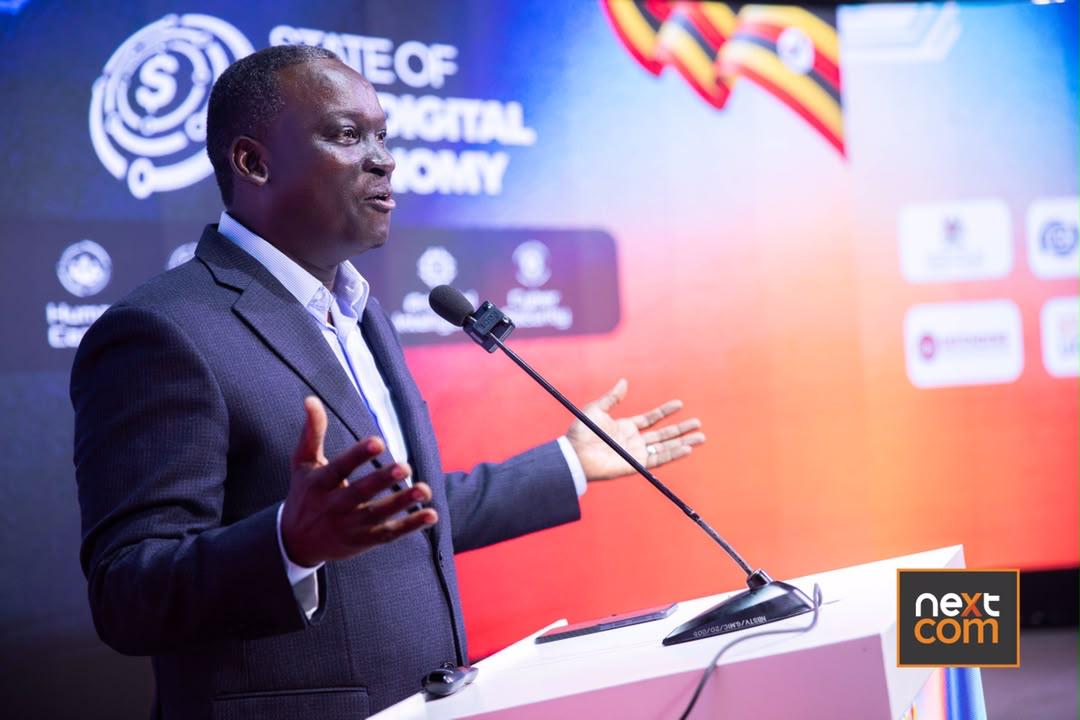
Uganda's digital transformation must move beyond expanding internet access to creating jobs, businesses and innovation, Next Media Group Chief Executive Officer Kin Kariisa has said, urging government, the private sector and innovators to focus on turning digital infrastructure into economic opportunity.
Delivering the opening keynote at the third edition of the State of the Digital Economy (SODE 2026), Kariisa said the country's digital conversation has evolved from asking how more people can get connected to ensuring that connectivity delivers tangible benefits for citizens and businesses.
His remarks echoed those of Next Media Chief Marketing and Ventures Officer Joy Mwangi, who earlier urged organisations to build systems that create opportunity rather than merely participate in conversations about digital transformation.
They also reinforced calls by ICT and National Guidance Minister Justine Lumumba for a "whole-of-country approach" to digital transformation and Permanent Secretary Dr Aminah Zawedde's push to make digital access more affordable.
Held under the theme "Beyond Connectivity: Turning Access into Opportunity," SODE 2026 has brought together leaders from government, technology, business, academia and the innovation ecosystem to chart Uganda's digital future.
"Twenty years ago we were asking whether internet on a mobile phone was even possible. Today, many Ugandans have access to the same 5G technology available in cities across the world. The question is no longer whether we are connected. The question is what we are doing with that connectivity," Kariisa said.
Reflecting on Uganda's digital journey, Kariisa recalled serving on the national committee that prepared for the 2007 Commonwealth Heads of Government Meeting (CHOGM), when enabling delegates to access email on mobile phones was considered a major technological milestone.
He said Uganda has since made remarkable progress, with digital infrastructure extending far beyond major urban centres.
Drawing on his own experience, Kariisa noted that his rural home in Ntungamo now enjoys 5G connectivity alongside electricity and piped water, illustrating the country's growing investment in digital infrastructure.
"Connectivity has come a long way. We should appreciate the investment that has made this possible," he said.
Kariisa argued that the country must now treat connectivity as the foundation rather than the end goal of digital transformation.
He challenged policymakers, businesses and public institutions to focus on whether digital infrastructure can create more jobs, help young people establish businesses, expand Uganda's digital exports and improve public service delivery.
"This platform exists because we must move beyond talking about access and begin talking about value," he said.
A significant part of his address focused on Uganda's youthful population, whom he described as central to the country's digital economy.
Kariisa encouraged young people to view smartphones as productive tools capable of generating income through entrepreneurship, digital services and content creation rather than simply devices for communication and entertainment.
"Everyone with a smartphone has the potential to create work for themselves instead of waiting for employment," he said.
He highlighted Next Media's investment in developing digital talent through the Next Creata Programme, implemented in partnership with the Mastercard Foundation, which aims to equip thousands of young Ugandans with practical digital skills while expanding creator hubs across the country.
The programme seeks to prepare participants for careers in Uganda's growing digital economy while creating opportunities beyond traditional employment.
Kariisa also called for greater investment in local content creation, warning that countries which rely predominantly on imported digital content risk losing control of their own narratives and cultural identity.
Instead, he urged continued support for Ugandan creators to produce content for local and international audiences while building sustainable digital businesses.
"We want our creators producing content for Ugandans and for the world," he said.
To accelerate Uganda's digital economy, Kariisa proposed three policy priorities.
He called for a review of import taxes on smartphones, arguing that mobile devices should be recognised as productive tools that support education, commerce, financial inclusion and entrepreneurship.
He also urged government to review internet taxation to improve affordability and increase digital participation.
Finally, Kariisa appealed to government and regulators to engage global digital platforms, including TikTok and X, to enable Ugandan creators to access monetisation programmes available in other markets.
He said although Ugandan creators produce content consumed by millions around the world, many remain unable to earn directly from the platforms hosting their work.
"Young Ugandans are creating incredible content. They should also have the opportunity to earn from it," Kariisa said.
He concluded that while Uganda has made significant progress in expanding digital connectivity, the country's next phase of transformation will depend on how effectively that access is converted into jobs, innovation, thriving businesses and inclusive economic growth.
