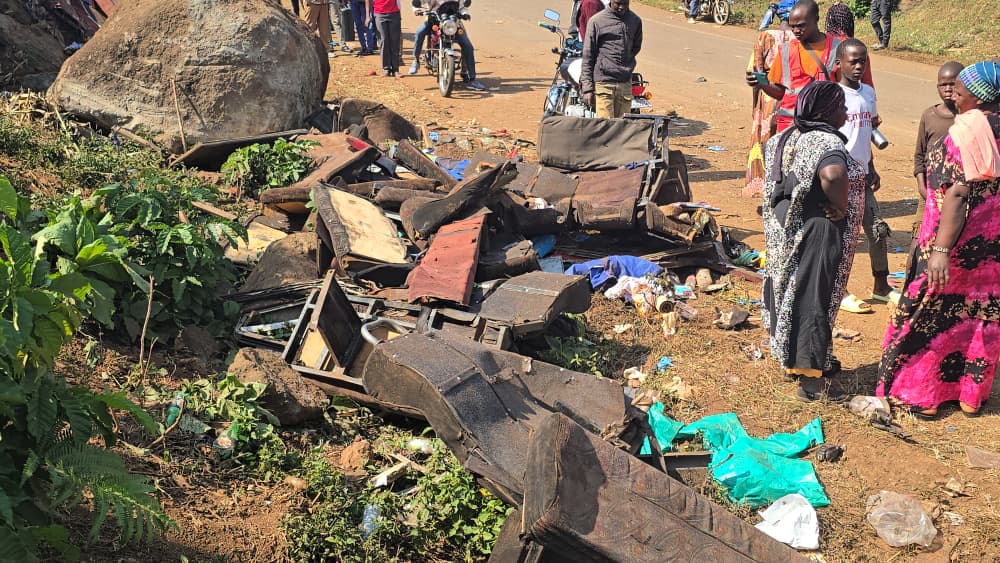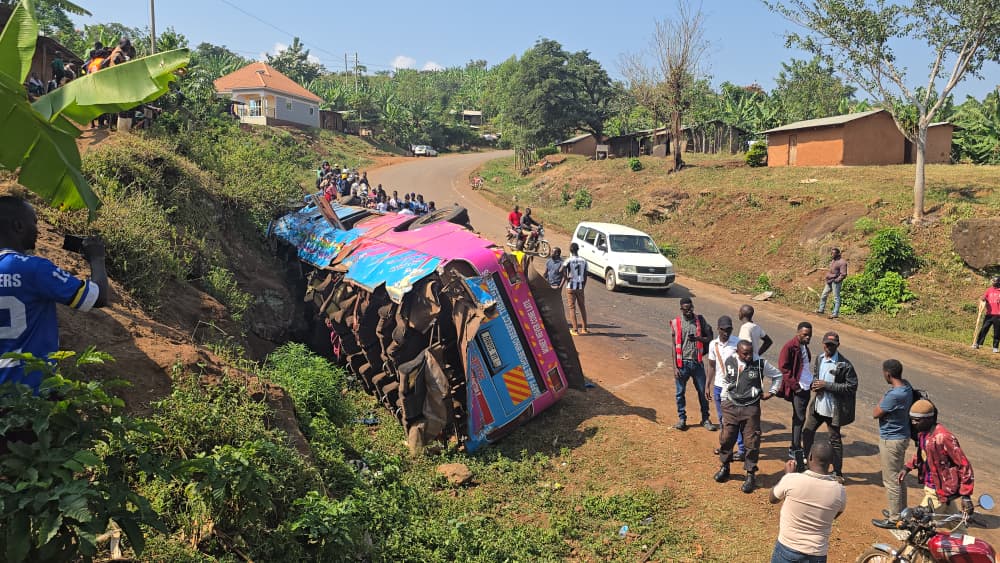
KAPCHORWA — The wreckage of the Liberty Bus still lies scattered along the steep Chepkwatit slope, a grim reminder of one of Uganda’s deadliest road crashes involving school children.
School bags, books, shoes and pieces of the vehicle, registration number UA 108BQ, remain visible along the roadside where the bus carrying pupils of King David Junior School, Ndejje, crashed while returning from an educational tour at Sipi Falls.
At least 23 pupils and a teacher have been confirmed dead so far while another 23 victims remain admitted at Kapchorwa Hospital where they are receiving treatment for injuries sustained in the crash.
Fresh accounts from witnesses suggest the tragedy may have been preceded by warning signs, including alleged mechanical problems and concerns raised by residents familiar with the dangerous stretch of the Kapchorwa–Mbale road.
According to eyewitnesses, the bus lost control while descending the steep slope before hitting a roadside boulder. The impact ripped off the roof of the vehicle, throwing pupils onto the road.
One witness said part of the bus struck a large boulder during the crash, killing some pupils on the spot and leaving others with severe injuries.
Residents who rushed to the scene said the bus had allegedly experienced mechanical problems earlier in the journey, with the driver reportedly making several stops.
A boda boda rider who witnessed the aftermath said some residents had warned the driver against proceeding down the slope.
“The bus had been stopping several times because of mechanical problems. When it reached this slope, residents warned the driver not to continue because the vehicle was not safe for such a dangerous descent,” he said.
The rider added that some community members offered alternative transport to help move the children to a safer section of the road before allowing the bus to continue.
“They even offered to use their own vehicles to transport the children to a safer section of the road before they resumed their journey,” he said.
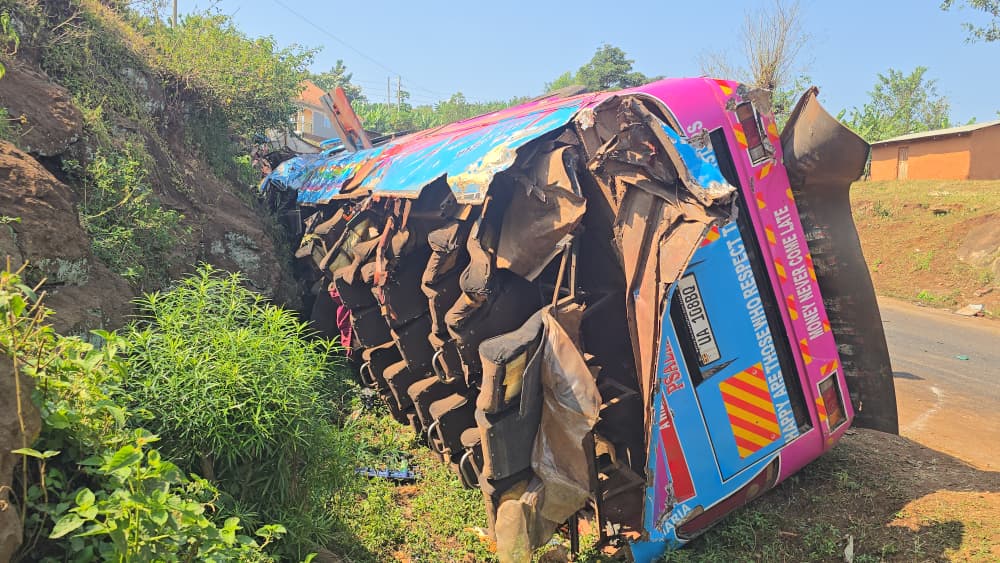
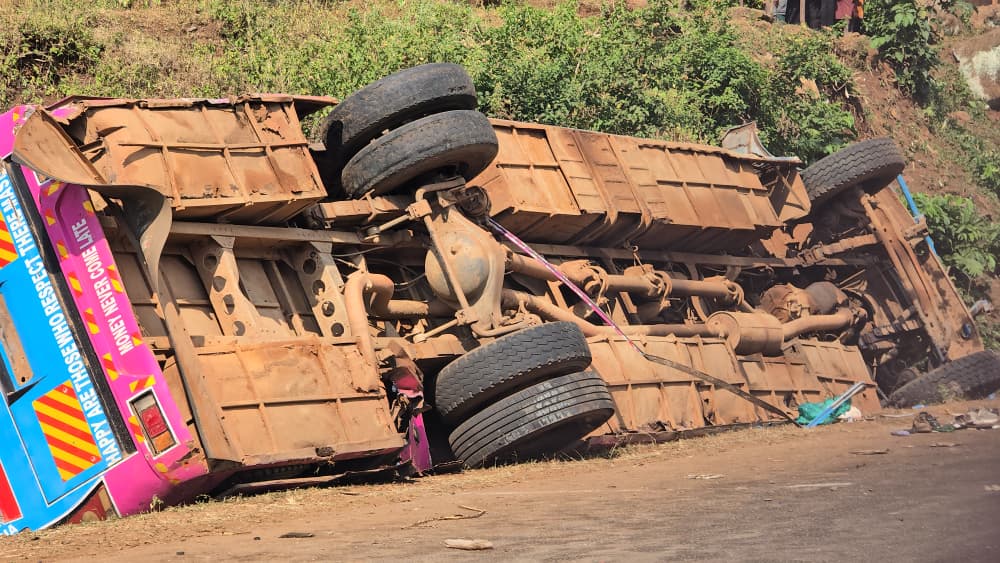
Other residents questioned the condition of the bus, saying it appeared old despite bearing a relatively new registration number plate.
A close-up image of the ill-fated vehicle's tyres rear-right tyres as well as the inside rear-left tyre were worn out to a state that they should not be on the road.
Police have launched investigations to establish the exact circumstances that led to the crash, including the mechanical condition of the vehicle, the driver’s decisions and other possible contributing factors.
The accident occurred along one of the region’s most feared sections of road, with residents saying Chepkwatit and surrounding slopes have previously recorded several fatal crashes.
Residents recalled previous tragedies involving security personnel, students and other travellers.
“Seventy UPDF officers perished at this very spot,” one resident said.
Dr Siraj Masai, Kapchorwa District Health Officer, said the death toll had risen to 21, comprising 19 pupils and two adults, one of whom is believed to have been the school director.
“We received more than 80 casualties. By the time we verified, 67 were admitted at Kapchorwa, 16 at Kaserem and three at Muyembe,” Dr Masai said.
He added that 46 victims were still receiving treatment at Kapchorwa Hospital, while some critically injured patients had been referred to Mbale Regional Referral Hospital for specialised care.
“Most of those we are referring have head injuries, and we do not have a CT scan to determine the extent of the injuries,” he said.
Dr Masai called for increased investment in emergency response systems, including a standby ambulance at Kaserem, installation of a CT scan facility and upgrading Kapchorwa Hospital to a regional referral facility.
He said the mountainous terrain requires stronger road safety measures, including redesigning dangerous sections and ensuring drivers operating in the area understand the challenges posed by the terrain.
Sharif Chebet, a tour operator, said the road also lacks adequate warning signs to alert motorists about dangerous sections.
“We need proper signs indicating blackspots and safety guidelines for drivers who are not familiar with the terrain,” Chebet said.
The crash has renewed debate over school transport safety, with questions emerging over vehicle inspection standards, driver preparedness, enforcement of road regulations and the safety of school trips on mountainous routes.